Get Full Government Meeting Transcripts, Videos, & Alerts Forever!
Get email alerts on the Personnel Policy Administrative Leave topic
No spam. Unsubscribe anytime.
Ordinance committee refers draft administrative‑leave ordinance to full council without recommendation
Summary
After extended debate over language mirroring Massachusetts law, the Ordinance Committee voted to send an amended administrative‑leave ordinance to the full City Council without a recommendation.
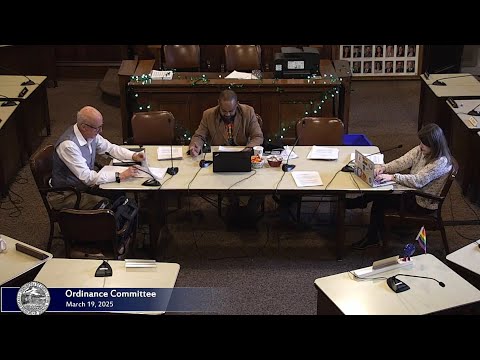
The Ordinance Committee on March 19 voted to forward an amended ordinance on administrative leave and suspension of municipal employees to the full Holyoke City Council without a recommendation.
The measure, filed to establish local procedures for placing city employees on paid or unpaid administrative leave, was discussed at length. Councilor Paul Jourdain (maker of the order) said the intent was to align local rules with Massachusetts General Laws governing suspension of officers or employees who are under indictment for misconduct. He asked the committee to adopt language consistent with state law and to protect taxpayers by clarifying when leave should be paid or unpaid.
City Solicitor Michael Bissonnette advised the committee on criminal‑process language. He recommended against relying solely on the term "grand jury" because some states and charging practices differ; as an alternative he told the committee it might be clearer to use the phrase "charged with a felony," explaining that “you can be charged with a felony and not necessarily be indicted,” and that the grand jury phrasing provides a narrower trigger than a straight felony standard.
Committee members debated two related concerns: whether local ordinance is necessary if state law already covers the subject, and how the city should balance employee rights with protecting taxpayers. Councilor David Bartley said he feared the ordinance could be harsh if the standard for suspension is the "barest" evidentiary threshold, while Councilor Vagan argued it is helpful to restate state law locally so staff and supervisors are clear on obligations.
After amendments incorporating law‑department edits and language about the appointing authority's discretion, the committee voted 5–0 to send the amended legal form to the full City Council "without a recommendation" so the larger body can review and decide.
The referral preserves the distinction committee members emphasized between discussion (policy objectives and language) and formal action: the committee did not itself adopt the ordinance; it sent the amended draft for consideration by the full council.