Get Full Government Meeting Transcripts, Videos, & Alerts Forever!
Get email alerts on the Apprenticeship Expansion topic
No spam. Unsubscribe anytime.
Committee backs bill to expand registered apprenticeship pathways into licensed professions; massage therapy stakeholders ask for extra review
Summary
House Bill 336 would allow registered apprenticeships to serve as an approved pathway to licensure in specified professions. Supporters argued apprenticeships expand access, increase wages and reduce student debt; some massage therapy stakeholders requested their profession be studied further because of trafficking and age-policy concerns.
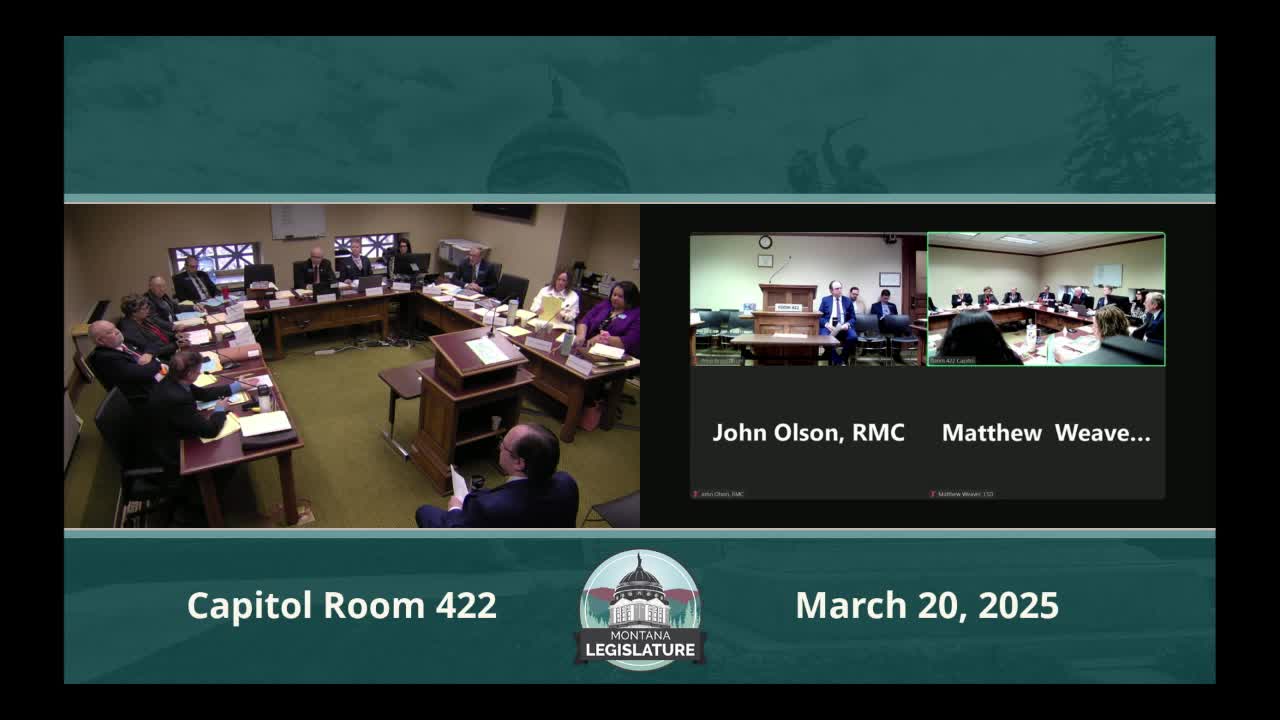
Representative Curtis Schomer, sponsor of House Bill 336, told the Senate Business and Labor Committee the bill opens apprenticeship as a recognized pathway to licensure for many occupations currently barred from apprenticeship by Montana statute. He described the idea as an expansion of training options: "This bill allows for professional licensures to get apprenticeships," he said, and invited apprenticeship proponents to explain the model.
Commissioner Sarah Swanson (Department of Labor and Industry) presented data the department has compiled on registered apprenticeships: she said apprentices who complete programs are more likely to keep employment with their sponsor and to earn higher wages — "return on investment for employers who utilize registered apprenticeship is 86%" — and told senators apprenticeship is a proven, structured model to train workers while they are paid on the job.
Proponents from construction trades, unions, healthcare apprenticeship sponsors and the Montana Hospital Association described existing registered apprenticeship success and opportunities to apply the model in health care, barbering and other licensed trades. Quentin Queer (plumbers and pipefitters Local 41) and Jay Reardon (Building Construction Trades) described standard apprenticeship terms — on-the-job training hours, related instruction and staged competency requirements — and emphasized apprenticeship safety and supervision.
Several witnesses urged caution and asked for further study before including massage therapy because of the profession's unique trafficking risks and age thresholds. A massage therapy representative and the Federation of State Massage Therapy Boards flagged concerns about 16-year-old apprentices and potential exploitation; proponents and department staff said licensing age and other licensing requirements continue to govern, and that apprenticeship programs must meet licensing standards and federal Office of Apprenticeship oversight.
Proponents from healthcare apprenticeship sponsors described national growth in health-care apprenticeships and said apprenticeship can be combined with related instruction (college coursework) to meet or exceed licensing education requirements.
The committee voted to concur on House Bill 336. Supporters said the bill creates optional, employer-driven training pathways that can increase rural access to skilled careers, reduce student debt and expand the talent pipeline; those with specific concerns asked to work with the department in the interim on safeguards for professions that present unique risks.