Get Full Government Meeting Transcripts, Videos, & Alerts Forever!
Get email alerts on the Immigration Checks Law Enforcement topic
No spam. Unsubscribe anytime.
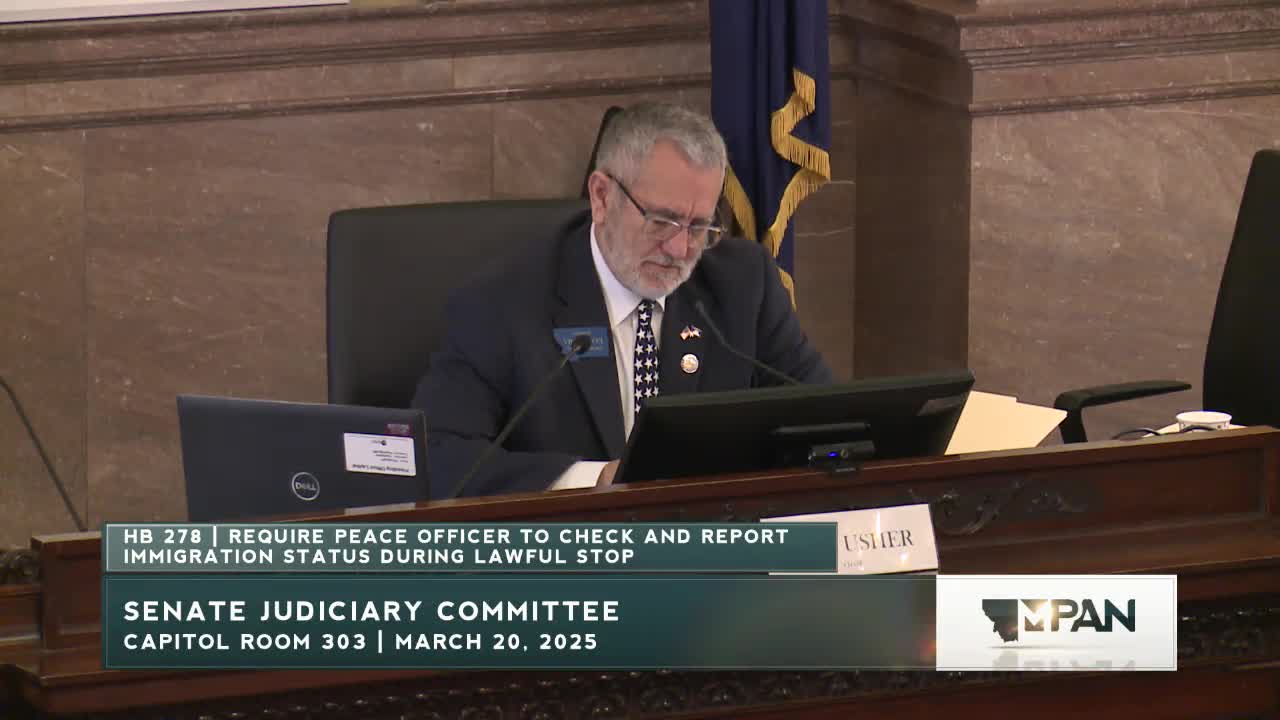
Bill would let troopers check and report immigration status on lawful stops
Summary
House Bill 278 would authorize peace officers to inquire about immigration status during lawful stops when they have reasonable suspicion, and to report confirmed unlawful presence to federal immigration authorities; the highway patrol and Department of Justice supported the change while civil-liberties advocates raised profiling concerns.
House Bill 278 would authorize peace officers, including Montana Highway Patrol troopers, to inquire about and report a person’s immigration status during a lawful stop when the officer has reasonable suspicion someone is not lawfully present. The bill’s sponsor, Representative Nellie Nickell, said the measure formalizes a practice troopers already use and responds to uncertainty created by a 10-year-old court ruling that limited such checks.
Alex Strahan, director of external affairs for the Montana Department of Justice, and Colonel Kurt Sager, Montana Highway Patrol chief, supported the bill. Strahan said the bill “better serves citizens of Montana” and gives troopers another tool. Sager said it aligns with current practice by allowing troopers to make status inquiries when they have reasonable or particularized suspicion and to follow up with federal partners; he said checks could reveal other criminal behavior.
Colonel Sager told the committee the patrol does not have direct access to federal immigration systems and would coordinate with federal partners to verify status; he said detention for transfer to federal authorities depends on the federal partner’s response time. Committee members pressed whether the bill would permit detention for the immigration check and whether it risks profiling; the colonel and sponsor said troopers should use discretion and are seeking statutory clarity so officers know what they can do.
Civil liberties concerns surfaced in testimony submitted to the committee and in questions from senators. Opponents and some members said the bill could lead to profiling or chill reporting of crimes by immigrants; proponents said the change is permissive (“may”), not mandatory, and aligns with current lawful practice. The committee recorded concurrence on House Bill 278 and sent it on for further consideration.