Get Full Government Meeting Transcripts, Videos, & Alerts Forever!
Get email alerts on the Ballot Access And Judicial Jurisdiction topic
No spam. Unsubscribe anytime.
Bill would shift original jurisdiction over ballot disputes to district courts; opponents warn of delay and burden
Summary
Senate Bill 13 would move most original jurisdiction for ballot-statement and related challenges away from the Montana Supreme Court and toward district courts for fact-finding before appellate review.
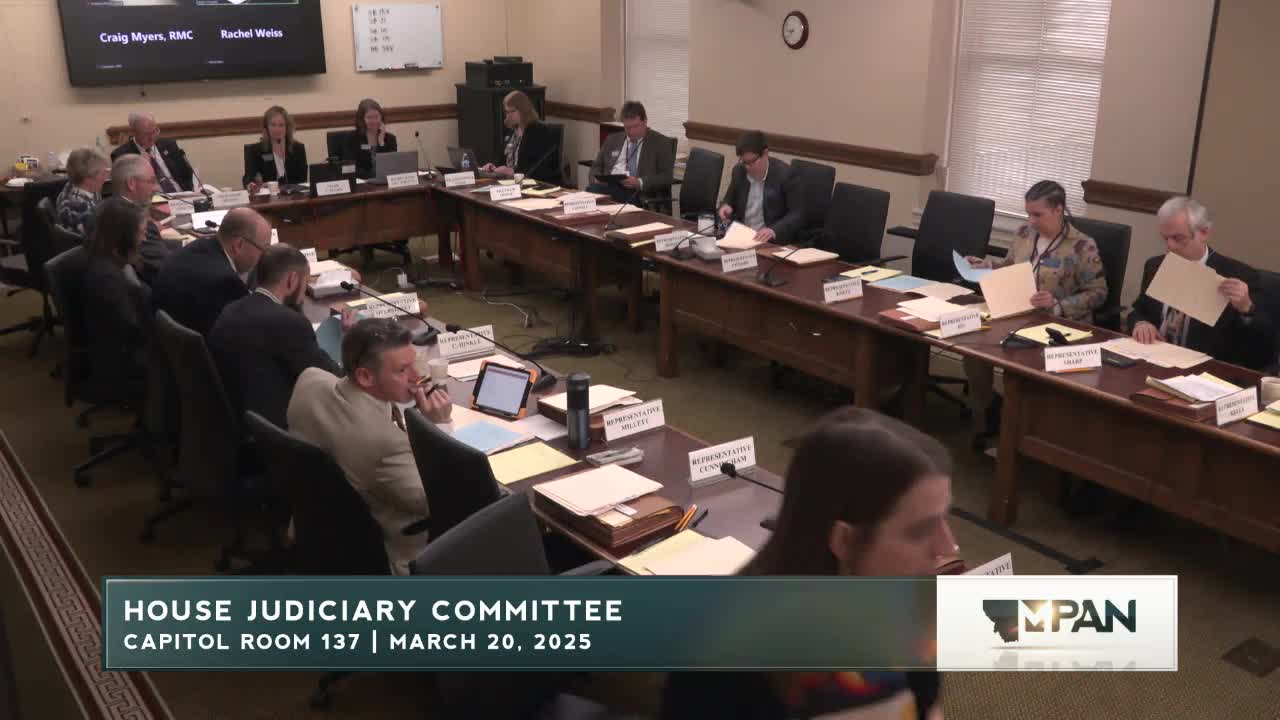
Senate Bill 13, presented to the House Judiciary Committee, would remove most of the Montana Supreme Court’s original jurisdiction over matters such as ballot-statement challenges and instead route those matters to district court for fact-finding before appellate review.
Sponsor testimony framed the change as a rule-of-process fix. The sponsor told the committee the bill was intended to ensure fact-finding occurs before the Supreme Court considers ballot disputes, saying the current route can leave the high court “shooting from the hip” because it lacks a factual record.
Opponents said the existing process already provides for district-court fact-finding when needed and warned the bill would create unnecessary delay, expense and duplication. Al Smith of the Montana Trial Lawyers said the current statute already allows the Supreme Court to refer matters to district court when factual records are needed, citing a provision that enables fact-finding by agreement of the parties.
Jonathan Mottle and other opponents representing initiative advocates argued that the pre-signature review process for ballot measures is time-sensitive. Mottle said sending more cases through district court increases the risk that initiatives will miss signature-gathering and ballot deadlines.
Mark Mackin, who testified he had been involved with the historical statutory change in the late 1970s or early 1980s, described the statute’s original purpose: speed and fewer duplicative hearings. He said the legislature adopted the Supreme Court route to give administrators faster, less costly answers and warned that reversing that decision risks litigation and diluting the people’s initiative power.
Witnesses also raised separation-of-powers concerns. Opponents argued that repealing the statute that currently grants the Supreme Court certain writs could be read as limiting the court’s enforcement tools and spur constitutional litigation.
Sponsor closing remarks repeated that the bill’s intent is to preserve judicial legitimacy and ensure fact-finding when factual issues exist; he told the committee the process would remain accelerated when necessary to protect ballot timelines. No committee vote or final action on Senate Bill 13 is recorded in the transcript.
Why this matters: The bill affects how Montana resolves pre-ballot challenges to ballot language and could change the timing and cost of initiative work. Proponents say it boosts factual rigor; opponents say it risks delay that impairs the initiative process and may trigger separation-of-powers litigation.