Get Full Government Meeting Transcripts, Videos, & Alerts Forever!
Get email alerts on the Separation Of Powers Fees topic
No spam. Unsubscribe anytime.
Sponsor seeks to bar courts from awarding attorney fees over legislative process disputes
Summary
House Bill 365 would restrict courts from awarding attorney fees based on how the Legislature conducts internal procedures; proponents said the bill protects the separation of powers, while opponents said it undermines judicial review.
House Bill 365, sponsored by Representative Steve Fitzpatrick, would narrow the circumstances in which courts may award attorney fees tied to claims of bad faith or frivolous actions that relate to legislative procedural choices. Fitzpatrick told the Senate Judiciary Committee the Montana Supreme Court’s interpretation in a recent case (referred to in testimony as Ford Montana) intruded on the legislature’s prerogative to set and run its own internal rules.
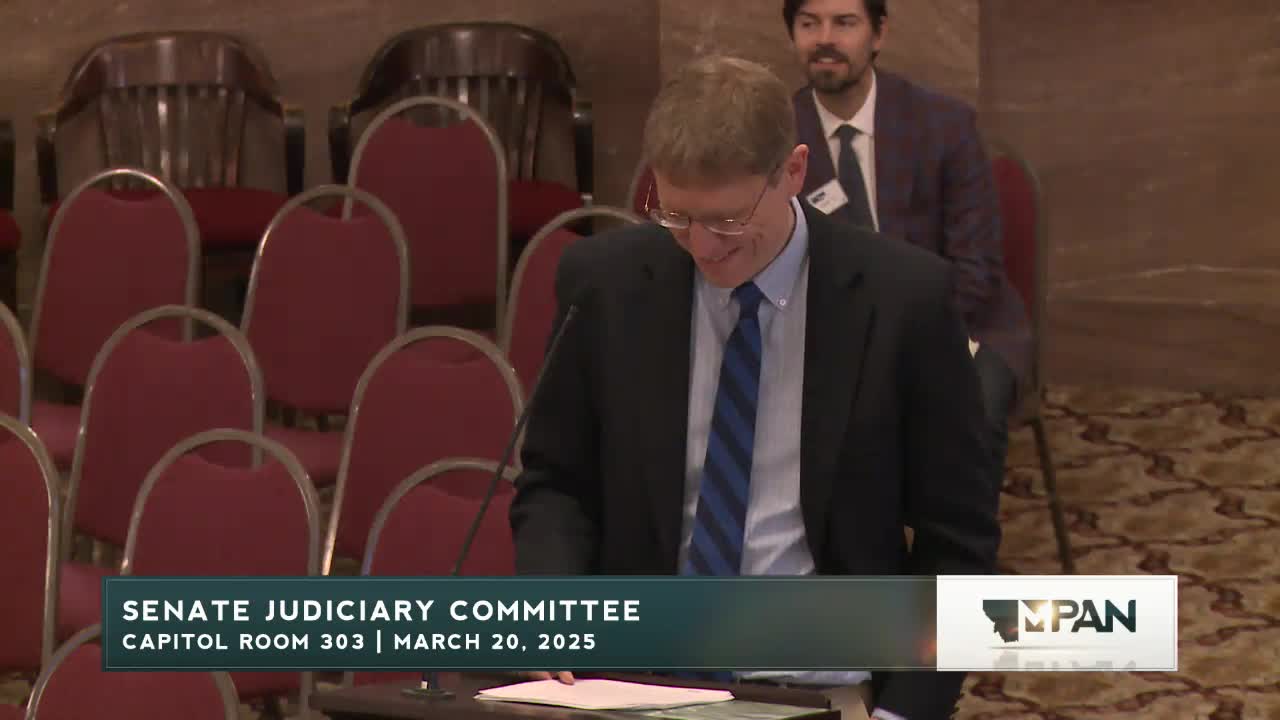
Brent Mead, deputy solicitor general for the Department of Justice, testified in support and said the bill would avoid creating a de facto veto point by inserting the attorney general into assessments of legislative conduct; he said future attorneys general might otherwise decline to defend legislative acts on that basis. Opponents including a speaker identified as Mr. Marshall argued the statute should remain intact because judicial review is an essential check on legislative power.
Committee members questioned sponsors and proponents about constitutional due-process protections and whether courts could review violations of constitutional rights; Fitzpatrick and Mead said the bill would preserve courts’ ability to adjudicate constitutional violations but would prevent judges from second-guessing internal legislative procedure so long as constitutional requirements are met.
During executive action the committee recorded concurrence on the bill and advanced it.