Get Full Government Meeting Transcripts, Videos, & Alerts Forever!
Get email alerts on the Licensing Discipline Standardization topic
No spam. Unsubscribe anytime.
Bill to standardize disciplinary rules across Montana licensing boards moves from committee
Summary
House Bill 435 would standardize disciplinary processes, definitions and reporting timelines across occupational licensing boards and programs; proponents said it reduces inconsistency and improves public protection while opponents asked clarifying questions about particular provisions such as infectious-disease language and mandatory reporting.
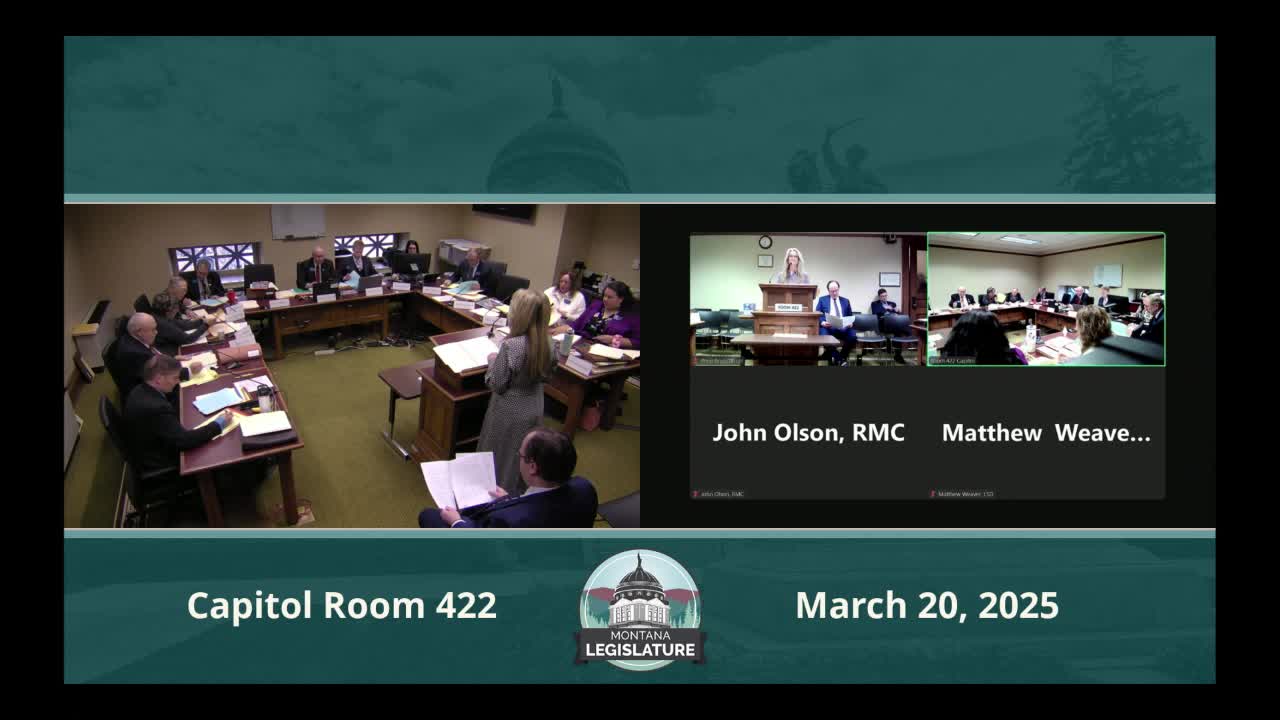
Representative Jody Etchart, sponsor of House Bill 435, told the committee the bill standardizes disciplinary timelines and definitions across occupational licensing boards and programs to ensure fairness: “this is gonna ensure that everyone is treated the same,” Etchart said.
Quinlan O'Connor, chief legal counsel for the Department of Labor and Industry, explained the bill aligns part 3 (boards) and part 4 (programs) of Montana law. Among the changes he described: standardizing the timeframe for reporting disciplinary actions to the state to 30 days, reorganizing statutory language for clarity, increasing the maximum civil fine from $1,000 to $5,000, and codifying certain behaviors (including specified criminal conduct and proven Human Rights Act violations) as unprofessional conduct.
Jean Branscum of the Montana Medical Association said physicians support the amendments and the effort to narrow requests for medical records to those directly relevant to an evaluation. Kevin Bragg, bureau chief for professional licensing at the Department of Labor and Industry, described planned communications to licensees about statutory changes through email, licensing portals and board meetings.
Committee members pressed O'Connor and department staff on several points: the practical incidence of infectious-disease discipline (he described it as rare and typically involving explicit intent to spread disease), how surrendering a license during an investigation affects jurisdiction (department staff said surrender terminates licensing jurisdiction but the board can still investigate the circumstances), and whether a failure by a licensee to report another licensee's misconduct would itself be unprofessional conduct (department counsel said it could be and that reporting is intended to protect the public).
Supporters included professional associations and small trade groups such as the Montana Athletic Trainers Association. The bill drew questions about mandatory reporting obligations and communicative steps the department will take so licensees know the new rules; Kevin Bragg said the department will prioritize email outreach, licensing-portal notices and board communications.
The committee moved to concur on House Bill 435 in executive action. Testimony emphasized the measure's goal: consistent treatment for licensees and clearer authority for boards and programs across Montana.