Get Full Government Meeting Transcripts, Videos, & Alerts Forever!
Get email alerts on the Property Tax Assistance topic
No spam. Unsubscribe anytime.
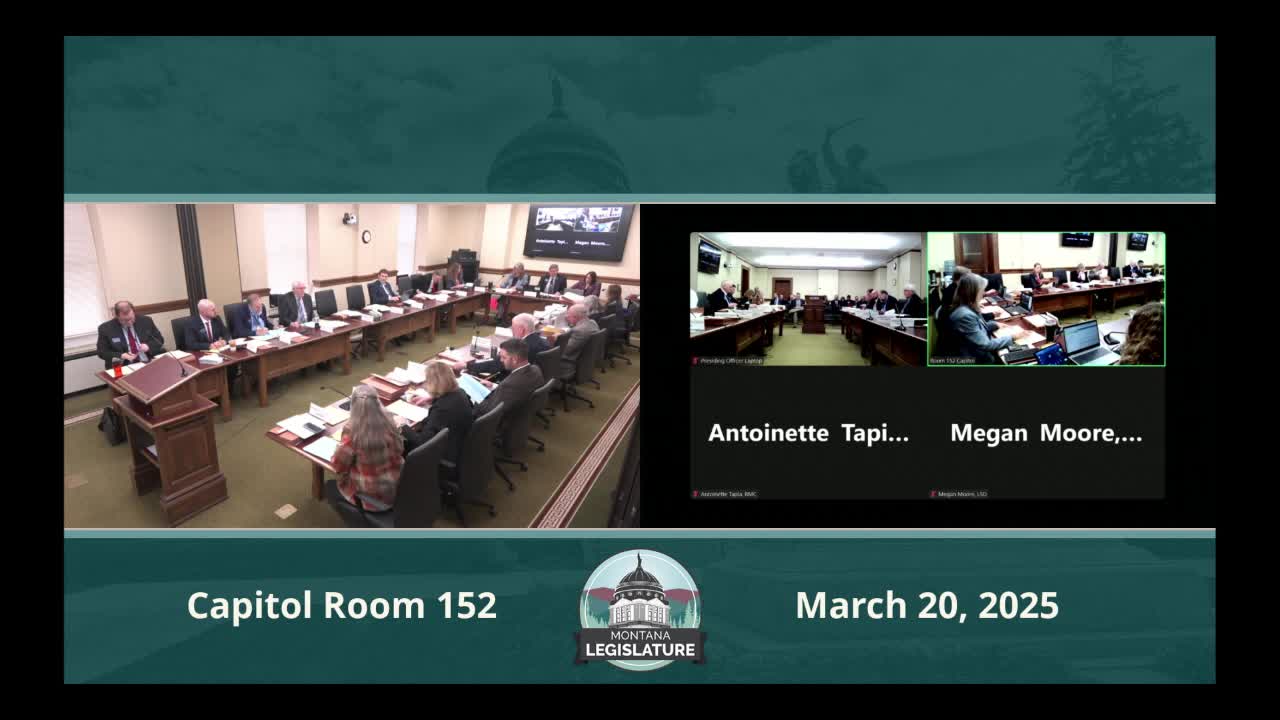
Committee hears bill to fund property-tax credits for primary residents using lodging and rental-car taxes
Summary
Sen. Carl Glimm told the House Taxation Committee that Senate Bill 90 would create a state property tax assistance fund paid from lodging and rental-car taxes and issue a per-residence credit for primary homeowners; proponents from local governments, business groups and housing coalitions told the committee the approach is simple and transparent.
Senator Carl Glimm opened the hearing on Senate Bill 90 before the House Taxation Committee, describing the bill as a measure to provide property tax assistance for primary residents funded by lodging (bed) tax and rental-car revenue.
The bill would create a state property tax assistance fund and issue a credit on local property tax bills for owner-occupied residences. Senator Glimm said the credit would appear directly on tax bills to increase transparency and could reduce mortgage escrow pressures for homeowners who currently receive post‑assessment rebates.
Proponents told the committee they favor SB 90 because it directs visitor-generated revenues toward offsetting costs residents bear for infrastructure and services. Bob Story of the Montana Taxpayers Association said a dedicated special revenue account would deliver recurring relief. Danny Hess of Montanans United for Sustainable Taxes (MUST) said SB 90 “acknowledges the impact of tourism” while preserving local government revenue to operate services. Representatives of the Billings Chamber, Montana Chamber of Commerce, Montana Travel Association, the City of Missoula, the City of Bozeman and local economic development organizations also testified in support.
Officials and witnesses discussed implementation details in response to committee questions. Jared Isom of the Department of Revenue said he prepared the fiscal estimates and would answer technical questions. Bryce Kotz, bureau chief with the Property Assessment Division, joined as an informational witness. Committee members asked how DOR would verify primary-residence status, and Kotz said the department could perform limited matching against tax records but faces accuracy problems — for example, P.O. boxes vs. physical addresses — so the bill includes an application process to certify primary residency.
Committee discussion summarized key clarifications in the hearing record: the fiscal note (as printed for the committee) projects an approximate per-residence credit of about $239.65 in fiscal year 2026 under the bill as printed; the sponsor said he is exploring amendments to increase the credit level in future actions (the sponsor mentioned a target “maybe in the tune of $500” but that change was described as proposed, not enacted in the hearing). Senator Glimm also described a statutory cap on the eligible taxable value of a home that was amended on the Senate floor to $1,000,000 and said he intends to propose an amendment to raise that cap (he mentioned a proposal to return the cap toward $2,000,000).
Committee members asked about administrative workload. Representative Carlin asked about the Department’s need for initial staff, noting the fiscal note references roughly 13 FTE for the first year to process applications; DOR confirmed additional resources would be needed for initial enrollment and verification. DOR and the sponsor explained that once DOR verifies eligible primary-residence properties, the department would provide the county lists and counties would apply the credit on the local tax bill.
No opponents appeared in the room, and the hearing closed after questions. The committee was handed copies of the fiscal note during the hearing; several proponents urged the panel to consider SB 90 as a long-term, transparent property-tax relief mechanism that preserves tourism-related funding for local commerce programs while directing a measurable credit to primary homeowners.