Get Full Government Meeting Transcripts, Videos, & Alerts Forever!
Get email alerts on the Merchant Code Firearm Purchases topic
No spam. Unsubscribe anytime.
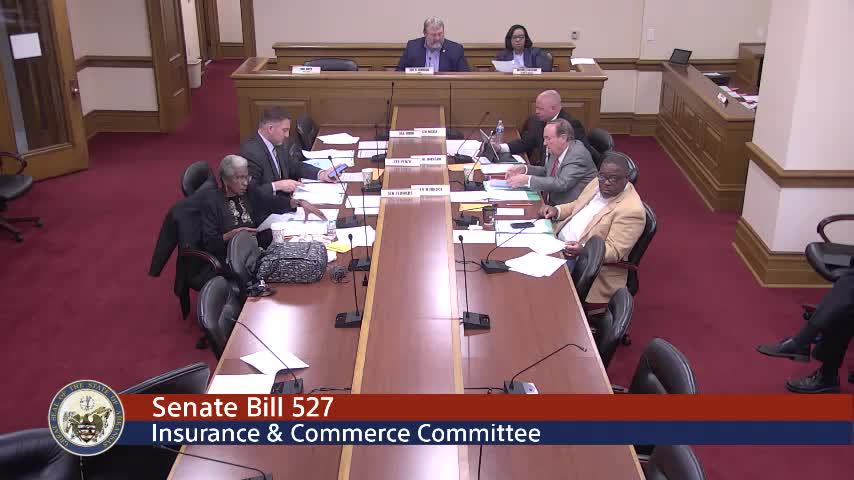
Committee backs bill banning merchant codes that identify firearm purchases, shields local banks
Summary
The Senate panel passed legislation that bars use of an industry merchant code that singles out firearm and ammunition purchases and limits liability for local financial institutions; the bill passed on a voice vote.
The Senate Insurance & Commerce Committee voted to approve legislation that would prohibit payment processors from using a merchant category code to identify firearm or ammunition purchases in Arkansas and would place enforcement and penalty authority with state officials rather than with local banks.
Representative Howard Beatty and Ricky Hill, who spoke at the committee, said the measure aims to stop third-party payment processors from attaching a unique firearm-related code to transactions that could be used to track customers. "This bill bans that code," Hill said, arguing that community banks should not be held liable for codes chosen by out-of-state payment processors.
The bill carves an exception for the bank that merely facilitates debits and credits for a customer transaction and would make a third-party payment processor, not the local bank, the target of any enforcement. Sponsors said the measure restores enforcement authority to the state attorney general and courts and includes a civil fine for violations.
Senators asked whether other industries have merchant codes; sponsors replied that merchant codes exist for many categories, but the bill focuses on the code specific to firearms, accessories and ammunition. Several senators noted similar laws have been enacted in other states.
Motion to pass the bill came from Senator McKee and was seconded by Senator Boyd; the committee approved the bill by voice vote. Senator Murdock and others spoke in support, and senators asked clarifying questions about online transactions and whether codes used by out-of-state processors would still be effective elsewhere.
Ending: The committee returned the bill as passed to the Senate calendar; sponsors said they would coordinate with stakeholders on enforcement mechanics.