Get Full Government Meeting Transcripts, Videos, & Alerts Forever!
Get email alerts on the Medicaid Waiver Pharmacy Rebates topic
No spam. Unsubscribe anytime.
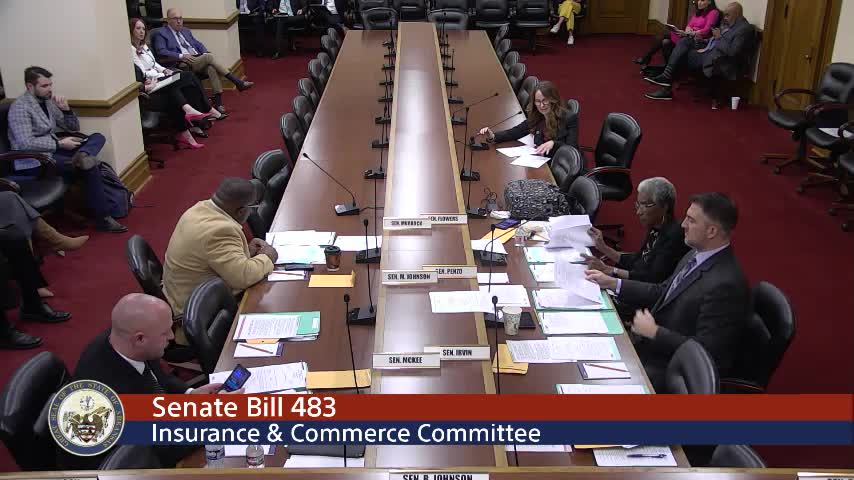
Senate committee reviews Medicaid waiver reauthorization, pharmacy rebate transparency; no vote taken
Summary
Senate Insurance & Commerce members heard a lengthy presentation on reauthorizing the Medicaid waiver that funds the state's "our HOME" program, including proposed changes to pharmacy rebate reporting, a higher medical loss ratio and work/volunteer requirements; sponsor declined to request a committee vote.
Senate Insurance & Commerce members spent more than an hour reviewing the sponsor's proposal to reauthorize Arkansas's Medicaid waiver for the "our HOME" program, including new reporting of pharmacy rebates, a change in the medical loss ratio and language supporting a work-or-volunteer requirement pending federal approval.
Senator Irvin, who presented Senate Bill 5 27, told the committee he would not ask for a vote at this meeting so members could review the proposal during spring break. "I don't intend to ask for a vote on this today," he said, and then summarized the bill's major provisions, including capturing pharmacy rebates for the state and raising the medical loss ratio from 80 percent to 90 percent.
The bill would require private insurers operating in the program to report their negotiated pharmacy rebates so the state could determine whether discounts or supplemental rebates are being applied to lower program costs. John Vincent, chief executive officer of the Arkansas Pharmacists Association, told the committee that those rebates exist in both fee-for-service Medicaid and in private plans and said the draft language aims to bring transparency to negotiated rebates used in the private-plan model.
Janet Mann of the Department of Human Services (DHS) answered questions about the proposed work-and-volunteer language and federal approval. She said DHS is preparing to submit the waiver to the Centers for Medicare & Medicaid Services (CMS) and intends to negotiate terms with CMS; if CMS does not approve a work requirement, DHS would have to amend the proposal. "If the waiver is not granted," Mann said, "then I think it would be DHS's responsibility to come back with amendments and additional items for the work requirement."
Committee members pressed for detail on the medical loss ratio and on how pharmacy rebates would be reconciled. Mann explained that a higher medical loss ratio would require carriers to spend a larger share of premium dollars on medical claims rather than administrative costs, and that any refunds from failing to meet the ratio would be subject to federal/state reconciliation rules.
Senator Johnson and others raised concerns about the volunteer component of the work requirement and asked for clearer definitions and guardrails to prevent potential abuse. Vincent and other witnesses described national examples where lack of transparency led to disputes over whether rebates were being passed through to plans or used elsewhere.
Because the sponsor declined to seek a vote, the committee took no formal action. Senator Irvin said members would have a week to review materials and that DHS and sponsors would provide additional analysis and comparisons to earlier waivers.
Ending: The committee moved on to other agenda items; staff and sponsors agreed to provide supplemental materials on rebate accounting, medical-loss-ratio mechanics and draft operational rules for the proposed work/volunteer provisions.