Get Full Government Meeting Transcripts, Videos, & Alerts Forever!
Get email alerts on the Public Health And Safety topic
No spam. Unsubscribe anytime.
Hemp-derived products debate stalls after agencies warn bill could undermine existing litigation and public-health protections
Summary
Sen. Joshua Bryant’s proposal to regulate hemp-derived cannabinoid products prompted expert testimony and warnings from the Attorney General’s office and public-health officials that the bill’s current text could interfere with ongoing litigation and weaken enforcement against synthetic cannabinoids.
Senate testimony on a bill introduced by Sen. Joshua Bryant (Senate District 32) would have created a regulatory framework for hemp-derived products containing intoxicating cannabinoids, including childproof packaging, manufacturing and testing requirements, age‑restricted sales (21+), and a contingency-based effective date tied to federal litigation over Arkansas’s 2023 ban (Act 629).
Bryant said the intent is to protect children by restricting marketing and requiring testing from accredited laboratories (ISO/IEC 17025 or equivalent) and to remove synthetic cannabinoids from the market while preserving legitimate hemp commerce. The bill would require products to be tested and labeled, impose manufacturing good‑practice standards and restrict sales and marketing to adults.
Multiple agencies urged caution. The Attorney General’s office said it is actively litigating the 2023 ban in the Eighth Circuit and opposed changes that would strike items from the controlled-substance list or otherwise “moot out” current litigation. The Department of Health highlighted public-health risks from unregulated synthetic cannabinoids and warned that removing language from the controlled-substances schedule — or weakening the statute — could allow new, potent analogs (for example, acetate esters such as THC‑O) to proliferate. The Arkansas Tobacco Control enforcement director said the agency prefers an outright ban rather than a regulatory approach because products persist in schools despite enforcement efforts.
Agency witnesses also answered technical questions about the bill’s testing and enforcement provisions: testing would be industry-paid, using accredited labs; manufacturing standards referenced good manufacturing practices; labeling and childproof packaging were among provisions discussed.
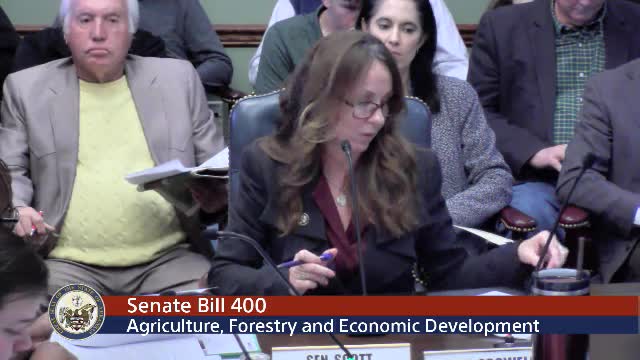
Committee members repeatedly raised constitutional and litigation-related questions. Senator Bryant acknowledged the bill was contingent on the outcome of federal litigation and said he would pull the bill to address drafting concerns, taxation and any unintended impacts on other regulatory boards and enforcement authorities. He asked agencies to confer with him on drafting changes, and committee staff signaled they would allow testimony from multiple agencies prior to any reintroduction.
Outcome: Senator Bryant withdrew the bill from consideration at the hearing to revise language and coordinate with the Attorney General’s office and implementing agencies.