Get Full Government Meeting Transcripts, Videos, & Alerts Forever!
Get email alerts on the Mental Health Identification Program topic
No spam. Unsubscribe anytime.
Committee advances bill to create voluntary "green envelope" identifier for people with serious mental illness
Summary
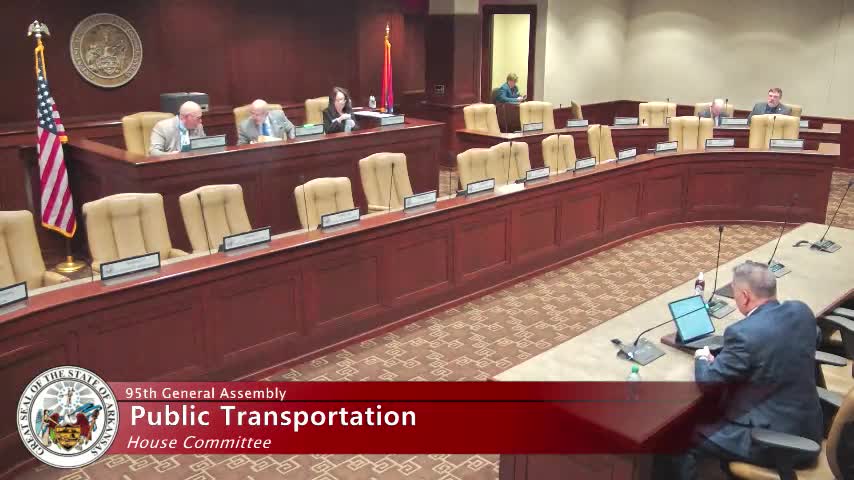
A sponsor told the committee House Bill 1798 would create a voluntary program—similar to a prior "blue envelope" program—to let clinicians notify authorities that a person has a diagnosis that may help law enforcement de-escalate encounters. The bill advanced out of committee by voice vote.
Representative Jason Azarenko, House District 4, presented House Bill 1798, which he said would establish a voluntary "green envelope" program to help law enforcement identify callers or drivers with diagnosed mental illnesses and to give officers information aimed at preventing encounters from escalating.
"Due to the mental illness that the couple suffered, that situation caused a great deal of stress and anxiety. It escalated very quickly for both the couple and the law enforcement officers that were involved," Azarenko said, recounting an incident he used to illustrate the bill's intent. He said a clinician would inform patients about the program and that a diagnosis from a licensed health-care provider would be part of the eligibility process.
Azarenko told the committee the program is intended to be implemented in coordination with existing training for law-enforcement officers and that program materials would be distributed through channels such as agency emails and annual training. He acknowledged concerns discussed during presentation of a prior "blue envelope" proposal, including the privacy risk of an external placard on a vehicle and the potential for targeting individuals who display identifiers.
When committee members asked what qualifies as a mental illness under the program, Azarenko said eligibility would be based on a clinical diagnosis and the expectation that a licensed clinical social worker or other medical provider would communicate program information to the patient before the patient requests the designation from the agency. Committee members also asked whether documentation would be required at application; Azarenko said the bill does not require specific paperwork to be submitted with the application and that clinicians providing the information in advance would be sufficient.
Azarenko said he had discussed the proposal with Sheriff Scott Bradley and that he was not aware of organized opposition; he also said he had not been contacted by state police. The committee heard no public testimony for or against the bill during the hearing and advanced the bill by voice vote after the sponsor closed with a motion to pass.
Why it matters: The bill would create a voluntary mechanism linking clinicians, the licensing agency, and law enforcement to share a diagnostic-based identifier intended to reduce escalation in encounters involving people with mental illness. Supporters cited potential public-safety benefits; the sponsor and others flagged privacy and targeting risks as concerns to consider.