Get Full Government Meeting Transcripts, Videos, & Alerts Forever!
Get email alerts on the Statutory Repeals topic
No spam. Unsubscribe anytime.
Committee clears multiple bills repealing obsolete agency reports
Summary
Members gave do-pass recommendations to a slate of short bills that repeal statutory reporting requirements described as duplicative or unused, advancing them out of committee by voice votes.
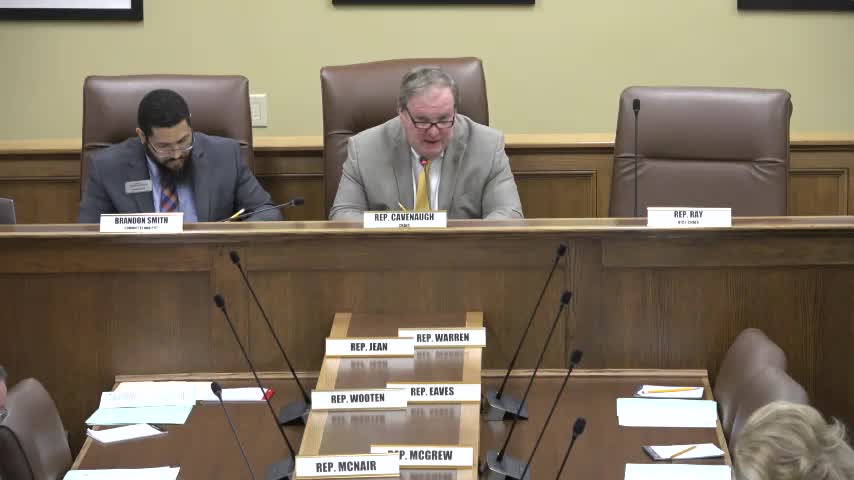
The Revenue & Taxation Committee moved a package of short Senate bills that repeal statutory reporting requirements the sponsors said are no longer used. Representative Frank Kavanaugh presented the bills and said each would repeal a law that requires an agency to submit periodic reports that legislators can request on an as-needed basis.
Kavanaugh described the measures as housekeeping repeals. Bills presented included repeal measures related to: the tax advisory council report (SB379), a DFA report on the Multi-State Tax Commission (SB380), a report from the Arkansas Development Finance Authority concerning capital-access/bond program materials (bill cited as SB382/SB384 in sequence), an annual rural services division report (SB385), and a requirement for occupational licensure entities to submit reports on automatic and expedited licensure (SB387). The sponsor said the reports were duplicate or unused and could be produced on request if lawmakers need the information.
Committee members offered no substantive opposition on the floor; the sponsor closed each presentation and the committee chair called voice votes for passage. Each bill was reported out of committee with a do-pass recommendation. The sponsor congratulated members after each voice vote and moved on to the next repeal.
Because the bills were presented as narrowly scoped repeals and received no public testimony at the hearing, committee discussion focused on the bills' redundancy rather than policy changes. Sponsors and the chair confirmed legislators can request the underlying information directly if needed in the future.