
Ambulance director highlights mobile-integrated health, transfer contract and storage needs in FY26 budget
Get AI-powered insights, summaries, and transcripts
Subscribe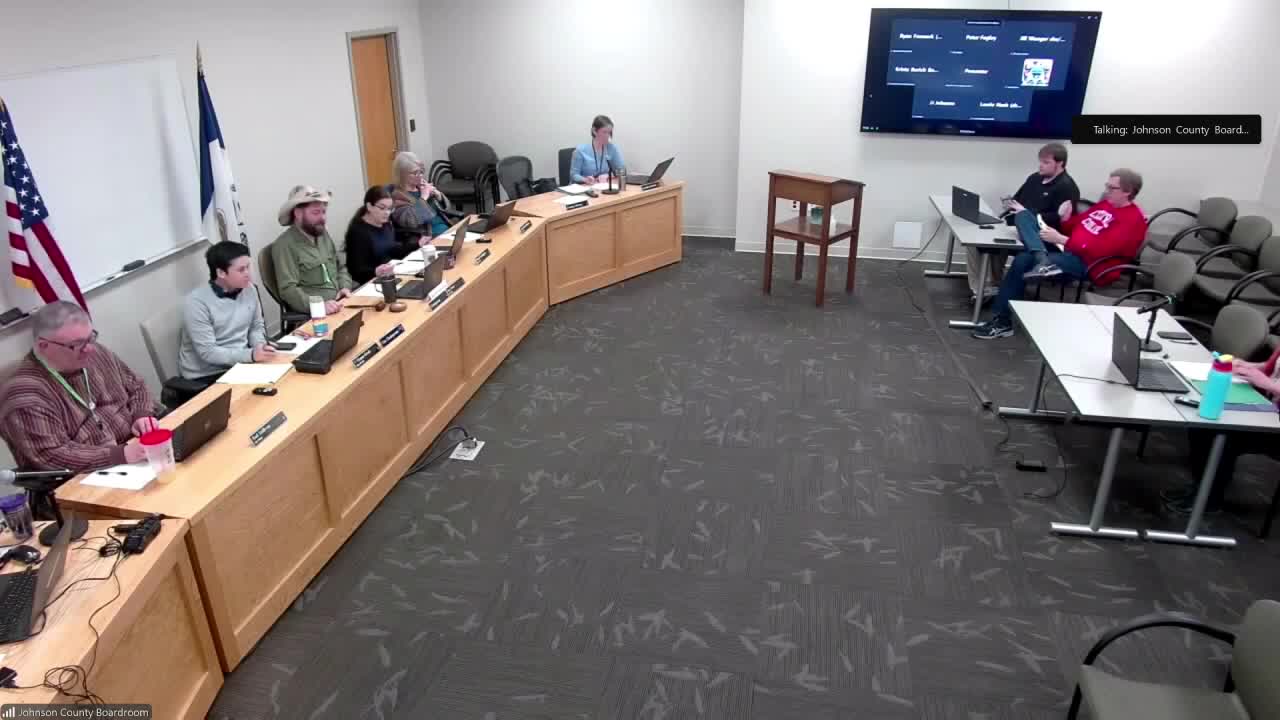
Summary
Ambulance Director Dion Johnson told supervisors that mobile integrated health and a new University of Iowa transfer contract are expanding service and revenue but also increasing fleet storage and supply needs. Staff and board discussed HealthCall technology, Narcan leave-behind kits, and a conservative FY26 spending plan with no new personnel.
Dion Johnson, director of Johnson County Ambulance, presented the ambulance department’s proposed fiscal year 2026 budget on Jan. 6, detailing program growth, new revenue streams and short-term capital and operating needs.
Johnson said two programs from FY25 — a full-time community paramedic for the Mobile Integrated Health program and a transfer contract with the University of Iowa Hospitals and Clinics — are now operational and have measurable effects on call volumes and reimbursement. “Those are both complete,” Johnson said, noting both programs reduce 9-1-1 activations and generate transfer revenue that “pays for itself.”
He reported the mobile-integrated-health pilot had enrolled 50 individuals with more than 100 interactions over six months and said the program shows measurable reductions in emergency utilization. The department also launched a seven-day-a-week transfer truck and said the transfer work will increase call volume but should produce corresponding revenue because insurance or the university is billed.
Johnson outlined FY26 decision-package priorities: HealthCall (a cloud-based patient-care platform to support the mobile-integrated-health continuum of care), additional secure storage for ambulances, medical-supply increases tied to higher call volume, and equipment to standardize eight front-line ambulances (including a Lucas chest-compression device and IV pumps). He asked the board to prioritize storage as a near-term need because fleet storage constraints affect operational readiness.
On community programs, Johnson described a Narcan Leave-Behind initiative in partnership with the Iowa Department of Health and Human Services that will allow providers and the community paramedic to leave intranasal naloxone kits for families and individuals, track counts but not patient identifiers, and report dispensing totals to the state.
Board members questioned staffing projections and equipment needs. Johnson said he had no personnel requests in FY26 because staffing levels had recently been raised and were now stable, though he anticipated 2–3 retirements in the next few years. He detailed vehicle counts (14 9-1-1 ambulances by month-end, five 24/7 units, a transfer truck and ancillary vehicles) and said ambulance storage and vandalism concerns make temporary paid storage necessary; he estimated a $12,000 near-term storage rental to house ambulances until a permanent solution is secured.
Johnson also requested capital funding for one transit-style ambulance to meet transfer demand if fiscally prudent; he said he would be conservative in capital requests this year and adjust future budgets when the transfer program’s revenue fully materializes.
Ending: Supervisors accepted the conservative FY26 approach with no new staffing requests, discussed prioritizing storage and HealthCall in decision-package rankings, and asked staff to reflect conservative revenue and expense projections in subsequent drafts.