Get Full Government Meeting Transcripts, Videos, & Alerts Forever!
Get email alerts on the Public Safety Medical Examiner topic
No spam. Unsubscribe anytime.
Medical examiner seeks new investigator pay tier, cites transport strain and rising autopsy costs
Summary
Johnson County Medical Examiner Clayton Schuman proposed a new MEI 2 classification to improve succession planning and retention after a year of heavy transports to the state office, an increase in accepted cases and higher autopsy-related costs.
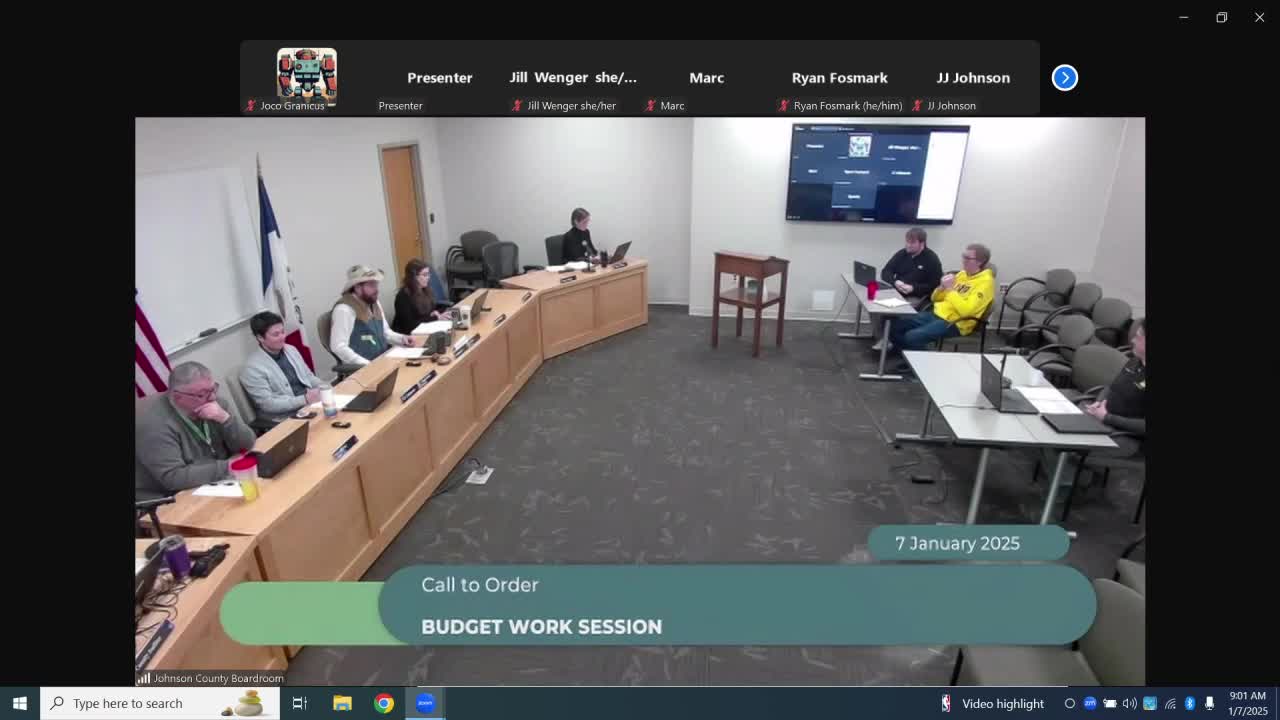
Clayton Schuman, director of the Johnson County Medical Examiner, told the Board of Supervisors on Jan. 7 that his department is proposing a Medical Examiner Investigator 2 (MEI 2) pay grade to help retain experienced investigators and improve succession planning.
Schuman said maintaining the department’s full accreditation from the National Association of Medical Examiners and absorbing transport burdens after a physician left last year have strained staff and vehicles. “We were 1% under our budgeted expenditures and 9% over on our budgeted revenues, so we were able to meet that goal,” he said when summarizing the department’s fiscal performance while describing staffing pressures.
The nut graf: the county medical examiner says limited staffing forced repeated transports of decedents to the state medical examiner in Ankeny last year, increasing overtime and vehicle costs. Schuman proposed creating an MEI 2 designation with a small pay-grade bump as a retention tool; the board discussed the proposal but did not vote.
Schuman described transport impacts after the department lost a physician midyear: some months required weekly trips to Ankeny, with some weeks containing multiple trips. He said the office was “essentially down to 1 vehicle” for transport and that a round trip to Ankeny is about three to three-and-a-half hours. Schuman said those transports increased overtime and vehicle wear, and that the department expects fewer transports in 2025 with the addition of a new deputy medical examiner but that some transports will likely continue.
Schuman outlined staffing and retention challenges: new investigators commonly separate within the first six months; others burn out after three to four years; and after five to six years, board-certified investigators often receive outside offers. The MEI 2 role would be available by application to investigators who meet criteria such as board certification, roughly five years’ internal experience and supervisor recommendation. Schuman said the annual cost for one MEI 2 position is approximately $7,746.70 and that projected additional revenue from normal growth would be about $9,150.
He also reviewed caseload and cause-of-death trends: reported deaths were 924 in calendar 2023 and 930 so far in 2024; accepted cases rose from 442 to 511; Johnson County scene calls increased from 213 to 275; certified suicides rose from 23 to 32; autopsies increased from 25 to 45; and certified opioid-related deaths rose from 10 to 15. Schuman said toxicology-only cases and other categories also changed and that the office will publish more granular breakdowns in its annual report.
Supervisors asked about certification and training costs; Schuman said the required registry and board certification costs are already covered historically by the office and that board certification is required for MEI 2 eligibility. He noted the department’s accreditation history — first accredited in February 2019 — and said accreditation requires annual data submissions and a site inspection every four years.
The board asked questions but took no formal vote on the MEI 2 decision package during the Jan. 7 work session. Schuman’s decision packet was presented as a proposed FY2026 budget item; the board indicated it would consider it as part of the broader budget process.
Ending: Schuman closed by reiterating that the MEI 2 role is intended as a modest, targeted retention tool and that the department will continue to submit its accreditation data in February. Supervisors thanked Schuman for the report and had no immediate vote; further action will occur during the FY2026 budget deliberations.