Get Full Government Meeting Transcripts, Videos, & Alerts Forever!
Get email alerts on the Social Services Budget topic
No spam. Unsubscribe anytime.
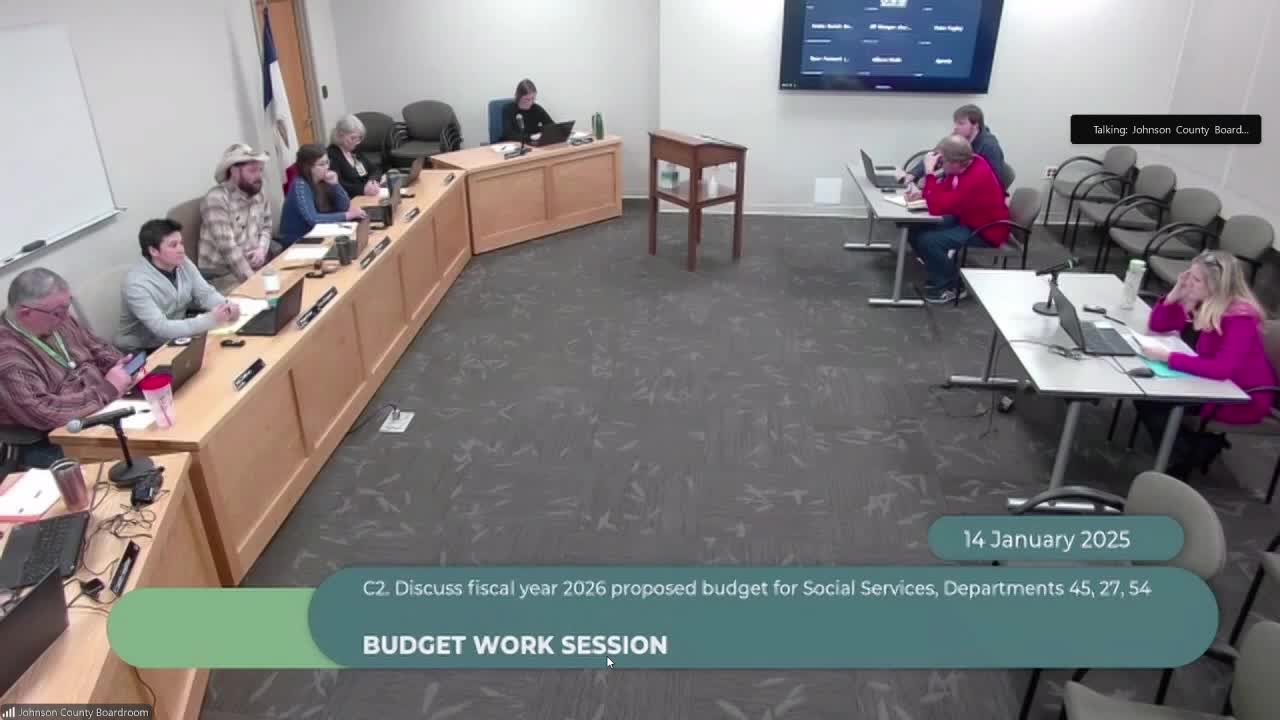
Social services staff warn of persistent demand, juvenile‑detention costs and changing state funding
Summary
Social services staff told the supervisors that demand for general assistance and navigator services remains high, juvenile detention and shelter placements are driving costs up, and state reorganization of some programs creates fiscal uncertainty for FY26.
Social services staff described continuing high demand for county assistance programs and flagged increased juvenile detention costs, changes in state funding and the phasing out of some categorical allocations.
Lynette, social services staff, told the Board of Supervisors the department is shifting to a scaled‑back general assistance program that took effect in November and is pursuing an electronic application and records system next year to increase efficiency. “We continue to see a really high demand for services,” Lynette said, adding that the department is booking clients out for appointments for up to two weeks.
Why it matters: county social services pay for court‑related juvenile costs, short‑term shelter care, county general assistance and other mandated services. Increases in detention and shelter use and changes to state funding streams can drive county costs higher.
Key points
- Service demand and case management: Lynette said navigators and the aging specialist continue to see increasing demand, and community support services outside county government are limited and often siloed, complicating holistic casework.
- Juvenile detention costs: The department reported an uptick in juvenile detention and shelter placements since changes in juvenile justice practice (including limitations on adult placements). Lynette asked the board to consider detention alternatives and noted that placement delays raise county costs because youth sometimes remain in local detention while awaiting available beds elsewhere.
- ADI/detention alternative discussion: Supervisors and staff discussed the past local Detention Alternative (ADI) program, which county staff ended because of cost and staffing issues; Lynette said she has data on the program’s earlier effect and can share it with supervisors.
- Funding uncertainty from the state: Lynette said some state allocations, including decategorization or child‑welfare transfers, are uncertain or being phased out; empowerment and other reorganizations are under review and may affect local revenues.
- Budget requests and adjustments: Lynette requested a $35,000 increase to the juvenile justice and delinquency prevention (JJYD) budget (to bring it to $350,000) and modest technology items (two laptops and three tablets) to support field work and in‑lobby electronic general assistance intake.
- Mandates and cost recovery: The county must provide certain services under Iowa code and covers some DHS administrative costs; Lynette noted partial state reimbursement (local administrative expense) covers roughly one third of these costs.
Outlook and next steps
Lynette said staff will continue implementing the electronic application system with IT, supply the board with ADI program data on outcomes and costs upon request, and monitor state reorganization and expected grant or legislative allocations. Supervisors directed staff to include options for targeted funding for food and shelter during the upcoming budget votes, and finance staff noted debt and bonding choices across county programs could affect available general fund capacity.
Ending
Supervisors asked staff for analysis and data to support decisions on detention alternatives, shelter funding and emergency assistance programs as budget hearings proceed.