Get Full Government Meeting Transcripts, Videos, & Alerts Forever!
Get email alerts on the Hb 3835 Residential Treatment Restraint Seclusion topic
No spam. Unsubscribe anytime.
Heated hearing on House Bill 3,835 exposes split over out-of-state placements and restraint rules
Summary
A packed House committee hearing on House Bill 3,835 brought sharply divided testimony. Supporters say the bill will restore treatment capacity and clarify when restraint or seclusion is wrongful; opponents say it weakens safeguards, reduces transparency and risks greater harm to children, especially those with disabilities.
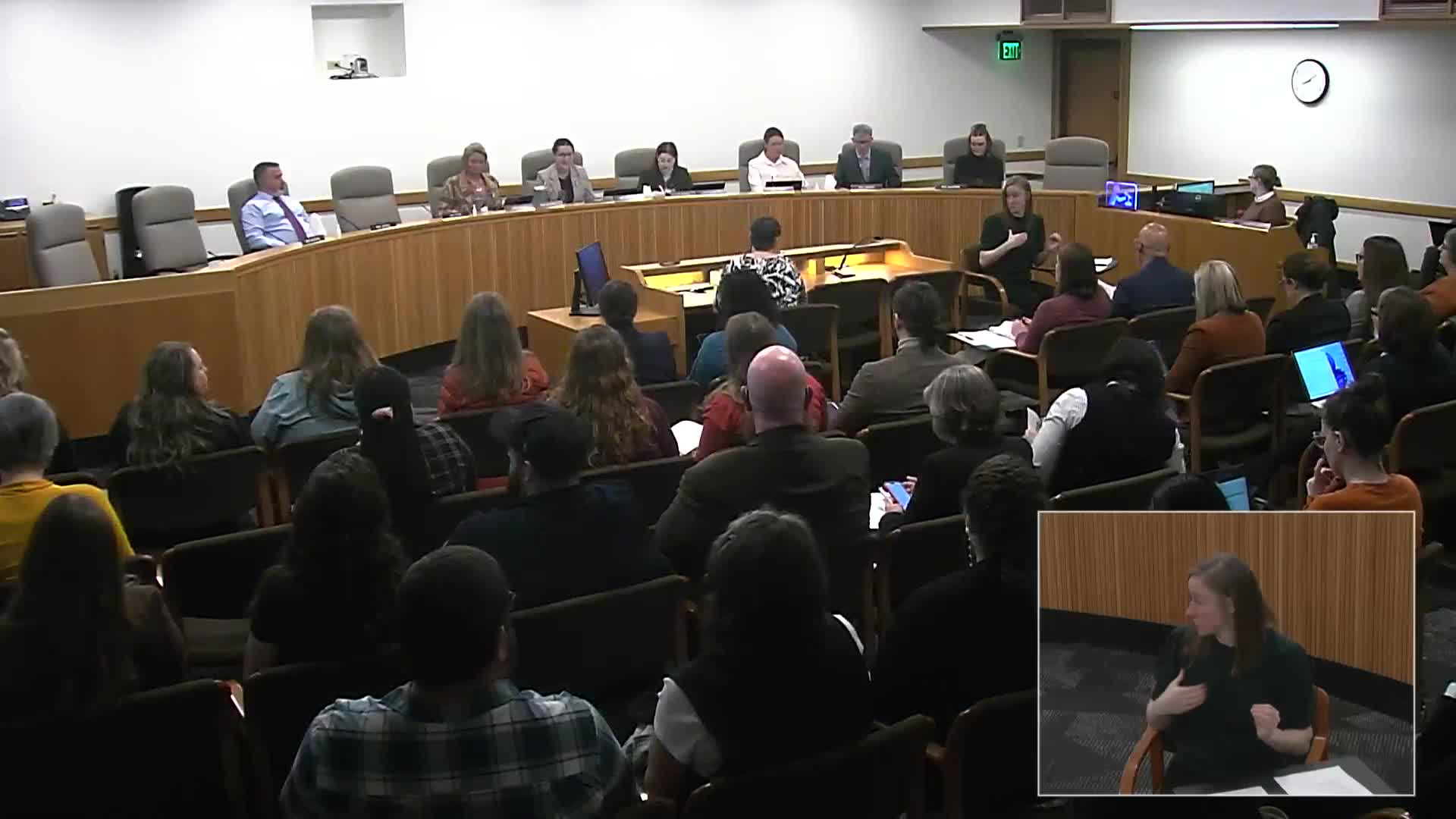
The House Committee on Early Childhood and Human Services opened a lengthy public hearing on House Bill 3,835 on March 20, drawing more than 60 people to testify and sharply divided testimony about how Oregon should care for children with high behavioral‑health needs.
Representative Rob Nosse, one of the bill's legislative sponsors, described Oregon as “among the worst in the nation for youth access to behavioral health services” and said HB 3,835 offers “practical solutions” with “strong safeguards” to keep children safe while expanding access to treatment, including placements outside the state when clinically necessary.
Opponents, including Senator Sarah Gelser‑Blueen, told the committee the bill would “eliminate laws protecting kids in care, kids at school, and kids with disabilities,” and criticized provisions that, they say, shift oversight to executive-branch rulemaking and reduce public transparency. “House Bill 3,835 will allow ODHS to hide critical information from the public,” Gelser‑Blueen said, citing past litigation, injury payouts and what she described as the department’s uneven oversight record.
Agency summary and the Dash‑1 amendment
Michelle Pfeiffer, legislative coordinator for child welfare at ODHS, walked the committee through a dash‑1 amendment posted to OLIS the day before the hearing. Significant changes in the amendment included:
- Removing two clarifying subsections that had unintentionally increased confusion about whether an act constitutes wrongful restraint or wrongful seclusion; - Allowing school personnel to intervene without immobilizing a child when necessary to break up a physical fight or prevent serious harm, aligning the school standard with child‑care settings; - Deleting a prior requirement that seclusion rooms in schools be equipped with operating video recording equipment after a racial‑equity review raised concerns about disparate impacts; - Restoring whistleblower protections for reports of violations beyond child abuse; - Tightening out‑of‑state placement controls: adding a requirement for an in‑person inspection before placement, requiring a multidisciplinary team to monitor progress, mandating in‑person contact with the child at least every 15 days, instructing ODHS to ensure the child understands rights and how to report violations, changing notice timing to “prior to or as soon as possible after” a placement, and making all out‑of‑state placements subject to court approval; - Banning placements in intermediate care facilities (ICFs) for these children; and - Removing “consent to care/consent authority” sections of the introduced bill (sections 42 and 45).
Pfeiffer also told the committee quarterly and annual reports would be provided to the legislature, and that existing reporting requirements on the use of restraint and seclusion in schools and child‑care settings would continue alongside new reports tied to exceptions for in‑state and out‑of‑state placements.
Supporters: workforce, access and clarifying rules
Supporters included legislators across parties, child‑behavior providers and agency staff who said the bill would reduce a “culture of fear” among staff and foster parents, stabilize the workforce and increase access to specialized treatment. Anna Day, executive director of Oregon Community Programs, said treatment foster care providers issued more than 120 placement denials in February 2025 alone; Anna Williams, executive director of the System of Care Advisory Council, described rising staff turnover—from roughly 13% before the statutory changes in earlier sessions to nearly 50%—and increased staff injuries and unplanned discharges.
Adam Rodakowski, director of foster care at Greater Oregon Behavioral Health, said access to residential treatment placements has dropped dramatically since 2020 and that “without it, programs like treatment foster care and other community‑based care are not able to meet the needs of our most vulnerable youth.” Anna Day and other provider witnesses argued clearer statutory definitions of what constitutes wrongful restraint or seclusion would reduce unnecessary investigations and encourage foster parents and staff to accept higher‑needs youth.
Several front‑line ODHS workers and caseworkers gave specific examples where providers or hospitals concluded an out‑of‑state placement was medically necessary to save a child’s life. Aubrey Kelly, an ODHS licensing coordinator, described a case in which a child admitted to an Oregon children's hospital was placed in an Arizona program after an in‑person licensor review and weekly monitoring; the child, Kelly said, “went from dying to thriving” and returned to Oregon after 11½ weeks.
Opponents: weakening safeguards and transparency concerns
Opponents included disability advocates, civil‑rights lawyers, former federal officials and parents who described seclusion or restraint experiences they called traumatic. Melanie Fontes Rainer, a former national civil‑rights official, warned that the bill’s changes risked violating federal civil‑rights requirements and said the measure “will make it harder for the state of Oregon to prevent child abuse.” Dr. Kim Knackstedt, who has researched seclusion and restraint, told the committee HB 3,835 “strips protections” and reduces data collection, accountability and oversight that have allowed improvements in other states.
Kristy Rees of FACT Oregon and representatives of the Developmental Disabilities Coalition said the bill weakens protections for children with intellectual and developmental disabilities and would invite inconsistent application of restraint and seclusion rules. Operation Luna, a volunteer investigative group, and several former residents gave testimony describing alleged abuse in some out‑of‑state programs and urged the committee not to expand placement authorities.
Questions and clarifications
Committee members asked repeatedly about investigation timelines, reporting pathways and whether the amendments preserved investigations of suspected child abuse. Legislative Council clarified that the dash‑1 amendment maintains investigations for child abuse under the cited statutory definitions; it also said a failure by a licensed child‑care entity to protect a child from abuse could be treated as a form of neglect that would be investigated.
Rep. McIntyre and others asked whether the bill would end investigations; Anna Williams answered no, saying the bill would not stop investigations but would allow some incidents that do not meet the statutory criteria for child abuse to be handled under licensure, human‑resources or human‑rights processes aimed at improvement and retraining rather than an automatic child‑abuse finding. Michelle Pfeiffer said the bill does not change the Oregon Administrative Rule 60‑day investigation timeline.
Public testimony and next steps
More than 60 people had signed up to testify; the committee limited speaking time to two minutes per person for the March 20 session and carried over the remainder of the public testimony to a continuation on March 25. No committee vote on HB 3,835 occurred on March 20; the hearing remains in committee. The dash‑1 amendment is on OLIS and will be part of the ongoing record as the committee continues to accept written and oral testimony.
Ending: The committee acknowledged the emotional weight of the testimony and the technical complexity of the bill. Members asked staff and Legislative Council to provide additional clarifications; further hearings and written submissions were scheduled so the committee could review more testimony and technical analysis before any vote.