Get Full Government Meeting Transcripts, Videos, & Alerts Forever!
Get email alerts on the Labor And Business Rideshare topic
No spam. Unsubscribe anytime.
Senate committee advances rideshare driver protections bill to rules after informational hearing
Summary
After an informational hearing March 20, the Senate Committee on Labor and Business moved Senate Bill 11‑66—intended to set minimum compensation, appeal rights for deactivations, paid sick time and other protections for rideshare drivers—to the Rules Committee without recommendation, citing the bill’s complexity and need for more work.
Salem, Ore. — The Senate Committee on Labor and Business advanced an expansive rideshare-worker bill to the Senate Rules Committee on March 20 after an informational hearing that drew drivers, union organizers and company representatives.
Senate Bill 11‑66, sponsored by Senator Jama and Representative Sosa, would require transportation network companies (TNCs) to pay minimum compensation rates to drivers, establish written policies and an appeals process for account deactivations, create minimum paid sick time for TNC drivers, direct the Bureau of Labor and Industries (BOLI) to contract with a nonprofit to operate a drivers’ resource center, and vest BOLI with enforcement authority. The bill as presented declares an emergency and sets an effective date of July 1, 2025.
The bill’s sponsors and drivers said the measure aims to raise earnings and add procedural protections for people who drive for services such as Uber and Lyft. “We deserve a living wage,” said Stephanie King, a Portland‑area full‑time rideshare driver, describing multi‑hour shifts, lost bonuses and a roughly $1,600 monthly income drop she said resulted from company changes. Nathaniel Hudson Hartman, an organizer with Drivers Union Oregon, told the committee: “No worker should ever have to choose between their health and their income.”
Why it matters: The proposal addresses how algorithmic pricing, incentives and company appeals processes affect driver livelihoods across Oregon. Supporters said minimum compensation and clearer deactivation appeal rights would reduce arbitrary terminations and raise standards for drivers; opponents warned higher mandated pay could raise fares, reduce demand and limit service availability in some communities.
During the informational hearing, industry and platform representatives urged more study and a collaborative working process. Zahid Arab, testifying for Boomer Technologies, said the compensation rates in the bill are “among the highest in the country” when cost of living and insurance are included and warned of higher fares and reduced access for low‑income riders. Marissa Cade, representing Lyft, said Lyft would participate in a work group to develop an Oregon‑specific approach. Scott Burge, a longtime Uber driver and former mayor of Scappoose, offered a back‑of‑the‑envelope comparison he attributed to his calculations: for a representative Portland‑to‑airport trip without surge, a driver would receive roughly $12.70 under current Oregon pay, about $23 in nearby Washington State, and, he said, about $32 under the bill; riders’ fares would correspondingly be higher. Burge characterized his numbers as rough estimates supplied to illustrate the bill’s potential impact on pricing and driver behavior.
Committee members and witnesses said the measure draws on policies from other states — committee staff cited Colorado and Washington as models for various provisions — but is not an exact replica of any single state law. Questions during the hearing also touched on whether a statewide framework would preempt local rules; presenters and company representatives said they expected local jurisdictions such as Portland to be stakeholders in any statewide policy discussion.
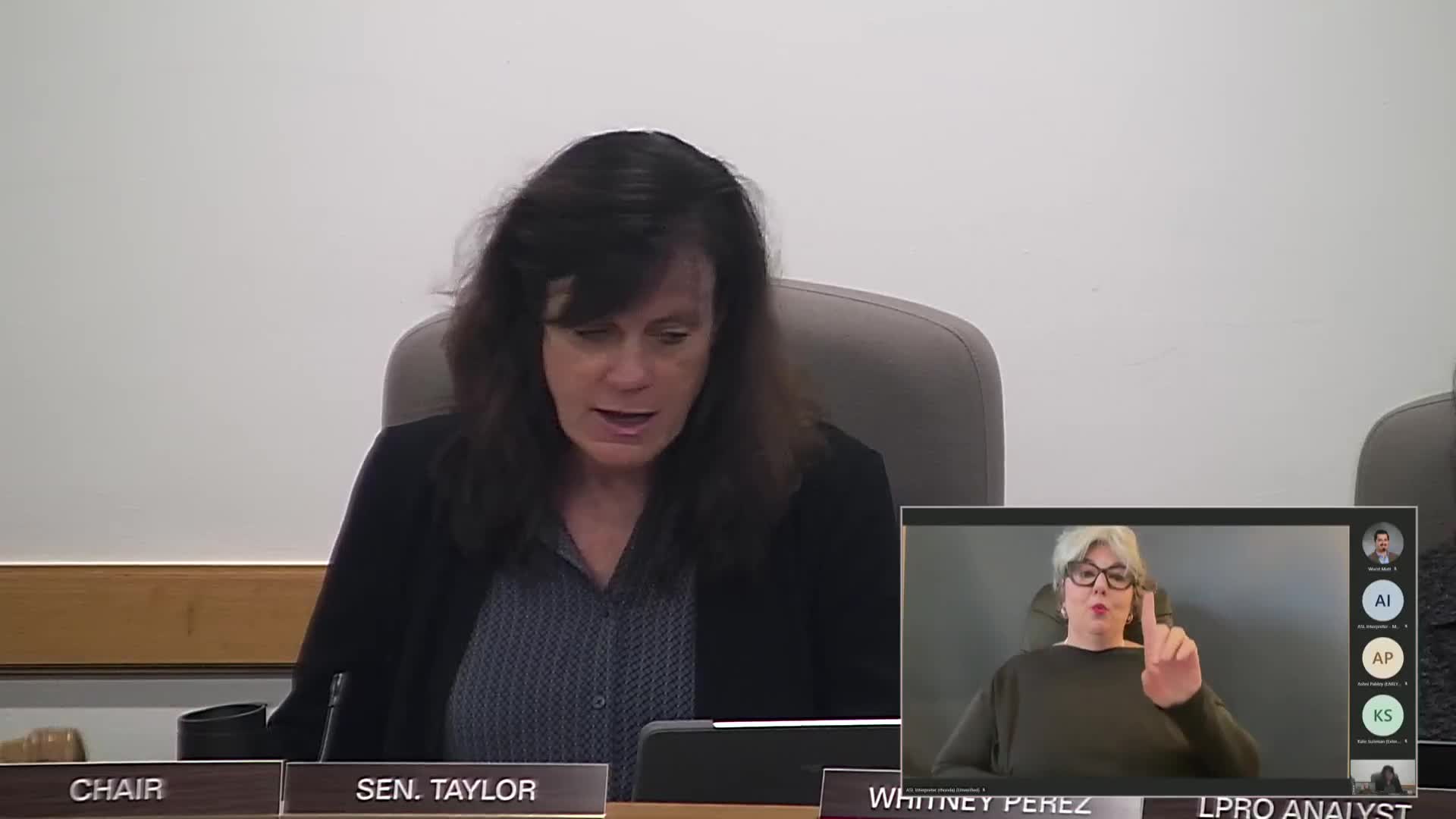
Action and next steps: In a work session later the same day, the committee voted to move SB 11‑66 without recommendation back to the Senate President, requesting re‑referral to the Senate Committee on Rules. Vice Chair Bonham moved the motion; the chair called for objections and, seeing none, announced the motion passed without a roll call. Committee members said the Rules Committee was an appropriate place for additional technical work and stakeholder negotiation given the bill’s scope.
Committee members signaled several issues they intend to track as SB 11‑66 proceeds: the interplay between any new minimum pay and drivers’ independent contractor status; enforcement authority and penalties under BOLI; how deactivation appeals would operate in practice; and potential consumer impacts if fares rise. Chair Taylor said she would watch closely whether the bill changes worker classification and how affordability and access for smaller communities would be preserved.
Supporters and opponents both said they were open to a negotiated working group or further study. Several witnesses urged a process that includes drivers, local governments and companies so changes are tailored to Oregon’s mix of urban and rural markets. The measure remains subject to revision and further committee consideration if referred back from Rules.