Get Full Government Meeting Transcripts, Videos, & Alerts Forever!
Get email alerts on the Campus Safety topic
No spam. Unsubscribe anytime.
Bill to refine campus Title IX reporting draws mixed praise from coordinators
Summary
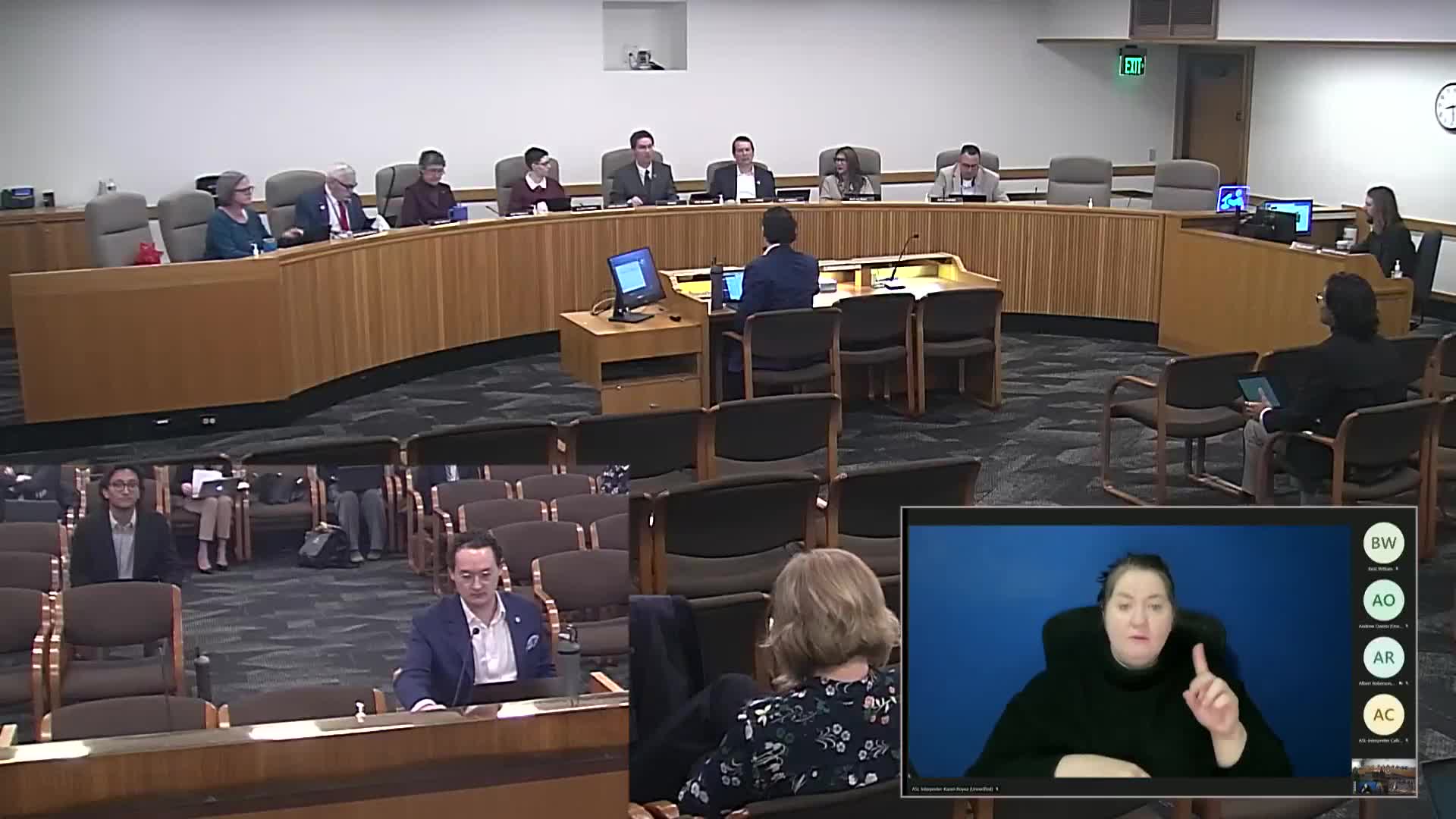
The House Committee on Higher Education and Workforce Development heard testimony March 19 on HB 3,731, a bill intended to refine statewide reporting on sexual-misconduct allegations and better capture the work of campus Title IX coordinators.
House Bill 3,731, a follow-up to Oregon’s 2023 campus-survivors legislation, was heard March 19 by the House Committee on Higher Education and Workforce Development. Supporters told the committee the bill refines requirements for public reporting on sexual-misconduct allegations to include incidents involving people who are not students or employees and to add a narrative section allowing Title IX coordinators to explain case closures, supportive measures and local context.
Daniel Moltke, chief of staff to Representative Hartman, testified for the bill and said the proposal grew from conversations with campus Title IX coordinators after the first round of statutorily required reporting revealed wide discrepancies in reported counts. "We can't address a problem that we don't fully understand," Moltke said, urging the committee to support HB 3,731 with a forthcoming dash-2 amendment that he said would provide technical fixes and flexible reporting categories.
The bill would refine reporting categories into three groups — allegations by (1) students, (2) students or employees, and (3) others — and would permit institutions to explain case-closure reasons and list the types of supportive measures offered. Moltke said institutions would have until the 2025–26 academic year to adapt to the changes except that the narrative option could be used sooner.
Albert Roberson, associate vice president for equity and compliance and Title IX coordinator at Portland State University, thanked Representative Hartman's office for collaboration and described why his office could not formally support the bill as filed. Roberson said the existing reporting template did not allow coordinators to convey the investigative and supportive work they provide, and he recommended forming a work group of regional Title IX coordinators to refine amendments, improve procedural clarity and ensure public reports accurately reflect processes and outcomes. "Capturing the depth and nuance to these experiences in a simple table format limited to numerical data does not reflect the scope of our efforts," Roberson said.
Committee members asked whether the bill also addressed prevention and awareness; Moltke said the current bill focuses on data and reporting so the legislature can better understand the problem before directing further prevention initiatives. Moltke and Roberson both told the panel they continued to work toward technical changes in a dash-2 amendment; Roberson suggested the work group as a forum for that collaboration.
The committee closed public testimony on HB 3,731 with no formal vote taken on the floor that day. The bill’s sponsor team indicated they anticipated a dash-2 amendment to resolve technical issues and expected to continue coordination with regional Title IX staff.