Get Full Government Meeting Transcripts, Videos, & Alerts Forever!
Get email alerts on the Higher Education Policy topic
No spam. Unsubscribe anytime.
House passes SB1 after hours of debate over DEI, tenure and campus policy
Summary
After extensive floor debate and multiple failed amendments, the Ohio House passed Senate Bill 1, the Advance Ohio Higher Education Act, 58–34. Proponents said the bill protects students and academic neutrality; opponents said it curtails academic freedom, worker rights and scholarships and will harm recruitment and public health training.
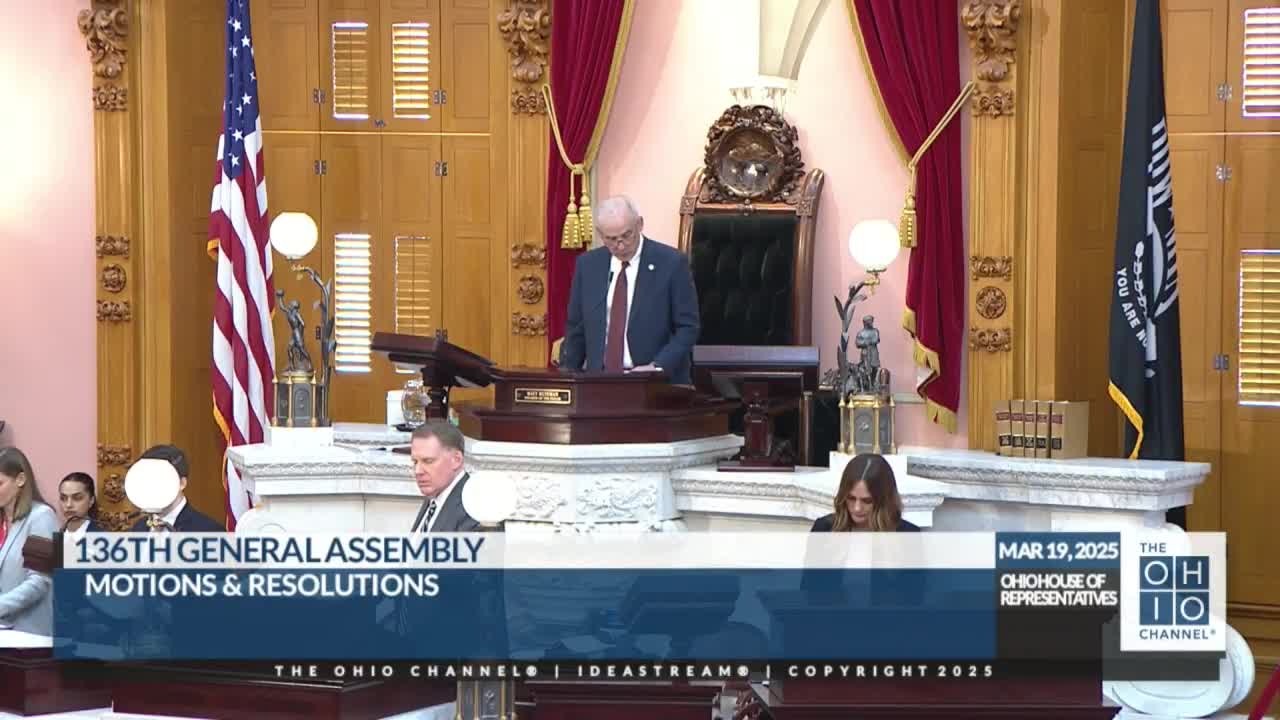
Senate Bill 1, the Advance Ohio Higher Education Act, passed the Ohio House 58–34 on a roll-call vote after several hours of floor debate and repeated attempts to amend or table provisions.
Supporters of the bill argued it will protect students from compelled ideological instruction and restore what they called neutrality in higher education. Representative Young, sponsor of the House version, told the chamber that the bill seeks to “reclaim what made DEI effective” and to focus higher education on “learning, not activism.” He asked colleagues for a “passing of this bill.”
Opponents said the bill attacks academic freedom, removes protections and programs that help recruit and retain students and faculty, and weakens workforce pipelines (notably in medicine and social work). Representative Simani said SB1 will “devastate the state's economy by shrinking our workforce” and warned medical training could be impaired if instruction on social determinants of health or cultural competency is curtailed. Representative Byrd and other opponents said the bill ‘‘guts’’ programs serving first‑generation students, veterans and other underrepresented groups.
The bill drew extensive amendment activity on the floor. Representative White offered amendment No. 292; Representative Tims offered amendment 0295; Representative Brennan offered amendment 1360305; and others proposed amendments that sponsors and supporters characterized as re‑opening committee work. Multiple motions to lay amendments on the table succeeded during debate. The first recorded tabling vote on an amendment was 56 affirmative, 36 negative; later tabling votes recorded 61–30 and 61–31, among other roll calls. On final passage the roll call recorded 58 affirmative votes and 34 negative votes, and the clerk declared the bill passed and entitled.
A major legal issue raised on the floor was whether publicly administered race‑ or identity‑targeted scholarships or hiring preferences are now legally permissible following the U.S. Supreme Court’s Students for Fair Admissions decisions and related federal equal‑protection analysis. Representative Williams (supporter) noted the attorney general’s legal view that public universities administering race‑based scholarships would likely trigger Fourteenth Amendment issues and suggested existing privately funded scholarships that specify race be phased out or administered differently to avoid state action problems.
Supporters emphasized provisions they said preserve classroom discussion while restricting institutional positions and mandatory DEI trainings or orientations. Opponents disputed that reading and highlighted language they said would limit course content, curtail faculty collective bargaining (including restrictions on striking and negotiating over tenure and retrenchment), and remove or phase out certain scholarships. Several speakers cited testimony from students and campus groups describing personal harms; other speakers described faculty and institutional concerns about micromanagement and academic career impacts.
The debate included extended personal testimony from members on both sides. Representative Williams described his own background and argued the bill protects academic neutrality; Representative Brownlee, Representative Simani and others described public‑comment and constituent opposition and urged a no vote.
With the passage recorded, the House approved the bill’s title and sent the enacted text forward in the legislative process.
Why it matters: SB1 touches university hiring, curriculum expectations, campus trainings, scholarship rules and faculty bargaining rights — areas that affect students and employees across Ohio’s public higher education system. Supporters say the measure increases intellectual neutrality and student protections; opponents say it reduces institutional autonomy, endangers recruitment, and will have downstream effects on workforce development and public‑health training.
The legislature’s action now shifts contested policy and legal questions — including how public institutions must adapt private scholarships and how courts interpret state actions — into implementation and, potentially, litigation.
Votes at a glance (excerpt): Final passage — SB1: 58 yes, 34 no.