Get Full Government Meeting Transcripts, Videos, & Alerts Forever!
Get email alerts on the Radiology Supervision topic
No spam. Unsubscribe anytime.
Committee debates supervision rules for radiologic technologists; proponents seek virtual direct supervision
Summary
Substitute House Bill 1546 would permit general (including remote) supervision for diagnostic, therapeutic and MRI radiologic technologists and exempt IV contrast procedures from the statute’s direct‑supervision requirement, subject to telemedicine compliance and on‑site trained staff.
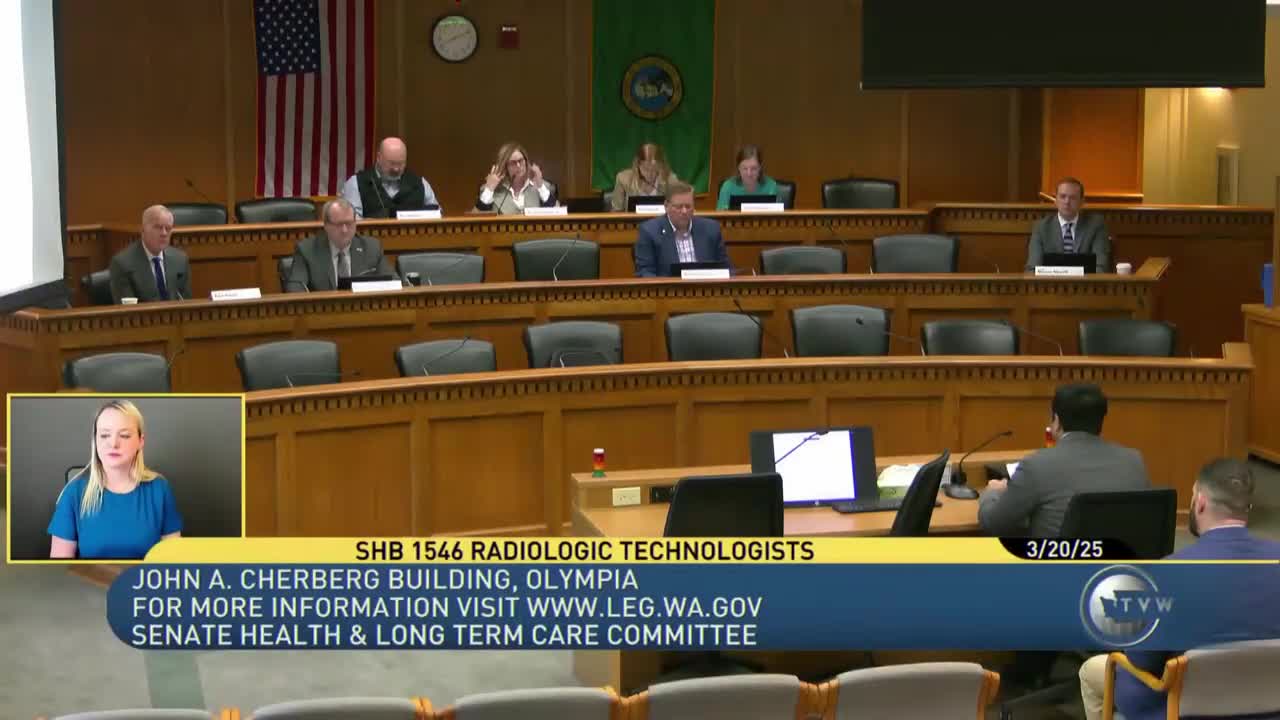
Substitute House Bill 1546 was presented to the Senate Health and Long Term Care Committee with staff explaining the bill adds a definition of “general supervision” and exempts IV contrast procedures from the existing direct‑supervision requirement for diagnostic, therapeutic and MRI radiologic technologists. Committee staff Rohan Bhattacharjee said the bill defines general supervision as care furnished under the overall direction of a licensed physician who need not be physically present but is on call, available for consultation, or able to respond to on‑site patient care needs; remote real‑time audiovisual supervision must comply with telemedicine rules and an appropriately trained licensed practitioner must be on‑site to manage adverse events.
Representative Leisha Partially, the prime sponsor, told the committee the bill would help address workforce shortages by enabling virtual general supervision and allow leveraging fewer radiologists to cover more sites. Radiology industry testimony showed mixed views: physician testifiers and independent radiology practices asked for a definition of “virtual direct supervision” and for language ensuring on‑site clinical staff have requisite training to handle adverse events and that physicians be within a reasonable response time, especially outside critical access exceptions. The Washington Association of Nurse Anesthesiology said it was neutral but supportive of conversations; the Washington Academy of Physician Assistants supported the version on the table and asked the committee to avoid adding time/distance limitations that could reduce access in rural areas.
Witnesses emphasized patient safety guardrails: proponents repeatedly said trained on‑site staff must be present to recognize and manage reactions to IV contrast and regulators should clarify telemedicine and supervision language. Public sign‑in tallies announced by committee staff were 4 pro, 93 con and 3 other.