Get Full Government Meeting Transcripts, Videos, & Alerts Forever!
Get email alerts on the Greenhouse Gas Inventory topic
No spam. Unsubscribe anytime.
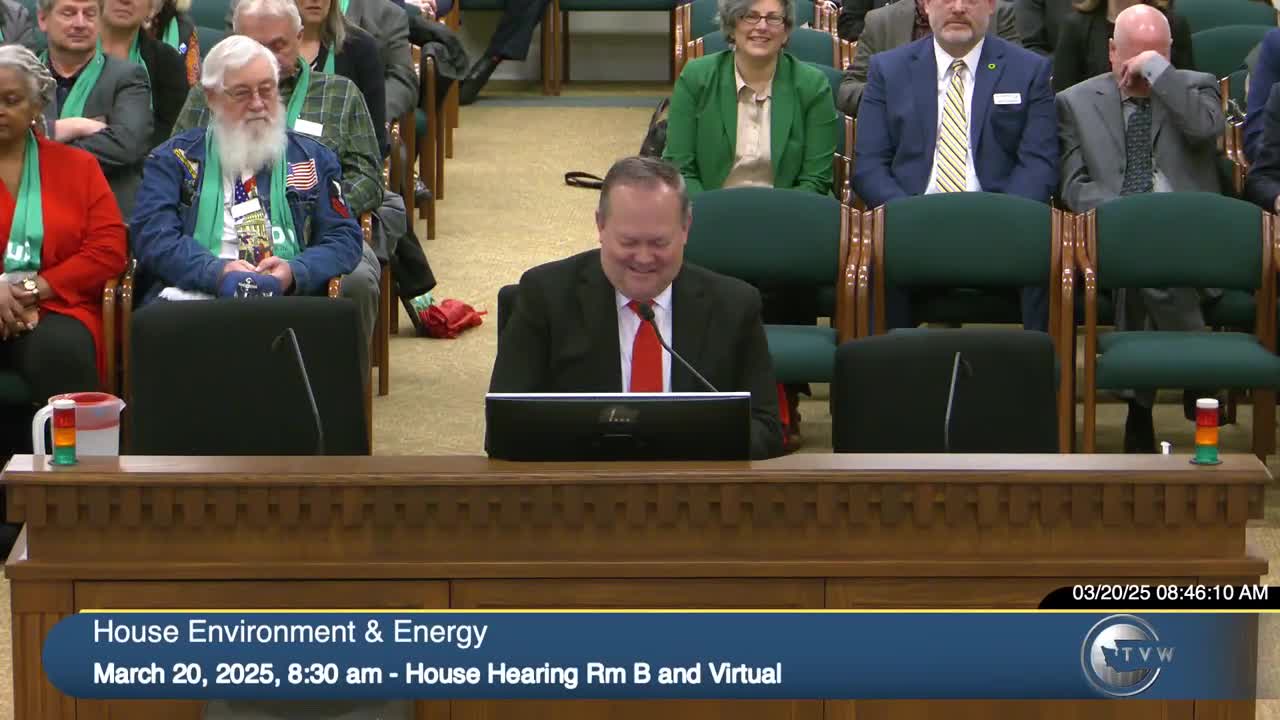
Committee hears bill to make state greenhouse‑gas inventory annual, not biennial
Summary
Senate Bill 5036 would require the Department of Ecology to publish the statewide greenhouse‑gas inventory annually by Dec. 31 rather than every two years.
A bill to require the Department of Ecology to publish Washington’s greenhouse‑gas inventory annually rather than every two years was presented to the Environment & Energy committee, with proponents saying more frequent data is essential for timely policy decisions and agency staff saying implementing annual publication is feasible with existing plans and additional staff support.
Why it matters: Policymakers, utilities and stakeholders use the inventory to evaluate progress toward statutory emission limits and programs including the Climate Commitment Act; testimony at the hearing said current data lags (Ecology has most recently published through 2021) make it harder to assess which policies are working.
Senate Bill 5036 would change an existing statutory requirement for biannual reporting (on even‑numbered years) so the Department of Ecology issues the greenhouse‑gas inventory each year by Dec. 31 and would add language stating that tracking and reporting are part of policy leadership and accountability under the state emissions limits law.
Sponsor State Senator Matt Behnke said the bill was "an easy, simple bill" intended to deliver "good timely data equals good decisions." He said Ecology’s current published dataset lag—examples cited by witnesses showed the 2021 update released in 2025—limits lawmakers’ ability to evaluate the effectiveness of large programs and budget decisions.
Multiple witnesses supported the measure. Dakota Manley, representing the Washington State Young Republicans, said annual reporting would provide more responsive and actionable data for businesses. Todd Myers of the Washington Policy Center urged timely datasets and said the current lag reduces the data’s usefulness for near‑term policy choices. Kira Domer, a Lake Washington High School senior, said annual publication would improve transparency and accountability and help track programs such as the Climate Commitment Act and the Clean Fuel Standard.
Joel Creswell, program manager for the Climate Pollution Reduction Program at the Department of Ecology, provided technical and implementation feedback and told the committee Ecology does not anticipate insurmountable barriers to annual reporting. Creswell said many regulated entities already submit annual reports and that the agency combines those with EPA datasets to produce the statewide inventory. He noted that some sectors already have shorter lags—the electricity sector relies on fuel‑mix datasets from the Department of Commerce that allow electricity emissions to be reported with a two‑year lag—and that the legislature provided funding in 2023 to expand Ecology’s inventory team and tools to reduce overall lag.
Committee members asked how Ecology would obtain corporate and facility data, how the agency would safeguard against misinterpreted or premature figures, and whether additional safeguards are needed to ensure accuracy. Creswell said the data sources the agency uses are routinely reported and that EPA publishes datasets annually; Ecology’s fiscal note reflects staff and implementation costs for annual reports. He added that while the inventory is inherently retrospective, the agency plans to reduce lag over time and already produces less‑lagged electricity‑sector figures.
What the committee did: The bill was heard; no final vote was taken. Supporters urged passage to improve decision‑making; Ecology indicated annual publication is feasible but that reducing lag across all sectors is a multi‑year effort.
Ending: The hearing closed with no action taken; staff and stakeholders will continue technical discussions about implementation and fiscal impacts.