
Panel approves option for remote statewide tests for online students
Get AI-powered insights, summaries, and transcripts
Sign Up Free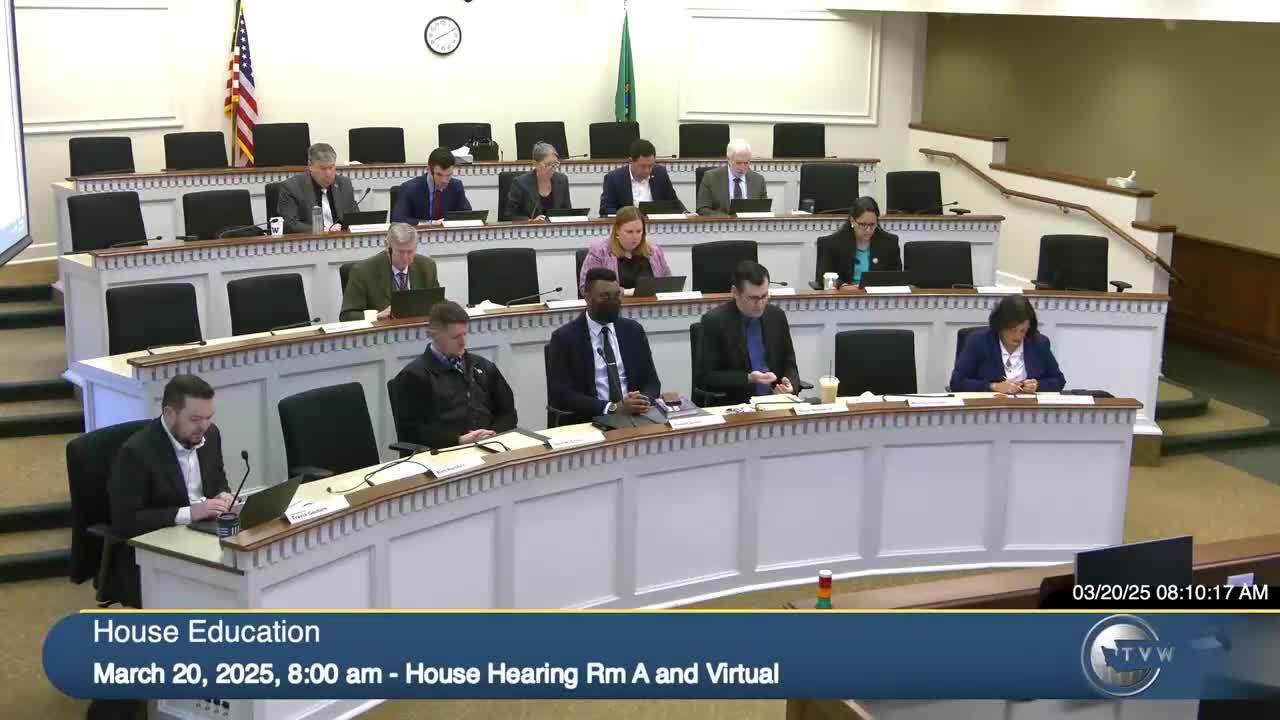
Summary
Substitute Senate Bill 5,193, allowing students enrolled in online programs to take statewide standardized tests remotely beginning in the 2027–28 school year and defining the scope of statewide assessments, was reported out of committee 18-0 (1 excused).
The House Education Committee voted to report Substitute Senate Bill 5,193 out of committee with a do-pass recommendation by voice vote (18-0, 1 excused).
The bill permits school districts to offer students enrolled in online school programs the option to take statewide standardized assessments remotely beginning in the 2027–28 school year. The measure also establishes OSPI duties related to implementing and supporting remote testing.
An adopted amendment identified as MOET 4 39 clarifies the definition of “statewide assessments” used in the remote-testing provisions: the committee said it intends the term to mean the general and alternate academic achievement assessments administered statewide for English language arts, mathematics and science (state-required K–12 assessments), and not college entrance exams such as the PSAT or SAT.
Ethan, staff member, summarized: “Substitute Senate Bill 5,193 allows school districts to provide students enrolled in online school programs the option to take statewide standardized tests remotely beginning in the 20 seven-twenty 8 school year. It also establishes policy and role duties for the OSPI related to implementing and supporting remote testing.”
Representative Ortiz Self said the change makes testing more accessible for students who study and test at home, and Representative McIntyre said technology now allows secure proctoring that addresses prior concerns about test integrity. The committee adopted the clarifying amendment and reported the bill with a do-pass recommendation.