Get Full Government Meeting Transcripts, Videos, & Alerts Forever!
Get email alerts on the Corrections Health topic
No spam. Unsubscribe anytime.
Bill would shift DOC behavioral-health program oversight to jointly adopted standards and DOH monitoring after budget concerns
Summary
A substitute to Senate Bill 53-88 would require the Department of Corrections and the Department of Health to jointly adopt behavioral-health standards for prison settings, with DOH conducting annual inspections and DOC required to implement standards and submit corrective plans when necessary.
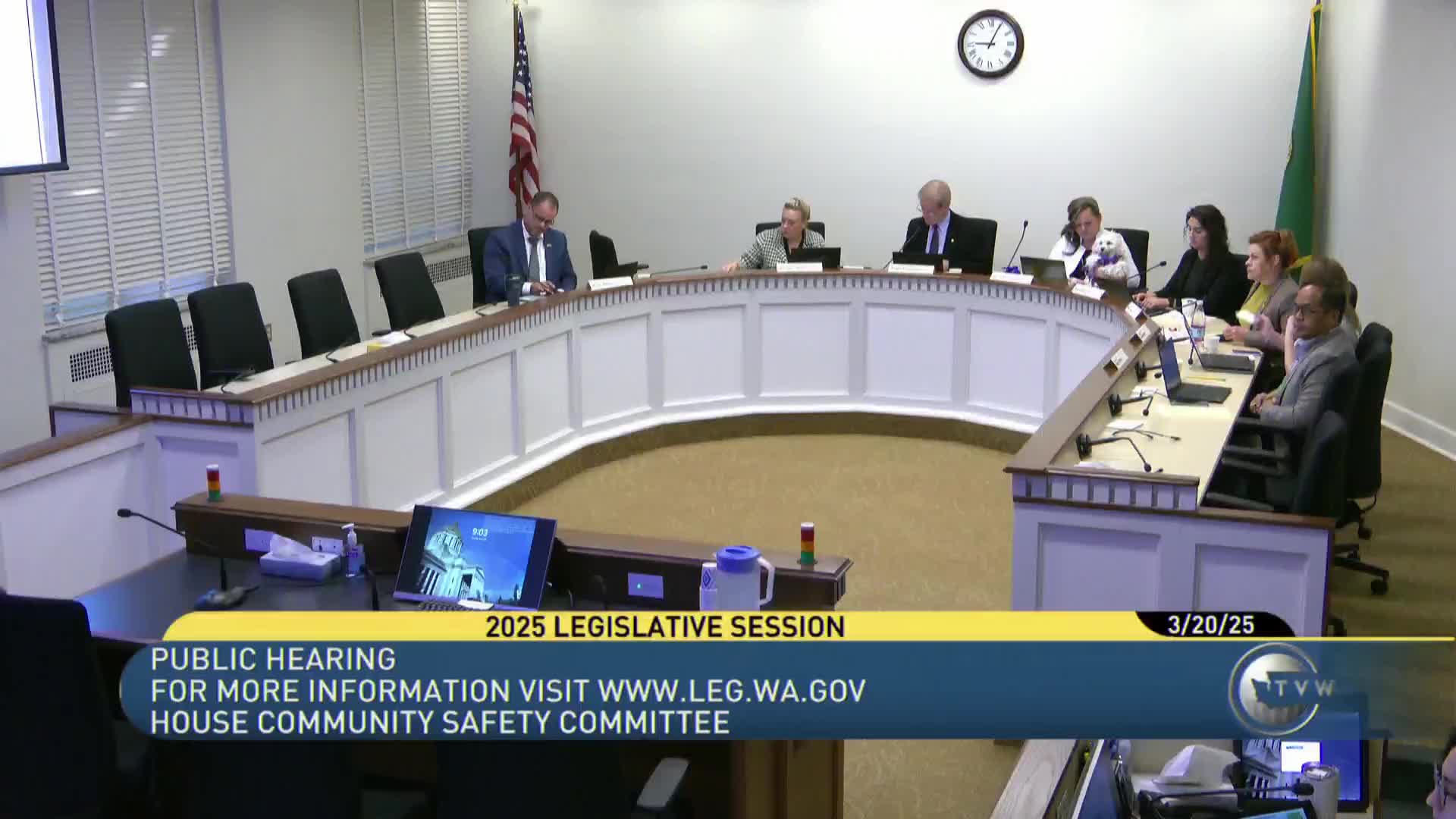
Senate Bill 53-88, presented in public hearing, would require the Department of Corrections (DOC) and the Department of Health (DOH) to jointly establish and adopt standards for behavioral health services provided to incarcerated people, and would shift DOH’s role to an annual-inspection and monitoring model rather than full program licensing in DOC facilities.
The staff report explained the background: prior statute required DOC behavioral health programs to be licensed or certified by DOH in the same manner as community behavioral-health facilities. DOC and stakeholders told the committee that full DOH licensing of prison-based programs would impose major fiscal and operational costs — staff cited a previously estimated $30,000,000 figure — and that the community-facility regulatory model does not fit the correctional environment. The substitute bill requires DOC and DOH to jointly adopt standards by July 1, 2026; DOC must implement those standards by July 1, 2027; DOH must begin annual inspections in 2027, produce reports identifying noncompliance, and DOC must submit corrective action plans within 45 days. The DOH may be reimbursed by DOC for technical-assistance and inspection costs; the agencies must review and update the standards by July 20, 2030 and every four years thereafter.
Testimony and stakeholder positions: DOC representatives said the statutory change reflects operational realities of prisons and will allow standards tailored to carceral settings. Kellett Saer, Assistant Secretary for Budget, Strategy and Technology at DOC, told the committee, “Prisons are not community behavioral health facilities, and the regulatory model for those facilities is not a good fit for prison settings.” Saer said the substitute bill reflects a negotiated approach with DOH and would reduce the fiscal impact compared with full DOH licensing.
Disability Rights Washington and other advocates opposed a prior version that would have removed DOH oversight entirely; they said DOH licensing visits had identified serious patient-safety issues (medical record keeping, mental-health assessment consistency, suicide-watch protocols) and argued that DOH monitoring should be preserved. Rachel Sievers of Disability Rights Washington said the amended bill is a compromise that continues DOH oversight in a monitoring role and preserves public reporting of inspection findings.
Clarifying details: committee staff and witnesses told the committee that (1) individual behavioral-health providers in DOC remain licensed by the state; (2) the bill changes program-level oversight rather than individual licensure; and (3) DOH will perform annual inspections beginning July 1, 2027, with DOC required to reimburse DOH for related costs. Testimony cited that only a small fraction of people assessed for substance-use treatment currently receive services in DOC’s capacity-constrained system; advocates pointed to reports by DOH identifying quality gaps.
Next steps: the committee held a public hearing and accepted testimony; no committee final action on this bill was recorded during the public hearing segment. Staff and agencies indicated further work ahead on standards development and fiscal implications.