Get Full Government Meeting Transcripts, Videos, & Alerts Forever!
Get email alerts on the Health Insurance Subsidy topic
No spam. Unsubscribe anytime.
Committee rejects proposal to replace reinsurance with a 20% direct premium subsidy after tied vote
Summary
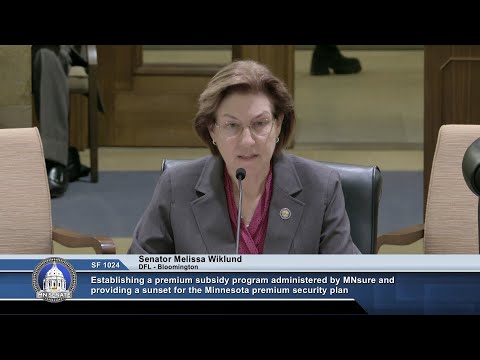
Senate File 1024, which would have repealed Minnesota’s reinsurance program and replaced it with a 20% direct premium subsidy administered by MNsure, failed in Commerce committee on a 5–5 roll call after extended debate over fiscal, timing and administrative risks.
Senator Wicklund presented Senate File 1024 on March 20, 2025, proposing to repeal Minnesota’s reinsurance program and instead provide a direct 20% premium subsidy for individual‑market enrollees, administered through MNsure. After extensive testimony and member questioning, the committee voted on the motion and the roll-call resulted in a 5–5 tie; the motion failed and the bill did not pass out of committee.
Wicklund said the subsidy would mimic reinsurance’s premium‑reduction effect for people who buy individual-market plans but would target payments only to those who do not receive federal advance premium tax credits (APTCs). She argued a direct subsidy reduces inefficiency where federal tax‑credit recipients do not directly benefit from lower underlying rates under reinsurance.
Officials and stakeholders raised multiple concerns. Dan Andreesen of the Minnesota Council of Health Plans and MNsure representatives warned that the subsidy approach differs materially from reinsurance: it would not draw down federal pass‑through funds through a 1332 waiver, could create new MNsure administrative burdens and may require new staffing and manual processes in year one. MNsure’s fiscal note — released shortly before the hearing — indicated substantial implementation work, including a manual enrollment process and additional FTE needs that could delay implementation until plan year 2027 and create a coverage gap when reinsurance ends.
Department of Commerce materials cited risks to MinnesotaCare funding in prior years when federal pass‑through arrangements changed. Testimony also flagged uncertain tax implications for subsidy recipients and the practical difficulty of administering retroactive subsidy payments for enrollees required to reconcile APTCs on their tax returns.
Several senators urged more actuarial analysis and close work with MNsure, DHS and the Department of Commerce before changing a program that currently uses federal passthrough funding. Senator Dames questioned whether the subsidy would reduce underlying health‑care costs (it would not); others worried about an implementation gap if the reinsurance program ends before a subsidy system is operational.
At roll call the committee recorded five ayes and five nays; because a majority was required the motion to recommend SF1024 as amended did not pass. Committee members and the author signaled continued willingness to discuss options but took no further action at the hearing.