Get Full Government Meeting Transcripts, Videos, & Alerts Forever!
Get email alerts on the Law Enforcement Hiring topic
No spam. Unsubscribe anytime.
Committee advances bill widening eligibility for law enforcement and first-responder hires, adopts liability and firearms language
Summary
Senate Bill 50-68 was reported out with a due-pass recommendation after the committee adopted an amendment expanding eligibility for certain noncitizen workers while adding protections for agencies regarding employment discrimination claims and accommodating certification issues tied to weapons prohibitions.
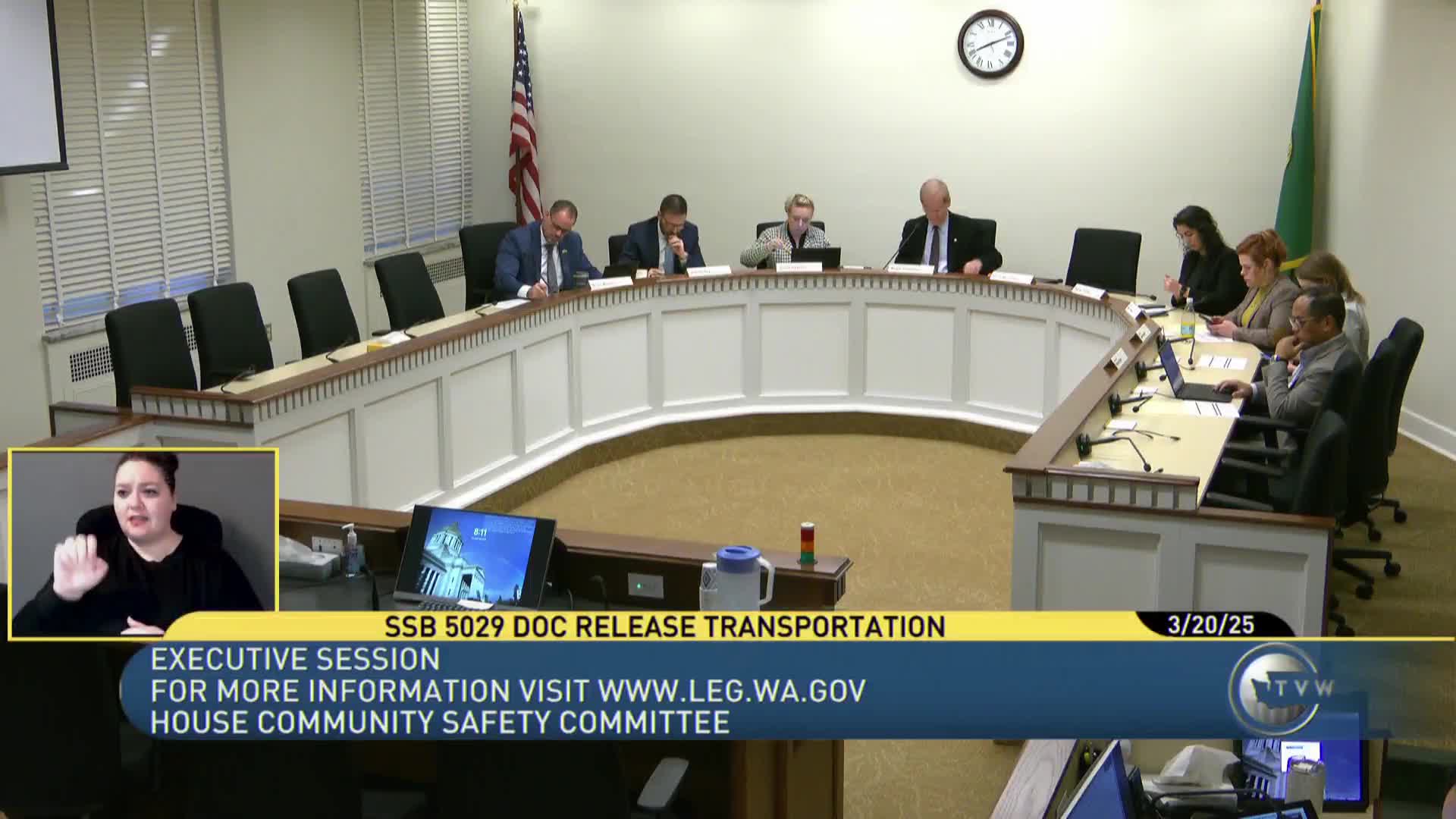
The Community Safety, Justice & Reentry Committee voted to report out as amended Senate Bill 50-68, which makes persons legally authorized to work in the United States under federal law eligible to apply for specified law enforcement and civil service positions. The committee adopted an amendment (Russum 2-4-6) intended to address employer liability and officer certification issues that had been raised by law enforcement stakeholders.
Why it matters: supporters said the bill widens the recruitment pool for law enforcement and other first-responder and civil service positions by allowing people with federal work authorization (beyond lawful permanent residents and DACA recipients) to apply. The adopted amendment provides that law enforcement agencies are not liable under state or other applicable law for employment-discrimination claims if an applicant is rejected because their work authorization is limited in a way that makes employment impracticable. The amendment also states the Criminal Justice Training Commission may not deny or revoke certification solely because an applicant is prohibited from possessing a weapon under federal law on the basis of immigration status, when the person could lawfully possess a weapon in their role as a peace officer or corrections officer after hire.
Committee debate: Representative Goodman, who sponsored the amendment, said she worked with the sheriff's and police chiefs association “to make sure that the intent…is to widen the pool of possible recruits.” During debate Representative Burnett and others raised concerns about firearm carriage and off-duty or interstate implications — citing possible liability, collective-bargaining, and legal risks — and signaled further work is needed as the bill proceeds. Representative Griffey said he supported the bill but would prefer the statute to more explicitly require DOC to follow individual exit plans (comment was on a separate bill earlier).
Vote: the committee adopted the Russum 2-4-6 amendment by voice vote and later, on roll call, reported the bill (as amended) out with a due-pass recommendation by a 6–3 tally. The roll call recorded ayes from Representatives Goodman (chair), Simmons (vice chair), Davis, Farivar, Fosse and Obras; nays from Representatives Graham, Griffey and Burnett.
Clarifying details: committee members repeatedly asked for further work on whether and how federal firearms prohibitions would affect an officer’s ability to carry weapons off duty or in other jurisdictions; no final resolution of those questions was recorded in committee. The bill as amended broadened eligibility but left open practical and legal questions related to firearms endorsement, interstate carriage, and employment practicability determinations.
Next steps: staff brought the standing committee report and the committee forwarded the amended bill with a due-pass recommendation for further floor consideration and stakeholder negotiation on the firearms and liability issues.