Get Full Government Meeting Transcripts, Videos, & Alerts Forever!
Get email alerts on the School Boundary Study topic
No spam. Unsubscribe anytime.
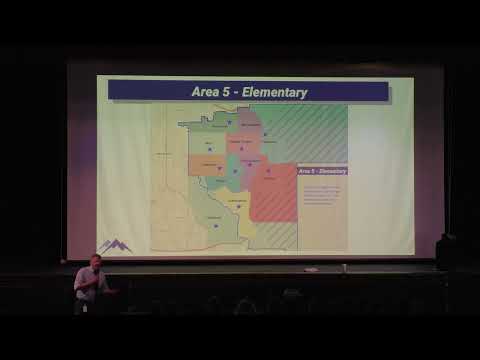
Granite School District opens Area 5 boundary study as enrollment decline puts some elementary schools on the table
Summary
Granite School District officials on Wednesday launched a public boundary study focused on elementary schools in what the district calls “Area 5,” citing a long-term drop in student enrollment and aging school buildings.
Granite School District officials on Wednesday launched a public boundary study focused on elementary schools in what the district calls “Area 5,” citing a long-term drop in student enrollment and aging school buildings.
Steve, a district staff member leading the study, told about three dozen attendees the process will be conducted over several months with public meetings, committee review and board votes later this year. “We’re not closing schools to save a new bus,” Steve said, adding that closure decisions are made to improve educational opportunities and resource use, not purely to cut costs.
The study focuses only on elementary boundaries; the district said it will not propose changes targeted at secondary schools but acknowledged that elementary boundary changes can produce byproducts at higher grade levels. Officials described the study as part of a roughly yearlong process that includes a Population Analysis Committee (PAC), community engagement and two formal board actions — an initial board meeting in November and a final decision in December — with any approved changes planned for implementation in fall 2026.
Why it matters
District staff described a sustained enrollment decline from roughly 68,000 students to about 55,000 over two decades and presented outside demographic forecasts that expect continued decreases in the near term. Staff said one firm the district uses for projections, MGT (formerly Davis Demographics), projects about 1,200 fewer students systemwide over the next five years in the district’s forecast. Those declines, combined with facility condition differences across schools, have prompted the district to study options that could include boundary shifts, consolidations or program moves.
Key facts and measures
- Scope: The study is elementary-focused and limited to “Area 5,” a geographic subdivision the district uses for multi-year planning. Officials emphasized the study will not propose deliberate secondary-school boundary changes as part of this phase.
- Facility condition: The district uses a Facilities Condition Index (FCI) assembled by engineers; staff explained the FCI ranks schools so the lower the score the more maintenance or replacement work the building requires. The FCI work the district cited was performed for prior bond planning and has not been comprehensively re-surveyed since the mid-2010s.
- Capacity definitions: Staff explained several measures of capacity, including “architectural” capacity (based on classrooms) and a building assessment that examines how rooms are used. Staff said formal building assessments are done with principals and can change if programs such as preschools or labs occupy space.
- Timeline and process: The district described a public process that begins with information meetings and feedback, proceeds through PAC and technical committees (transportation, special education, curriculum), includes board study sessions and culminates in board action (initial approval in November, final decision in December). Any approved boundary or consolidation changes would be implemented in the fall term following the decision.
- Transportation and walk zones: The district reiterated elementary walking eligibility is 1.5 miles (secondary 2 miles) and said municipalities and school safety data feed route and hazard decisions; bus reimbursement from the state depends on official eligibility and routes.
Funding context
Officials told attendees capital decisions (rebuilds/remodels) are funded through voter-approved bonds and property-tax capital revenue, while most operating costs (teachers, custodians, administrators) come from state per-pupil funding (the Weighted Pupil Unit, or WPU) and other ongoing sources. The district noted federal ESSER funds used during the pandemic temporarily supplemented staffing in some schools and that those one-time funds are no longer available for ongoing staffing.
Steve said the larger long-term savings from closures are realized by avoiding future rebuild costs on schools that later require full replacement; staff estimated an elementary rebuild in today’s market is on the order of tens of millions of dollars while a large remodel to extend life is typically smaller. He said routine maintenance budgets are largely personnel costs and that closing schools does not automatically translate into large recurring operating savings because most staff follow students or are absorbed by attrition.
Programs and equity concerns
Attendees pressed staff about how magnet and special programs — including dual-language immersion (DLI) and other attractor programs — factor into decisions. Staff said some programs were created to attract students and can change enrollment patterns; the district treats many specialized programs as school-level offerings and intends to preserve commitments where possible. Officials also said program consolidation and creative program placement are among the options PAC will evaluate.
Community concerns and next steps
Parents and residents raised concerns about neighborhood identity, walking access, volunteer capacity, the effect of closures on property values and whether the district will “sell” closed school property. Staff replied Granite School District has been reluctant to sell closed properties, has not sold a closed elementary in about a decade and commonly leases unused buildings to local governments or nonprofit partners rather than relinquish them immediately.
District staff asked the public to submit written feedback via the study website, attend subsequent meetings and participate in community-level conversations (city councils, school community councils, PTA) that the district will incorporate into PAC deliberations. Steve and other staff reiterated no formal decisions had been made and encouraged constructive ideas — including program consolidation or alternative funding ideas — for PAC to consider.
Ending note
Superintendent Horsley and staff closed by reiterating the district’s objective to protect students’ educational opportunities while responsibly managing facilities and capital dollars. “We’re here to serve your community,” a district official said, urging residents to engage in the study process and provide written feedback so PAC and the board can weigh options before any final votes.