Get Full Government Meeting Transcripts, Videos, & Alerts Forever!
Get email alerts on the Zoning Accessory Structures topic
No spam. Unsubscribe anytime.
Council rejects proposed accessory-structure zoning amendments on first reading after commissioners recommendation and public comment
Summary
After a public hearing and lengthy council discussion, Orland City Council voted down proposed amendments to Title 17 (accessory structures) intended to align accessory structure rules with ADU allowances. The council asked staff to return with visuals and further refinements.
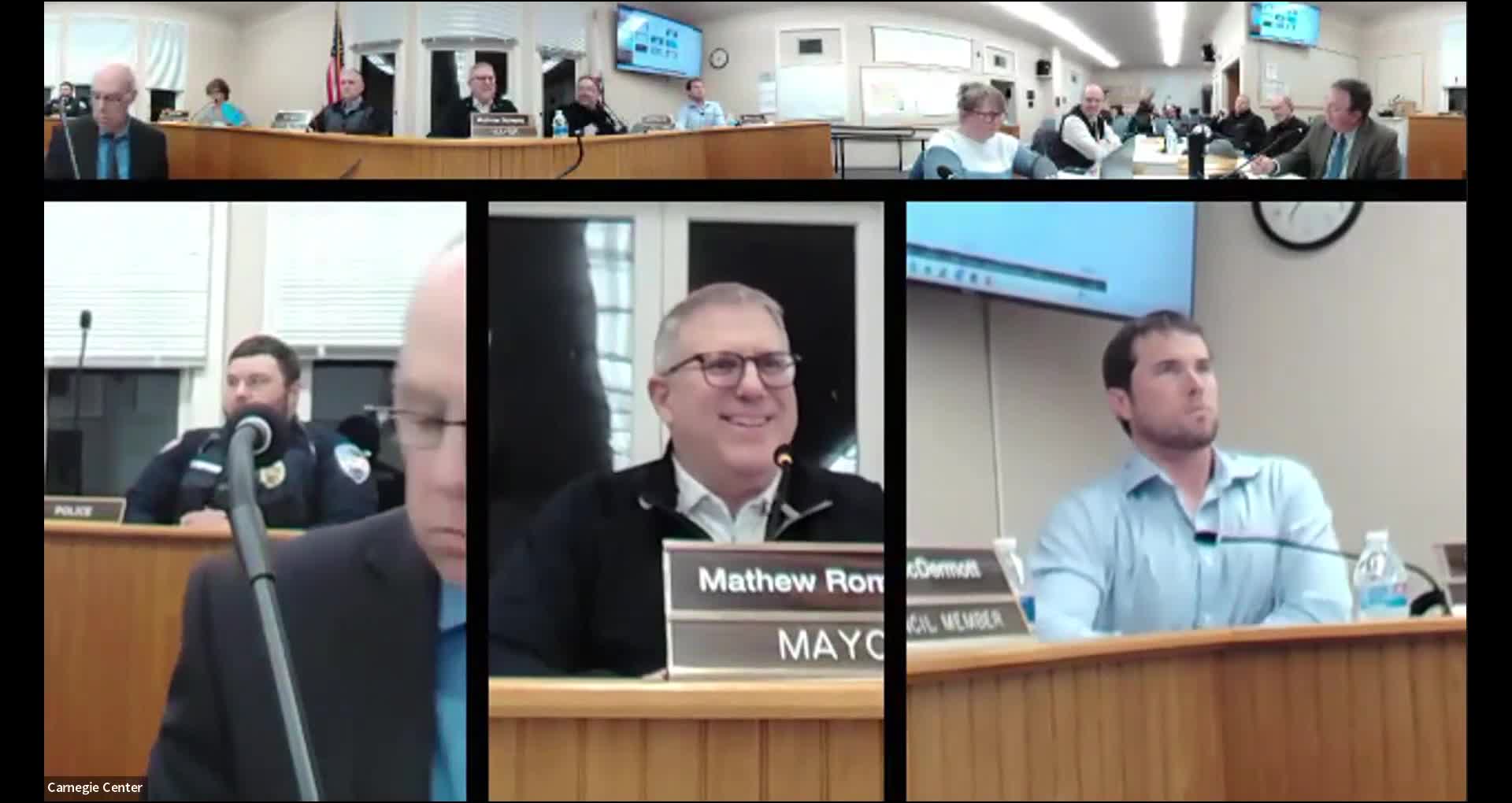
Orland City Council on Feb. 4 considered proposed amendments to the cityMunicipal Code Title 17 to change how accessory structures (detached garages, sheds, patio covers) are regulated. After a public hearing and extended discussion the council voted against the ordinance at first reading and asked staff to return with additional visuals and clarifications.
Scott (city planner) introduced the ordinance as a Planning Commission-recommended update intended to reconcile local rules with state ADU standards and to reduce regulatory friction for small backyard structures. Key elements proposed in the staff report included removing the prohibition on electrical service and plumbing in accessory structures, increasing allowable accessory structure height from 15 to 25 feet, reducing rear-yard setbacks to 4 feet (to match ADU setbacks), and allowing accessory garages to align with the primary house rather than being forced 35 feet back from the front property line.
Council members and many public speakers debated tradeoffs between maximizing yard efficiency and protecting neighborhood character. Questions and concerns raised included roof-pitch matching requirements, whether high accessory structures would permit two‑story buildings close to property lines, impacts on neighbors when accessory buildings include electricity/plumbing (possible conversion to living units), and whether the proposed allowances would disadvantage owners of narrow urban lots or rural large-lot properties.
Several residents urged flexibility for commonly sold prebuilt sheds, visual examples of how changes would look in neighborhoods, and protections for neighbors (setbacks, variance procedures). Planning Commission staff and the planner said the commission voted 4–0 to recommend the amendments and that staff favored the CEQA exemption cited in the staff report.
Council action: A motion to adopt the ordinance on first reading was made and seconded; the roll call vote recorded Council Member Barr: No; Council Member Smith: No; Council Member McDermott: Aye; Vice Mayor Toll: Aye; Mayor Romano: No. The motion failed, recorded in the transcript as "Motion fails 3, 2." Council members asked staff to prepare visual examples and to return with refined language and options rather than adopting the proposal unchanged tonight.
Why it matters: The amendments would have changed routine permitting for backyard accessory uses, potentially streamlining permits for homeowners and altering how cities regulate accessory uses that can be fitted with electricity and plumbing. The councildecision keeps existing restrictions in place while staff returns with refined options and visual examples.