Get Full Government Meeting Transcripts, Videos, & Alerts Forever!
Get email alerts on the Municipal Finance Water Sewer topic
No spam. Unsubscribe anytime.
Council hears fiscal update: general fund below budget, water fund can absorb VACON cost; sewer pond work could require new funding
Summary
Finance staff reported general fund revenue below budget, urged caution on midyear spending, and recommended allocating the VACON pump expense to the water fund while noting sizable upcoming sewer projects and the need for a sewer master plan and possible rate study.
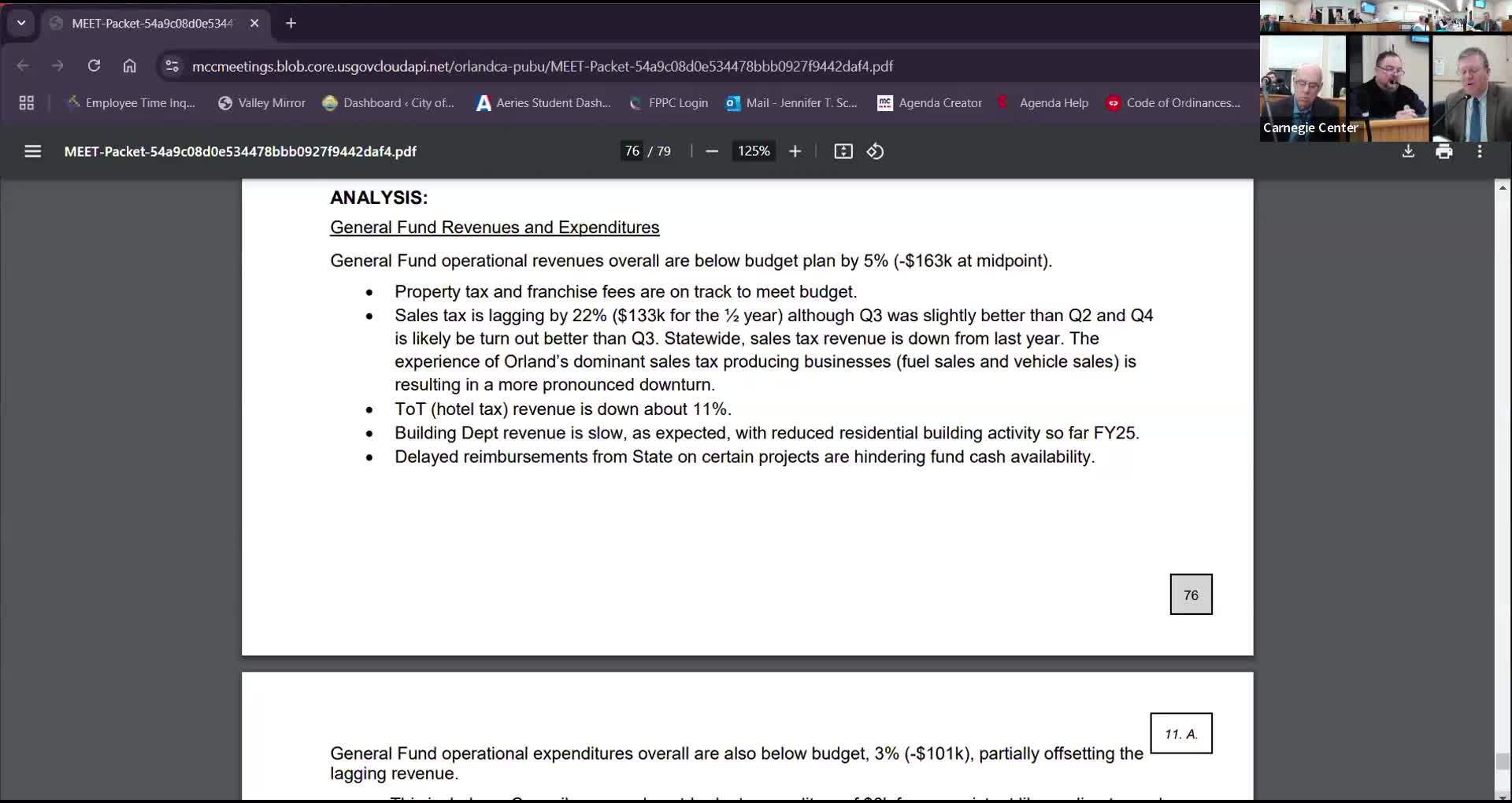
City finance staff reported Tuesday that Orland’s general fund revenues are running about 5% below budget midway through the fiscal year and advised prudence on unplanned expenditures as the council considers capital priorities.
The finance presentation showed general fund operational revenue lagging by roughly $163,000 at the midyear point, with sales tax and hotel tax receipts the largest variances. The report noted one-time and post-budget items that had been approved but not yet reflected in the numbers, and flagged a possible $168,000 repayment to the county under a Teeter arrangement that remains unresolved.
On enterprise funds, staff recommended allocating the full cost of a recently purchased VACON pump to the water fund because the water fund has a stronger balance. Finance reported a water fund balance of roughly $4.85 million (before recent allocations) and said the water fund’s position can absorb a larger share of the VACON expense without jeopardizing operations.
In contrast, the sewer fund faces upcoming capital needs: lift‑station upgrades totaling about $439,000 and an analysis of sewage ponds that may lead to costly remediation. The sewer fund balance is smaller, and the council discussed the need to commission updated water and sewer master plans and a rate‑setting study to support any rate adjustments.
Staff noted the city could pursue a Proposition 218 process (ballot/mail procedure for utility rate increases) or other formal rate-setting steps if the council pursues sewer-rate increases beyond CPI‑based adjustments. Councilors asked staff to bring back options for a sewer master plan and a costed study to support any voter outreach or rate change proposals.
Why it matters
The fiscal report frames decisions about capital projects, streets and public safety investments. Larger one‑time costs and uncertain sales tax trends mean the council must weigh reserve targets, project timing and the potential need for rate increases or grant funding for major sewer work.
What’s next
Staff will continue to monitor revenue and return with options to adjust appropriations, recommendations on shifting the VACON cost to the water fund, and proposals for sewer and water master plans and a public-rate study if necessary.