Get Full Government Meeting Transcripts, Videos, & Alerts Forever!
Get email alerts on the Hhs Omnibus topic
No spam. Unsubscribe anytime.
Senators question scope of HHS ‘clean-up’ bill, pause floor action to allow more committee work
Summary
Legislative Bill 376, an omnibus package of Health and Human Services statutory changes, drew criticism on the floor for lumping many substantive policy changes into a single bill without separate hearings. Senators asked for recommitment and more detailed review; the body passed over LB376 for further off-mic negotiations and follow-up.
Lawmakers spent substantial floor time debating Legislative Bill 376, a sweeping Health and Human Services omnibus bill that would amend or repeal numerous statutory reporting and program requirements across multiple chapters. Several senators urged separating standalone policy changes into individual bills and holding dedicated public hearings rather than advancing the large package as a single measure.
Why it matters: LB376 would remove outdated reporting requirements, redefine program terms, change eligibility for some assistance programs (including the Bridge to Independence program), align service-area language, and eliminate certain statutory duties — changes that sponsors said are intended to increase government efficiency and reduce county unfunded mandates. Opponents said the bill bundles distinct policy decisions that deserve individual hearings and stakeholder input.
Key floor points: Senator Harden (sponsor) characterized LB376 as “about government efficiency, removing antiquated obligations from statute that allows the department to focus on helping people” and said many reports would remain and new dashboards could be added. Senator Cavanaugh pushed back: “this bill is multiple bills into 1 and, should have been separated and had public hearings on various sections,” citing Section 13 (changes to Bridge to Independence eligibility) and Section 53 (service-area alignment with judicial districts) as examples that should receive standalone hearings.
Other senators with domain experience said they supported efficiency work but urged careful review of programmatic impacts. Senator Armendariz, who described convening efficiency audits with DHHS, praised the agency’s effort to identify unused reports but said lawmakers should meet with program staff about specific reports before removing statutory language.
Procedural outcome: After extended discussion and additional off-mic negotiations coordinated by the Speaker’s office, the body agreed to pass over LB376 for now and return to it in coming days so the sponsoring committee and stakeholders could refine the bill and address concerns raised on the floor. The Speaker directed more conversation and a possible recommit or amendment process rather than immediate advancement.
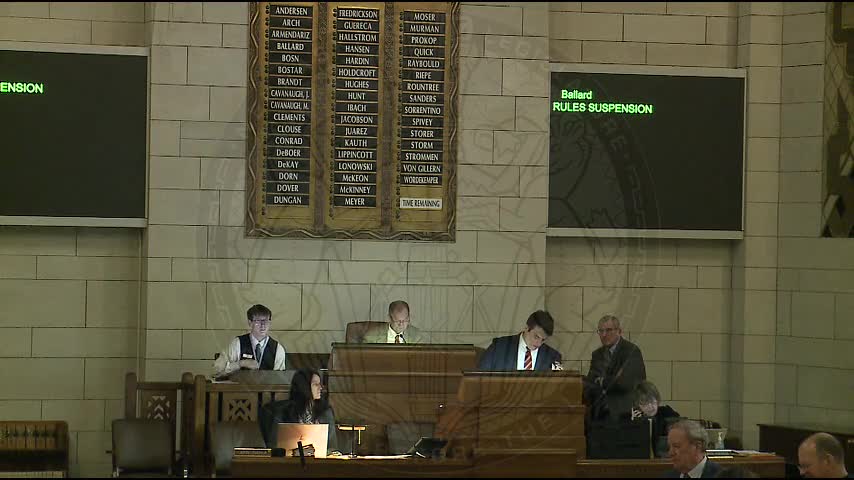
Related procedural action: Earlier in the session the body voted to suspend Rule 3, Section 14 to allow the Nebraska Retirement Systems Committee to cancel a scheduled public hearing (the actuary could not travel because of weather). That suspension passed on the floor with a recorded 43 ayes and no nays; the Committee formally noticed the hearing’s cancellation.