Get Full Government Meeting Transcripts, Videos, & Alerts Forever!
Get email alerts on the Family Economic Security topic
No spam. Unsubscribe anytime.
Child tax credit bill LB157 gains proponent support from policy researchers
Summary
LB157 would create a refundable state child tax credit for children age six and younger beginning in tax year 2026. Testimony cited national evidence on poverty reduction and state models; committee received significant written support and no in‑person opponents at the hearing.
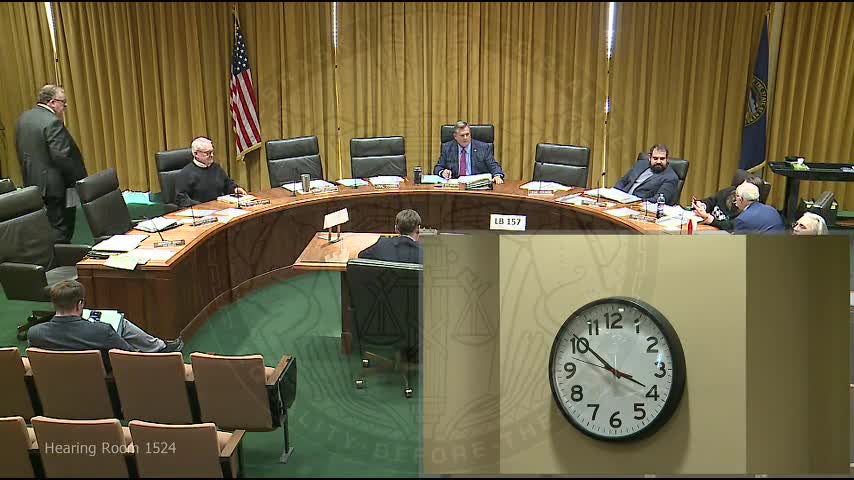
Senator George Dungan opened the Revenue Committee hearing on LB157 on behalf of Senator Danielle Conrad, explaining the bill would create a refundable child tax credit for qualifying children age 6 and younger beginning in tax year 2026. Under the proposal, the credit would be $1,000 per qualifying child (with phaseouts by adjusted gross income and inflation adjustments beginning in 2027). The bill also shields the refund from garnishment in bankruptcy or money-judgment collection.
Joey Adler Ruane, representing the OpenSky Policy Institute, testified in support and summarized research showing state-level child tax credits reduce child poverty and increase family economic security. He cited Institute on Taxation and Economic Policy (ITEP) modeling that LB157 would reach an estimated 98,500 Nebraska households and about 154,500 children (the figure cited by the proponent’s modeling). "State level child tax credits are an evidence based way to support families with young children," Ruane said, noting that an expanding number of states have adopted or expanded such credits in recent years.
Supporters argued that the credit would direct money to families for basic needs—food, rent, child care—and that recipients typically spend the additional funds locally, increasing consumer purchasing power and delivering local economic benefits. The proponent acknowledged state budget constraints but said the evidence and scalability justified committee consideration.
The hearing record included a substantial number of written proponent comments (the committee received 42 proponent submissions online) and only one online opponent; no in‑person opponents testified. Senator Dungan waived closing for Senator Conrad; the committee will consider the bill as it proceeds through Revenue Committee processes.
Ending: LB157 drew a strong set of written endorsements emphasizing poverty-reduction research and state precedents; committee members did not take a vote at the hearing and will consider the bill during the committee’s regular process.