Get Full Government Meeting Transcripts, Videos, & Alerts Forever!
Get email alerts on the Tobacco Tax Regulation topic
No spam. Unsubscribe anytime.
Nebraska Legislature advances bill taxing alternative nicotine products after heated debate
Summary
Lawmakers advanced LB9 to engrossing after adopting a General Affairs committee amendment that adds a 20% wholesale excise on alternative nicotine products, rejects a last-minute amendment to tax by weight, and projects several million dollars of new revenue over coming fiscal years.
The Nebraska Legislature on the floor advanced Legislative Bill 9, which updates the Tobacco Products Tax Act to bring alternative nicotine products — including nicotine pouches and other “nicotine analogs” — under state excise taxes and enforcement tools.
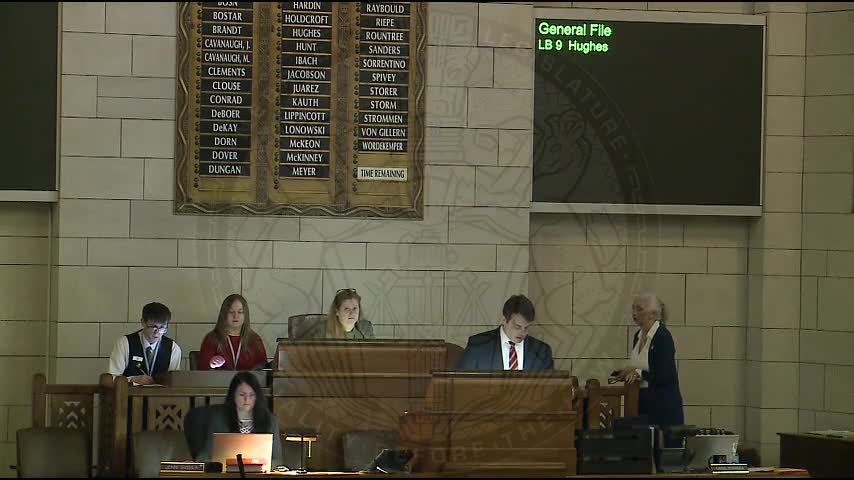
The bill, introduced on general file by Senator Hughes and amended on the floor with General Affairs Committee amendment AM549 (which folded LB125 into LB9), was advanced to E&R initial after the body adopted the committee amendment and rejected a separate floor amendment proposing a weight-based tax. Senator Hughes explained the bill’s core purpose as “to update our existing law to improve the regulation and enforcement of the Tobacco Products Tax Act” and to “future proof” taxation for new nicotine products.
Why it matters: LB9 would apply a 20% wholesale excise to alternative nicotine products and include a statutory definition of “nicotine analogs,” bringing a class of largely untaxed products under the state’s tax and enforcement regime. Sponsors said the change enables seizure and forfeiture for unregistered products and avoids frequent legislative fixes when new nicotine products arrive.
Key details and debate: Proponents including Senator Hughes and General Affairs Chair Senator Holcroft said the 20% wholesale approach prevents manufacturers from evading tax policy by altering product formulations or weights. Hughes argued a weight-based tax would “only incentivize manufacturers of these products to sell products with a higher nicotine content that is currently on the market,” and that a wholesale-percent tax grows with price and does not require frequent statutory updates.
Opponents and some industry representatives urged a per-ounce or weight-based tax for parity with moist snuff, arguing taxation by weight is already the norm for certain oral products and would be simpler for retailers and wholesalers. Senator Raybould led a floor amendment (AM646) to replace the ad valorem approach with a weight-based tax; that amendment failed (recorded on the floor as 5 ayes, 24 nays). Supporters of the committee approach warned weight-based levies could be gamed by concentrating nicotine powder into lighter formulations.
Fiscal and enforcement notes: Senators discussed a fiscal estimate printed for LB9 showing new general fund revenue in the low millions: $927,000 (FY27), about $2.5 million (FY28), $2.7 million (FY29), rising to roughly $3.0 million thereafter (figures reported on the floor by Senator Hughes during questioning). Supporters pointed to enforcement benefits: the committee amendment clarifies that the Department of Revenue and law enforcement may declare untaxed products contraband and seize them.
Floor votes and next steps: The last recorded floor action advanced LB9 to E&R initial with a recorded 41 ayes and no nays. The General Affairs Committee reported AM549 out of committee 8–0 before floor consideration. The body rejected AM646 (weight-based tax) and adopted the committee amendment as the vehicle for the bill.
What remains: LB9 now proceeds to engrossing; it will return later in the session for further consideration and final reading. Debate on tax policy and product definitions is likely to continue as implementing regulations and revenue estimates are refined.