Get Full Government Meeting Transcripts, Videos, & Alerts Forever!
Get email alerts on the Voter Registration topic
No spam. Unsubscribe anytime.
Bill would make DMV voter registration opt‑out in Nebraska; sponsors point to 24 other states
Summary
Sen. John Frederickson introduced LB218 to automatically register eligible people to vote at the DMV unless they opt out. Proponents said the change would improve accuracy of voter rolls and expand registration, while questions focused on fiscal costs, verification of eligibility and the DMV/Secretary of State implementation details.
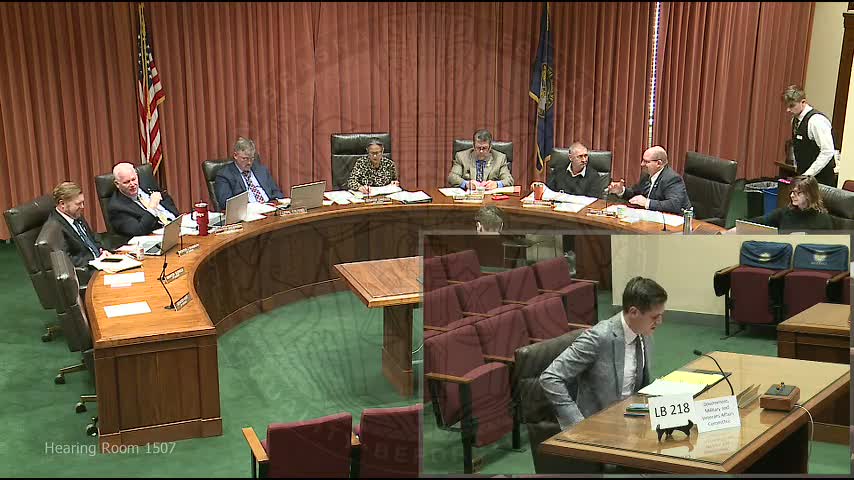
Senator John Frederickson introduced LB218, a proposal to change the DMV voter‑registration interaction from an opt‑in to an opt‑out system so that eligible citizens who obtain or renew a driver’s license would be automatically registered to vote unless they decline.
Frederickson told the Government, Military and Veterans Affairs Committee the bill would preserve the current attestation that a registrant is 18 and a U.S. citizen and that county election officials would review records to verify eligibility before processing a registration. “Changing the default from an opt in to an opt out will ensure a smoother process, while also protecting the safety and security of our voter rolls,” Frederickson said, noting that 24 states and Washington, D.C., use similar systems.
Proponents from Common Cause Nebraska described national studies showing substantial increases in registrations where automatic or opt‑out DMV systems are used. Gavin Geis, executive director of Common Cause Nebraska, told the committee that states that implemented such systems have seen large increases in registrations and updated records; he cited Pennsylvania (45% increase at license centers), Georgia (94%), and other state examples. Supporters emphasized that the National Voter Registration Act already requires states to offer registration at DMVs and that LB218 would build on that foundation.
Committee members pressed the sponsor on costs and eligibility verification. Frederickson said the DMV identified a modest redesign cost for forms (testimony referenced $4,000 for DMV form changes) and the Secretary of State estimated additional costs for verification and processing (discussion in the hearing referenced a larger figure on the order of $100,000 for Secretary of State salary/benefits/equipment but committee members asked staff to confirm exact fiscal numbers). Committee members also asked how the DMV would detect noncitizen or otherwise ineligible applicants; Frederickson said the DMV’s identity and residency verification for driver’s licenses would continue to apply and county election officials would handle final eligibility determinations.
The committee received written comments and multiple proponents and opponents in the record; the sponsor said he was willing to work with stakeholders including county officials and the Secretary of State on staff capacity and duplicate‑record concerns. No committee vote on LB218 was recorded at the hearing.