Get Full Government Meeting Transcripts, Videos, & Alerts Forever!
Get email alerts on the Nuisance Properties Receivership topic
No spam. Unsubscribe anytime.
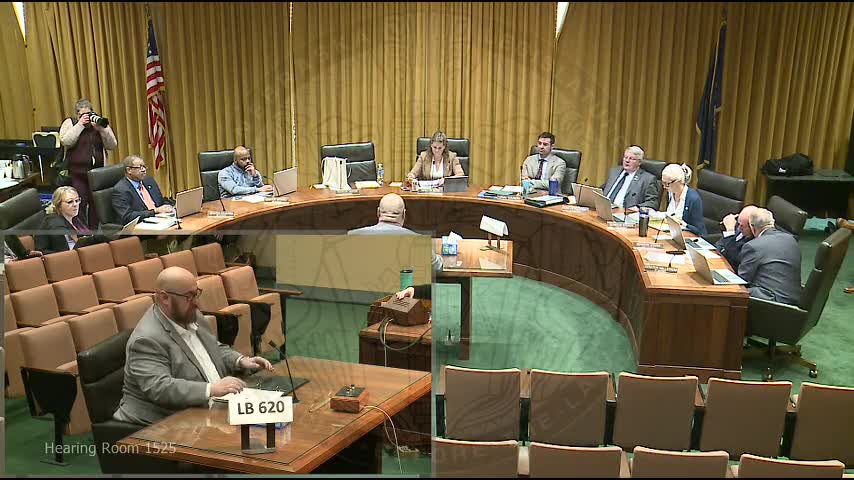
Judiciary committee hears bill to allow court-appointed receivers to remediate long-term nuisance properties
Summary
Sen. Duxi Guereca introduced LB620 to add a receivership process for certain long-unaddressed structural code violations; proponents including a Tennessee attorney and the Omaha Municipal Land Bank urged the panel to advance the concept while bankers and others raised concerns about lien priority and financing.
Sen. Duxi Guereca, a Democrat representing Legislative District 7 in Omaha, on behalf of the Judiciary Committee introduced LB620, the Nebraska Neighborhood Revitalization Act, a bill to create a court-supervised receivership process for properties deemed public nuisances because of repeated, unaddressed structural code violations.
The bill would let a qualified petitioner ask district court to declare a property a public nuisance after three unremedied, structure-based code violations in a 12-month period. If the court finds a nuisance and the owner fails to comply, the court could appoint a receiver who would submit a court‑approved plan to stabilize, rehabilitate, demolish or sell the property. Court-approved receiver costs would become a lien on the property, and an owner could redeem the property by paying that lien within a court-set period; the introducer said the draft extends that redemption period from 30 to 60 days in a recent amendment.
Supporters told the committee receivership has been used in other states to return abandoned properties to productive use and reduce recurring calls for police, fire and code inspection. Vincent Sawyer, an attorney from Tennessee who described work under that state's neighborhood receivership law, said Tennessee courts vet receivers’ financial and administrative capacity, require a detailed budget and timeline in a receiver's plan, and allow owners or interested lienholders to respond before receivership proceeds. Leslie Smith, executive director of the Omaha Municipal Land Bank, said the land bank holds roughly 300 vacant parcels and that current remedies such as tax sale and condemnation take years and frequently result in demolition before redevelopment can occur.
Committee members sought clarifications. Sen. Bob Hallstrom and others raised concerns about section 6 of the bill, which creates an attaching receiver’s lien with priority over other claims; Hallstrom said banks and existing lienholders need notice and a recorded claim so they can assess risk. Guereca said he has discussed lien priority with bankers and is open to changes. Several senators asked who may petition the court; the introducer said municipalities, code enforcement officials or neighbors with standing could initiate proceedings but emphasized the amendment removes a private right of action against landowners and narrows the nuisance definition to structure-based violations.
Proponents including Habitat for Humanity of Omaha and the Omaha Municipal Land Bank said the tool could speed rehabilitation and increase affordable housing options; opponents and neutral parties, including the Nebraska Bankers Association, requested amendments clarifying lien priority, notice to lenders and protections to preserve legitimate secured interests. The introducer said the bill is meant to be permissive for municipalities, to target absentee or bad‑actor owners and to keep local officials engaged in shaping implementation.
The committee did not take a final vote. Guereca said he will continue discussions with stakeholders over the interim and expects additional amendments. Several testifiers and the introducer asked the committee to advance the bill to general file to allow further refinement.