Get Full Government Meeting Transcripts, Videos, & Alerts Forever!
Get email alerts on the Court Interpreters topic
No spam. Unsubscribe anytime.
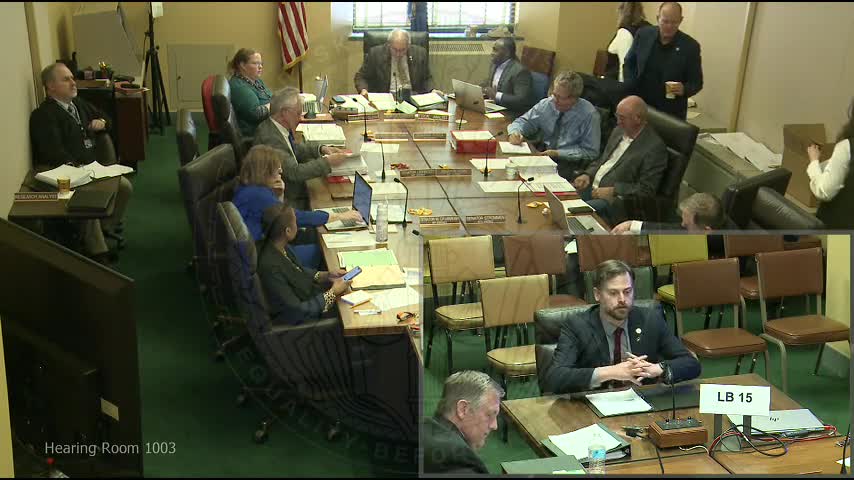
Bill to fund court interpreters (LB15) wins broad support at appropriations hearing
Summary
Sen. George Dungan introduced LB15, an appropriation request to sustain increased pay for court interpreters; Supreme Court officials and legal groups testified in support, citing federal obligations and recent staffing disruptions.
Sen. George Dungan (District 26) introduced LB15 to the Appropriations Committee, requesting $600,000 for fiscal 2025–26 and $600,000 for fiscal 2026–27 to the Nebraska Supreme Court to maintain current pay levels for court interpreters.
Dungan told the committee that Nebraska has more than 90,000 residents who meet federal definitions of limited English proficiency and said certified interpreters perform highly technical work across criminal, civil and juvenile matters. He said a 2023 interruption in interpreter availability caused case delays and increased jail costs for some defendants awaiting proceedings.
“Every year that I have been here in the Legislature, I have brought this or similar legislation,” Dungan said, and described recent negotiations that produced a partial pay increase in 2024 that the court cannot sustain without added appropriation.
Nebraska State Court Administrator Corey Steele testified in support and provided spending history showing interpreter expenditures rising from about $1.2 million in fiscal 2020 to a projected $2.5 million in the current year. Steele said the branch increased per‑hour rates after a 2023 work stoppage and that federal law, U.S. Department of Justice guidance and Nebraska Supreme Court rules require meaningful access for limited‑English‑proficient (LEP) parties.
“We were under a DOJ investigation for not adequately providing LEP services in our courts and probation,” Steele told the committee. He said the branch reformed certification pathways and has added certified interpreters this year but needs the appropriation to sustain rates and recruitment.
Proponents included representatives of Omaha Language Solutions and the Nebraska State Bar Association, who said professional interpreters are independent contractors whose work cannot reliably be replaced by machine translation for hearings and evidentiary proceedings. A lobbyist for Omaha Language Solutions said machine and phone interpretation may assist in limited situations but cannot substitute for certified in‑court interpreters in complex hearings.
The hearing produced no formal vote; Senator Dungan waived closing and the bill will proceed through the committee process. Committee members asked for follow‑up information from court administration on expenditures and certification pathways.
Ending: Supporters urged the committee to fund LB15 to avoid disrupting court operations and to preserve access to justice for LEP Nebraskans.