Get Full Government Meeting Transcripts, Videos, & Alerts Forever!
Get email alerts on the Wastewater Treatment topic
No spam. Unsubscribe anytime.
DEQ, Junction City outline compliance schedule: new mechanical wastewater plant, inflow fixes required
Summary
The Oregon Department of Environmental Quality told the Junction City Council that a 40‑page wastewater permit and an accompanying Mutual Agreement and Order require the city to upgrade from lagoon treatment to a mechanical plant, reduce inflow and infiltration and pursue funding to meet new ammonia and other limits.
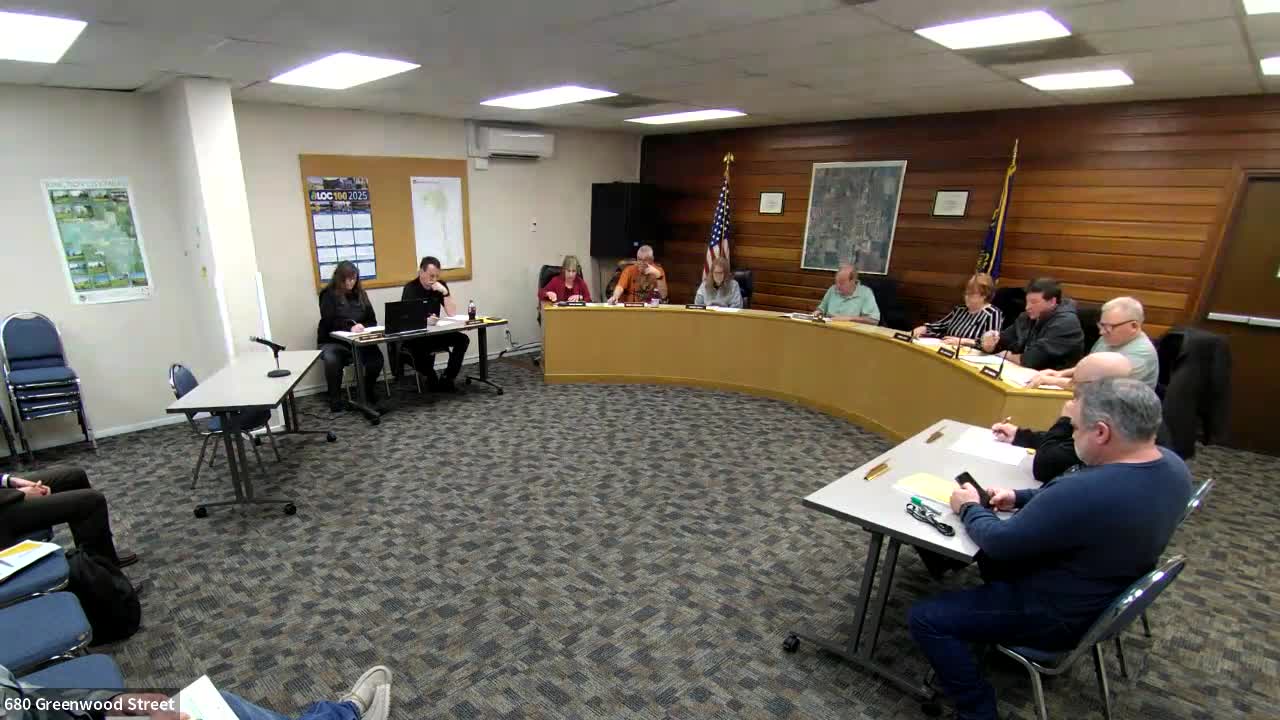
The Oregon Department of Environmental Quality on Tuesday told the Junction City Council that the city must upgrade its wastewater system under a new 40‑page permit and an associated Mutual Agreement and Order (MAO) that together set a multi‑phase compliance schedule.
DEQ Western Region wastewater permitting and compliance manager Renee Nomura said DEQ and the city have been discussing the plant upgrade since 1995 and that the new permit “is 40 pages long.” She told council the city’s wastewater lagoon cannot meet recently tightened ammonia and other limits and that a mechanical treatment plant is now effectively required.
The issue matters because Junction City is on the EPA’s significant noncompliance list for wastewater, DEQ officials said, and the MAO ties permit milestones to the number of connections the city may allow while work proceeds. Nomura said the MAO allows a total of 380 equivalent dwelling units (EDUs) tied to specific MAO tasks — 310 EDUs associated with required steps plus 70 optional EDUs that can be earned by completing additional actions.
DEQ and city staff outlined what the upgrade will include and why. City engineer Rod Henry described a two‑phase approach: build a new mechanical treatment plant capable of removing ammonia and other constituents the lagoon cannot, then secure additional irrigation land for recycled water so the system can handle peak winter flows. “The wastewater treatment plant, that’s the big 1, and that’s the thing that we’ve been talking about for a long time,” Henry said.
DEQ staff and the city said the treatment technology under consideration is a moving‑bed biological reactor (MBBR) — a mechanical process that DEQ officials said is efficient at removing ammonia while using less electricity than some alternatives. The plan also includes a large storage pond to hold treated effluent when discharge to Flat Creek or irrigation is not possible, and a mitigation wetland where excavation for the pond’s berm will occur.
DEQ emphasized that the city’s existing lagoon receives vastly higher flows in winter and that much of the compliance work focuses on the collection system. Nomura said the city’s dry‑weather flow is roughly 0.4 million gallons per day and that winter flows can reach about 4.75 million gallons per day, an increase she called “more than 11 times.” DEQ staff said that significant inflow and infiltration (I&I) from stormwater and groundwater must be reduced so the new plant can operate within permit limits.
To identify I&I sources, staff said the city will perform smoke testing and CCTV inspection of sewer lines and then prioritize repair, replacement or pipe routing changes. Henry said the city will submit the TV/smoke test results and a prioritized remediation list to DEQ for the MAO schedule.
DEQ also discussed enforcement and penalties. Nomura explained that by entering a long‑standing MAO the city has a defined base penalty schedule rather than subjecting itself to the full penalty equation in Oregon Administrative Rules; she said penalties for recent incidents have been “fairly low” and that one cited demand was roughly $3,000 and another MAO demand referenced in the record was $5,050 for an out‑of‑season discharge. DEQ staff said they prefer to see money spent on infrastructure rather than penalties but will press for MAO milestones if violations continue.
Council members and residents pressed on options DEQ had previously discussed — discharge to the Willamette or Long Tom rivers — and voiced opposition to routing more wastewater into already stressed waterways. Councilor Hancock said, “I just don't want to ever see our sewer get dumped in the Long Tom River,” and DEQ replied that both rivers are impaired in ways that limit new discharges and that the city faced technical and regulatory barriers to those alternatives.
City and DEQ staff discussed funding pathways: grants, the DEQ Clean Water State Revolving Fund (a low‑interest loan program), federal programs and bond financing. Nomura said DEQ can help identify technical assistance and loan opportunities but cautioned that many state and federal grant programs are constrained and that loans may be necessary. City staff said they will work with financial advisors and return with scenarios for council review.
What happens next: city staff and consultants will complete engineering design and finalize cost estimates, continue MAO compliance work (smoke testing and CCTV already scheduled), refine the phased schedule for the mechanical plant and irrigation land, and produce funding scenarios for council review. Staff told council they plan to return with a financing and rate‑impact work session in March.
While there was no formal vote, DEQ officials and city staff emphasized the regulatory deadlines embedded in the permit and MAO and repeatedly framed the items as compliance requirements rather than optional policy choices. The city’s ability to add new sewer connections is currently limited and will be linked to completion of MAO tasks.