Get Full Government Meeting Transcripts, Videos, & Alerts Forever!
Get email alerts on the Budget Kickoff Strategic Planning topic
No spam. Unsubscribe anytime.
City manager kicks off Danville budget season, urges 10-year operational focus
Summary
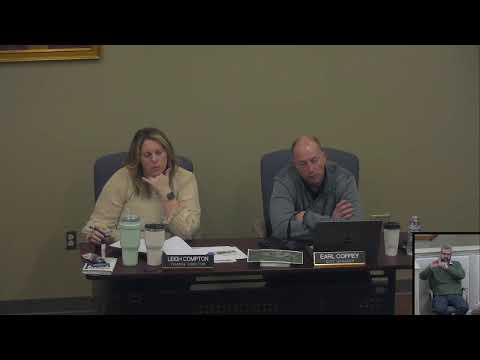
City Manager Mr. Coffey opened the city's budget kickoff by urging commissioners to "self evaluate" the organization and set a 10-year operational outlook as staff prepares budget priorities.
City Manager Mr. Coffey opened Danville City’s budget kickoff at a special-call meeting Thursday in March by urging the commission to “self evaluate” the organization and set a 10-year operational horizon.
"We really wanna self evaluate each other. We wanna self evaluate our performance, as a group, and ... we wanna be prepared for the future," City Manager Mr. Coffey told commissioners, framing the kickoff as an exercise in organizational preparedness rather than a line-by-line budget review.
Mr. Coffey told the commission that population and density trends are driving operational pressures on police, fire and public works. He cited a long list of active and planned projects the city is tracking: northern sewer expansion; work with Mercer County Sanitation District; Spears Creek pump station upgrades; downtown master-plan work that led to the Walker Hall property; water-line grants between Bergen Road and Harrisburg Road; a phase 2 of the sewer plant; transportation planning supported by an $11 million grant for the bypass; airport access-road and lighting projects; and an Economic Development Authority (EDA) acquisition west of the bypass (about 200 acres) that includes Norfolk Southern right-of-way access. "That was a hundred million dollar investment in downtown," he said, referencing recent redevelopment outcomes tied to prior planning.
Mr. Coffey urged commissioners to define what "winning" looks like for the city and stressed a shift from a fixed to a growth mindset: "It's not about making the community the most populous community in Kentucky. It's about intellectually doing the best we can as a community." He said staff will use that direction to prioritize operations and program planning during the budget season.
Commissioners responded with several suggestions. One commissioner proposed a systematic review of the 2023 strategic plan to mark items that are complete, in progress or not started and to align budget allocations accordingly. Commissioner Kevin (last name not specified) recommended that staff present a status update on projects such as the downtown master plan and the lot across from City Hall that commissioners have discussed for a hotel or town center.
The commission debated communication and public engagement formats. Mr. Coffey and commissioners discussed small-venue "third space" outreach — coffee shops, libraries and civic events — alongside larger informational sessions and a proposed citizen engagement series led by Melanie, the city’s communications staff. "The third space is critical for civic engagement," Mr. Coffey said.
On operations and personnel, Mr. Coffey noted recent structural changes — placing code enforcement under police, creating a utility administration, and targeted compensation adjustments — and urged continued attention to retention and benefits. The meeting flagged several internal items staff said they will bring into the budget process, including sick-leave policy discussions and next year's health insurance cost estimates.
Commissioners asked for improved regular reporting from external boards. The mayor and other commissioners sit on the Economic Development Corporation (EDC) and the Economic Development Authority (EDA). Commissioners suggested a monthly "commissioner update" agenda item so board-member reports (EDC, parks, airport, etc.) are consistently shared with the full commission.
No formal budget votes or policy adoptions were taken at the session. Mr. Coffey said the next budget meeting will open with year-to-date and year-end reports and a revenue discussion tied to state-level developments; he asked commissioners for direction before staff develops budget options.
The discussion covered regional recruitment, workforce development and the limits of local authority on revenue tools; one participant noted that Kentucky localities cannot impose a general sales tax. Commissioners and staff agreed to return to a deeper review of the strategic plan at the next meeting and to build prioritized budget items from that discussion.