Lifetime Citizen Portal Access — AI Briefings, Alerts & Unlimited Follows
CDOT updates Transportation Commission on Floyd Hill progress, seeks final funding
Loading...
Summary
CDOT told the Transportation Commission Feb. 19 that the I‑70 Floyd Hill reconstruction is under active construction but that design refinements and market escalation raised the program estimate to roughly $905 million, and staff asked the commission to approve a package of reallocations and financing to close a remaining funding gap.
CDOT staff delivered an extended update on the I‑70 Floyd Hill project and asked the Transportation Commission to consider a resolution the next day to finalize additional funding for the last construction package. The agency presented schedule milestones, safety and environmental benefits, and a revised program cost that staff said requires additional near‑term funding to keep construction moving.
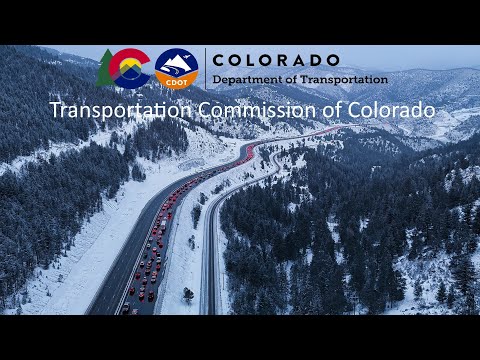
The Floyd Hill project, which CDOT officials described as improvements to about seven miles of I‑70 between roughly mileposts 241 and 248, entered construction in 2023 after an environmental assessment signed in 2021. Project director Kirk Kianka said crews have delivered three construction packages and work is under way across the corridor. "We are in construction for about a year and a half now, 20 months," Kianka said.
Why it matters: CDOT said the project will reduce a persistent bottleneck at the top of Floyd Hill by providing a continuous third travel lane eastbound and a new westbound configuration, improve interchange geometry, establish shoulders designed to a 55 mph design speed, improve multimodal connections including reconstruction of the Clear Creek Greenway Trail to ADA standards, and add wildlife mitigation measures such as an overpass and more than four miles of fencing. Those elements, CDOT argued, are intended to reduce crashes, improve travel‑time reliability during peak periods and provide route resiliency when I‑70 closes.
Cost and funding: CDOT staff reviewed a multi‑year cost history and explained how refined design and market escalation increased the estimate from an initial 2020 planning number of $700,000,000 (then later shown as $800,000,000 after an INFRA grant) to a most recent project‑level estimate. "The latest cost estimate that we have with our final package at 90% design, the whole, Floyd Hill umbrella, including early projects design right of way construction is now sitting at $905,000,000," Kianka said. Piper Darlington, representing CTIO, told commissioners CTIO had originally planned to contribute $100,000,000 in toll‑revenue backed financing but now estimates about $80,000,000 because existing peak‑period shoulder lane revenues are governed by a memorandum of understanding that caps operations and includes a 2035 cessation date.
To close an approximately $100,000,000 shortfall staff proposed a blended approach that CDOT presented in a packet of options: reallocate $40,000,000 of existing ten‑year plan (TYP) funds from near‑term projects that staff say can be deferred, increase Bridge and Tunnel Enterprise support by $40,000,000 (pending a future BTE board action), apply $30,000,000 of regional priority program funds, and use the secured $100,000,000 federal INFRA grant where eligible. Commissioners were told the commission would be asked to act on a resolution (Resolution No. 10) the following day to authorize changes in allocations and to keep construction moving during this construction season.
Schedule and benefits: Staff outlined target dates tied to the construction sequencing: final eastbound alignment by the end of 2027, final westbound work by the end of 2028, and ancillary work such as frontage road connections, landscape establishment and permanent monitor installations in 2029. CDOT emphasized early deliverables already in service — the Genesee wildlife underpass, new roundabouts on US‑40, and a nearly completed Pegasus shuttle stop — as evidence of project benefits that are already visible to motorists.
Commissioner discussion and concerns: Commissioners complimented the project progress but pressed staff on reasons for the increased cost and on contingency for future market changes such as tariffs on steel. Kianka and Darlington said most price risk has been managed through contracting approaches (CMGC) and locked‑in steel prices for key suppliers, though they acknowledged ongoing inflationary pressure for concrete, asphalt and labor. Commissioner Ritter asked whether tariffs could force CDOT to return with another supplement; CDOT responded that many major steel purchases are bought under Buy America requirements and that critical steel pricing is locked for existing supplier agreements but that delays in authorization could expose the project to greater price risk.
Next steps: Staff said the item would be presented to the Commission for action the next day. Commissioners signaled support but reserved judgment pending the formal resolution and requested ongoing updates about the availability of the INFRA grant obligation and CTIO financing modeling.
Ending: The commission paused additional policy debate to take up other agenda items; CDOT staff said they would return for formal action at the next session where the commission will consider the proposed resolution to reallocate TYP funds and to augment the package with enterprise and regional dollars.