Get Full Government Meeting Transcripts, Videos, & Alerts Forever!
Get email alerts on the Procurement topic
No spam. Unsubscribe anytime.
Staff explains procurement rules: $30,512 state bid threshold, board policy 3003 and administrative procedures
Summary
District staff reviewed school procurement rules, explaining the state bid threshold (listed in the meeting as $30,512), board purchasing policy 3003, administrative procedures with internal approval thresholds (examples cited: $10,000 and $100,000) and emergency-purchase exceptions.
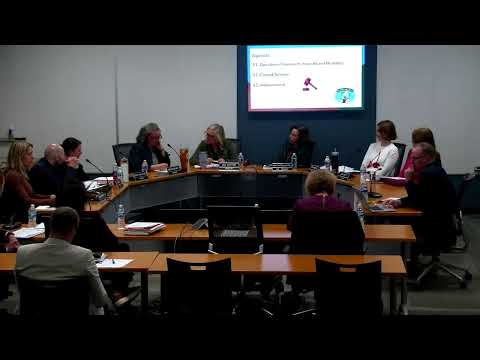
Devin, a district staff member, gave the board a detailed overview of procurement and purchasing rules at the March 11 meeting, walking trustees through the three "filters" that govern purchases: state law (including the state bid threshold), board policy, and district administrative procedures.
Devin said the state bid threshold (updated annually and tied to the consumer price index under the Michigan Revised School Code) applies to purchases of construction, supplies, materials and equipment, and cited the threshold figure used in the presentation as $30,512. He emphasized that the threshold does not apply to purchased services or contracted services, which are governed by other rules and internal procedures.
The presenter cited board policy 3003 (purchasing), which authorizes the superintendent to supervise purchases and requires competitive bidding as required by law. Administrative procedures implement the policy and set internal approval levels: examples discussed included building-level approvals for very small purchases, director-level approvals for moderate purchases, superintendent review for purchases over $10,000 and board review in some cases for larger capital expenditures or bids above the state threshold. The transcript also records that some administrative thresholds are dated and may not reflect current inflation, prompting the suggestion to review and update procedures periodically.
Devin outlined additional points: federal funds can impose separate procurement rules, bond projects and construction have their own bid/approval paths, emergency purchases can bypass normal procedures with after-the-fact documentation, and some long-standing service contracts (transportation, audit services, construction management) may not have been rebid recently and could be candidates for future competitive bidding.
Board members asked clarifying questions about how administrative dollar cutoffs interact with the state threshold, when board review versus board approval is required, and whether project-related professional services tied to bond work are treated differently (they are frequently reviewed with project approvals). Devin and others suggested convening a small group to review the administrative procedures and update thresholds that no longer account for inflation.
No formal vote was taken; the presentation was for board education and to prepare trustees for oversight and possible future procedure updates.