Get Full Government Meeting Transcripts, Videos, & Alerts Forever!
Get email alerts on the State Legislation topic
No spam. Unsubscribe anytime.
Council hears state legislative briefing that could affect city finances and planning
Summary
City staff summarized several Florida bills under consideration that could affect Sebring finances, redevelopment tools and local control — including proposed changes to community redevelopment agencies, utility service rules, property tax exemptions and accessory dwelling regulations.
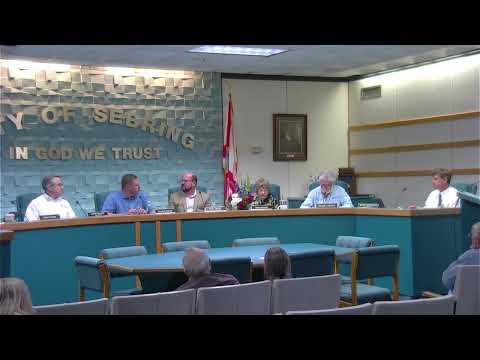
Budget and grants coordinator Jared Lee briefed the City Council on March 18, 2025 about state legislation the city is tracking and the potential impacts on Sebring’s budget and governance.
Lee summarized priority bills and explained likely consequences if they pass in their current forms. Highlights included a statewide proposal to sunset or prohibit new Community Redevelopment Agencies (CRAs) by 2045 and to limit future CRA project funding; changes that would restrict cities’ ability to charge utility service surcharges for properties outside city limits (affecting an estimated share of local utility revenue); proposals to raise the homestead/property tax exemption floor (which could reduce local ad valorem revenue); and an accessory dwelling unit (ADU) bill that would curtail local regulation of ADUs and could expand short-term rental-type activity.
Staff warned that some bills would shift significant revenue pressure to local governments (for example, property tax cap increases and changes to utility surcharges) or reduce local land-use control (live-local/ADU bills and charter school siting rules). Lee recommended the council identify priorities for lobbying and stay ready to contact legislators if bills with large local impacts advanced to floor votes.
Councilors asked staff to monitor several bills closely—particularly CRA reform (which could affect downtown redevelopment financing), utility surcharges, and ADU/short-term rental changes—and requested advance notice when bills in the briefing reached pivotal committee or floor votes. Lee said he would prepare short, targeted briefs and alert the mayor and council when bills reached those stages.
Why it matters: Several bills described could materially change the city’s revenue base, the tools available for downtown and redevelopment finance and the local control over land use and housing types. City staff and councilors said they would monitor the session and engage lawmakers on items that threaten municipal budgets or operational capacity.
Next steps: Staff will circulate concise updates as priority bills advance; council directed staff to flag any legislation that becomes critical and to request the mayor or councilmembers contact state representatives when needed.