Get Full Government Meeting Transcripts, Videos, & Alerts Forever!
Get email alerts on the Education Students topic
No spam. Unsubscribe anytime.
Hillside Middle School highlights student leadership, mental-health club and a shift in math instruction
Summary
Hillside Middle School students and staff presented a year of PTSA-funded classroom supports, student-council activities and a Be Nice mental-health program, and demonstrated a Building Thinking Classrooms approach to math that teachers say emphasizes collaboration, vertical whiteboard work and growth mindset.
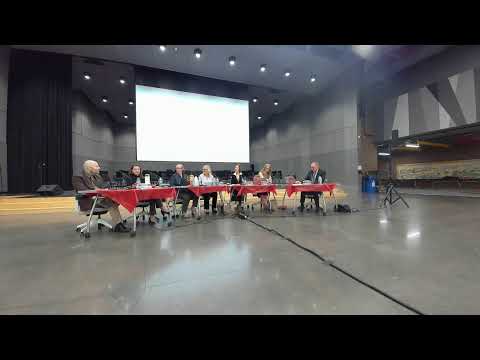
Hillside Middle School leaders, students and the school’s PTSA presented an overview of extracurricular and classroom work at the Northville Public Schools Board of Education meeting on March 18, describing more than $20,000 in teacher grants, student-led service projects and a new student mental-health club.
The presentation combined updates from the PTSA, student council representatives and a student-led Be Nice club with a live demonstration of Building Thinking Classrooms (BTC) math strategies that staff members are piloting districtwide.
The PTSA representative described large, recurring supports and one-time purchases the group has provided, saying, "This year alone, we awarded over $20,000 in teacher grants" that funded STEM activities, classroom technology and library books. The presenter also listed recurring events — a carnival planned for May 27, staff appreciation, an esports team, rowing and gym equipment, and ongoing funding for art and classroom supplies.
Student council members from sixth through eighth grade reported on fund-raisers and service projects, including candy-cane sales, a canned-food drive donated to Civic Concern, and an eighth-grade dance scheduled for May 16 from 6 to 8 p.m. Student leaders also described attendance at regional leadership conferences and other student-exchange events.
The Be Nice club — which follows a model from the Mental Health Foundation of West Michigan — described an action plan the students use: "notice, invite, challenge, and empower," and listed past activities such as informational posters, a student symposium and a mental-health speaker. A student leader explained the club’s goals as aiming "to destigmatize the conversation around mental health and mental health illnesses" and to provide peer resources and referral support.
Teachers and coaches then demonstrated Building Thinking Classrooms, a research-based instructional approach that emphasizes vertical, nonpermanent whiteboard work, group roles (scribe, speaker, inquirer, manager), peer critique and rich tasks. Doctor Carrie Zielinski, the district math coach, told the board that BTC aims to build the “four C’s” of 21st‑century learning — communicating, collaborating, critical and creative thinking — and to move beyond procedural drill toward conceptual understanding. In a classroom demonstration, students and board members worked in groups on an exponential-growth task comparing simple and compound interest; a teacher summarized the result for long-term savings: "Long term, who made the better choice? Claire."
Teachers who have piloted BTC said the strategy increased student engagement and peer-to-peer learning. A math department head described hosting visiting teachers and visiting cohorts: she said her algebra students “got to express themselves in other ways” and that groups were self-moderating and pushing each other to solve parts of a parabola task.
Board members praised the mix of student leadership, mental-health work and instructional change. Several trustees noted the value of student-led mental-health efforts and singled out the PTSA and teachers for helping create a supportive climate for both students and staff.
Hillside administrators said BTC and related instructional coaching are multi‑year efforts that grew from goals set in 2018; they described teacher coaching, cross‑building cohorts and ongoing professional development as necessary supports for the classroom changes.
The presentation ended with board members applauding students and teachers, and several trustees saying they hoped districtwide rollout and parent-facing sessions (math 101 and teacher-facing PD) would follow to align classroom practice and expectations.
The board did not take any policy votes during the Hillside presentation segment; the session was informational and demonstrative.