Get Full Government Meeting Transcripts, Videos, & Alerts Forever!
Get email alerts on the Sunshine Law topic
No spam. Unsubscribe anytime.
City attorney briefs Deltona planning board on Sunshine Law and public-records obligations
Summary
City attorney provided an extensive review of Florida’s Sunshine Law and public-records statutes, covering notice requirements, ex parte communications, email/text preservation, record custodianship and penalties for violations.
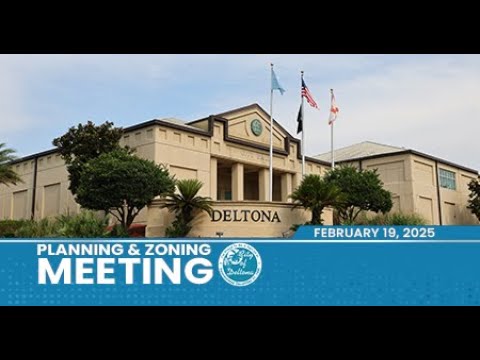
A City of Deltona attorney delivered a structured presentation on Florida’s Sunshine Law and public-records requirements at the Planning and Zoning Board meeting on March 19.
Gemma (city attorney) reviewed the state’s open-meetings and public-records framework, including statutory underpinnings (Chapter 286 for Sunshine Law and Chapter 119 for public records), notice best practices, what constitutes a meeting, and rules that prohibit board members from conducting board business by private email or text. She emphasized that advisory boards must avoid serial or private communications that could amount to decision-making outside a publicly noticed meeting.
The attorney explained that certain communications are presumed prejudicial in quasi-judicial matters and must be disclosed before a final vote; disclosure should identify persons contacted so the public can rebut or address the information. Gemma also advised members that records created or received in connection with agency business (including emails and text messages about board business) are public records and that individual members can become custodians of public records if those materials exist only on personal devices or email accounts.
Board members asked practical questions about meeting notice publication, minutes turnaround, when to disclose ex parte contacts, whether social gatherings are permitted and how to handle emails from members of the public. The attorney said minutes need not be verbatim, recordings are optional, and that a reasonable practice is to prepare minutes before the next meeting; for public-records requests the city clerk is the usual custodian, and members were advised to forward official correspondence to the clerk or staff liaison to centralize retention.
The attorney warned that violations can carry civil and criminal penalties and that most violations are curable by redoing the public process with proper notice and opportunity for comment. She recommended members consult staff or city counsel promptly if they suspect a violation so the city can pursue a cure before penalties accrue.