Get Full Government Meeting Transcripts, Videos, & Alerts Forever!
Get email alerts on the School Security topic
No spam. Unsubscribe anytime.
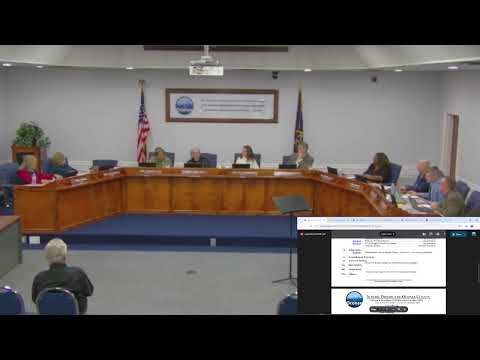
Oconee County board discusses metal detectors, Syntegix rollout and other security upgrades after high-school weapons incident
Summary
A parent urged the School District of Oconee County Board of Trustees on March 10 to install metal detectors at the district’s high schools after a student recently brought a firearm onto school grounds.
A parent urged the School District of Oconee County Board of Trustees on March 10 to install metal detectors at the district’s high schools after a student recently brought a firearm onto school grounds. Tierra Barnwell told the board she presented a petition with more than 100 signatures and said, “We cannot afford to wait for a worst case scenario.” She added, “What is the price of a life?”
The board heard a detailed security update from district leadership that outlined existing measures — school resource officers in each building, double-secure entry points, cameras, drills, nurses in every building, canine searches, internet/keystroke monitoring, and parental controls for district devices — and described several projects in progress: installation of Syntegix emergency/location devices, testing of strobes and sensors in classrooms, installation of protective film on first-floor glass, and districtwide distribution of “Stop the Bleed” kits.
Superintendent Dr. Thorsland and staff said Syntegix trainings began this week for key personnel with a planned broader rollout to staff during the spring; the district hopes equipment and training will be in place by April 1 if procurement and installation stay on schedule. Dr. Thorsland said the system’s room-based sensors and panic/alert devices can detect and pinpoint emergencies and that many schools already have strobes and other hardware installed.
Board members and staff described field visits to other districts to compare systems. Staff reported seeing two broad approaches: daily/entry screening at a fixed entrance and rotating/spot screening with portable units. The board discussed at least three product categories observed: fixed walkthrough detectors (permanent installations), portable walk-through or gate-style detectors (moved between sites), and supplemental x-ray-style checks used in some places for items such as electronics. District staff described one vendor configuration called “Evolve” (portable system) and a brand name often used for permanent walkthrough detectors, Garrett.
Staff gave example cost and staffing figures observed elsewhere: one permanent detector reported at roughly $15,000 per unit, an Evolve-style portable system quoted in demonstrations at about $75,000, and a fully purchased system in one district reported near $150,000. Implementation requires trained technicians and security staff: Greenville County’s program uses a team of about eight technicians to move and operate three portable systems, plus a small security team of former law enforcement personnel (five security staff reported, with a goal of increasing to seven). Staff told the board vendors have lead times of roughly 8–10 weeks after order, and districts implementing daily screening said systems smoothed operationally after a few months.
Staff emphasized tradeoffs: higher detector sensitivity catches small metal objects but can slow morning entry and create exterior lines; lower sensitivity speeds entry but could miss small metallic threats. Staff said districts that operate detection daily typically screen all students and visitors; staff are sometimes exempt from daily checks. Board members raised concerns about school climate, the potential for lines and backups, operational staffing needs, and the cost of ongoing vendor fees.
Funding and timeline questions were raised. District staff said some state-level safety grant funding has previously been awarded to districts for security projects and that the governor had proposed school safety items in the state budget; however, the board was told it is not yet clear whether a future state grant would reimburse purchases made before an award is issued. Staff recommended seeking more detailed cost estimates and survey feedback from teachers, parents and staff and returning to the board at the April meeting with itemized costs and options.
Discussion also included other security options: the possibility of a “floating” SRO to cover absences, continued use of random canine searches, and non-detection investments such as protective glass film and improved building PA connections. Miss Hughes, the district’s director of student services, was cited by staff as managing much of the safety work and as a point person if metal-detection deployment were pursued.
The board did not take a formal vote on weapons detection at the March 10 meeting but requested more detailed cost information and stakeholder feedback before any commitment. Staff indicated an implementation this school year would be unlikely unless decisions and procurement happened immediately; most vendors’ timetables pointed to an August rollout if the board chose to proceed now.