Get Full Government Meeting Transcripts, Videos, & Alerts Forever!
Get email alerts on the Student Discipline topic
No spam. Unsubscribe anytime.
Student behavior report: district shows declines in some referrals, board presses for clearer follow‑up
Summary
District staff presented a second‑quarter behavior report showing long‑term trends, a 14.3% decline in middle‑school referrals over three years, and top offense categories by grade span; board members requested additional disaggregated data and clearer support protocols for teachers.
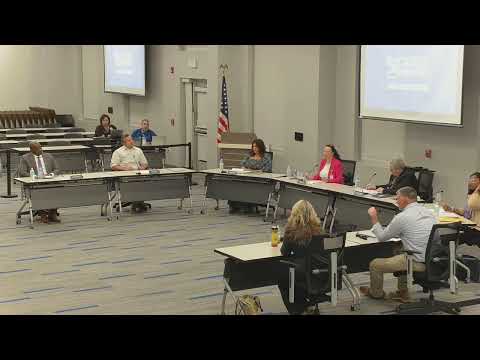
Dr. Diana Smith presented the Rock Hill School District’s second‑quarter student behavior review on March 11, framing discipline data with an explanation of due process and how referrals are recorded in PowerSchool.
Dr. Smith said disciplinary referrals reflect both objective incidents and subjective perceptions. She described a district three‑year second‑quarter comparison that breaks referrals down by grade span and lists the top five referral categories for each span. At the elementary level, the top five categories were: hit/kick/push; defiance; class disruptions; inappropriate behavior; and major disruptions. For middle schools the top five were defiance; class disruptions; disrespect; hit/kick/push; and inappropriate behavior. For high schools the top categories shifted to tardies, class cutting, phone violations, defiance and ID violations.
Dr. Smith highlighted a district improvement: middle‑school disciplinary infractions were down 14.3% over the last three years. She also told the board that higher‑profile categories such as fighting, bullying, weapons and drug possession were down “significantly” though there was a small uptick in some categories in the most recent quarter.
The presenter emphasized procedural safeguards. She explained that once a teacher files a referral, administrators must conduct an investigation to provide students with due process (investigation, notice and an opportunity to be heard) and then apply consequences consistent with the board code of conduct. Dr. Smith said parents may appeal consequences: first to the principal and then to the district office; she also said parents have a three‑day window to challenge a referral once it is issued.
Board members pressed for more actionable follow‑up. Several requested that staff provide not only total referrals but the number of distinct students who received referrals (for example, to show how many students generated multiple referrals). Members also asked for the discipline matrixes, a drill‑down of serious infraction numbers by school, and anonymous staff surveys to identify what supports teachers need when handling difficult incidents. Dr. Smith confirmed the district can produce those reports and pointed to existing tools (teacher surveys, dean‑of‑students reviews) the district can use to gather staff feedback.
The discussion included a strongly worded comment from a board member who presented counts of frequent repeat referrers at a single school and urged the district to bring specific recommendations to support teachers. Dr. Smith responded that her assignment to the board was to provide data and context for second‑quarter behaviors but that the district is open to receiving direction to develop recommendations and implementation plans.
Several board members linked discipline, staff retention and academic outcomes, and asked staff to recommend both short‑term operational steps (for example, response timelines and clearer communication when teachers file referrals) and longer‑term programmatic measures (expanded MTSS behavioral supports, restorative practices and dean support in schools). Dr. Smith agreed to provide the requested disaggregated counts and the discipline matrix documents to the board for review.