Get Full Government Meeting Transcripts, Videos, & Alerts Forever!
Get email alerts on the Federal Education Funding topic
No spam. Unsubscribe anytime.
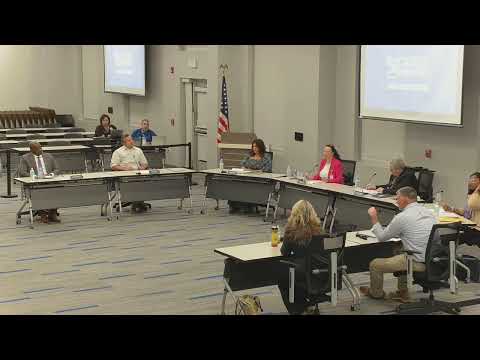
Rock Hill Schools report drop in Title I funding; district outlines federal program uses
Summary
District staff told the school board that Rock Hill Schools saw a roughly $316,585 reduction in Title I funding for 2024–25 and outlined how federal dollars for Title I, III and IV are spent across schools and district services.
Tanya Belton, director of programs for Rock Hill Schools, told the board on March 11 that the district’s preliminary federal allocations for 2024–25 show a $316,584.80 decrease in Title I funding from the prior year.
Belton said the preliminary Title I allocation is based on the district’s fifth-day attendance count for March 2024. She described how Title I funds are split between district set‑asides and school allocations, and listed specific school allocations given in the preliminary notice: St. Anne’s (listed as receiving $3,265.51) and the Palmetto School (listed at $43,200, noted as based on 32 students). She said final allocations arrive in October.
The district’s Title I school expenditures totaled $3,506,675, about 77% of the Title I budget Belton presented, with money going to tutors, literacy materials, math manipulatives and classroom software. District set‑asides under Title I support a literacy specialist, math specialist, a Title I coordinator, a parent specialist and indirect funds, she said.
Belton also described other federal programs. Under McKinney‑Vento (homeless student supports), the district identified 468 students in the most recent year; services include clothing, school supplies and outreach. Under Title I, Part D (neglected and delinquent), two named facilities receive funds for tutors, lab assistants and career exploration resources.
On multilingual services, Belton said Title III funds partially support multilingual specialists who provide coaching, classroom observation and professional development for teachers, and that the district serves “over 1,400” multilingual students (students whose first language is not English for Title III purposes). For Title IV (student support and academic enrichment), Belton said funds back MTSS tools, gifted-and-talented professional learning and summer STEAM enrichment camps that include free transportation.
Board members asked follow-up questions about how private schools can appear on allocation lists; Belton and a district official explained that federal law requires equitable services for eligible students who live in the district attendance zones but attend private schools. Board members also asked whether potential changes in federal funding were known; Belton said state and federal guidance was not final and district leaders were preparing scenarios in case of cuts.
Belton closed by asking board members to direct any detailed follow‑up requests (for example, McKinney‑Vento clarifications) through interim Superintendent Dr. Jones so staff could supply additional data.
The board did not take any vote tied to the federal programs presentation on March 11.
Belton’s remarks and the allocation figures were presented as preliminary and subject to final October allocations, and several board members requested additional breakdowns and follow‑up data.