Get Full Government Meeting Transcripts, Videos, & Alerts Forever!
Get email alerts on the Municipal Budgeting topic
No spam. Unsubscribe anytime.
Council hears budget overview; staff proposes local grocery tax, 3% water rate increase and $1.2% new‑growth levy allocation to roads
Summary
City staff presented a draft 2025–26 budget showing a balanced general fund, proposed a local 1% grocery tax (to replace a state‑administered revenue), recommended a 3% water rate increase (~$0.11/1,000 gallons), and proposed dedicating 1.2% new‑growth levy proceeds to street resurfacing.
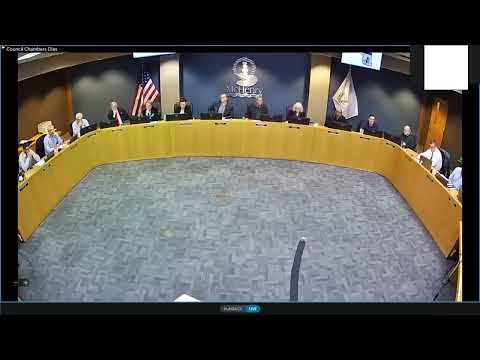
City staff presented a draft fiscal year 2025–26 operating and capital budget to the City Council on March 17, covering the general fund, the recreation center fund and the water and sewer enterprise fund. The presentation described projected revenues and expenditures, proposed rate changes and several staff recommendations for funding priorities.
Suzanne (budget presenter) said the proposed budget is balanced, showing a $748,000 surplus in the draft; staff estimated revenues for the current fiscal year were about 3.3% higher than budget and expenditures about 4.8% lower, producing a stronger-than-expected ending fund balance. Staff proposed transferring roughly $3.45 million of excess general fund balance into the capital asset maintenance and replacement fund to cover future capital needs.
On taxes and fees, staff outlined two notable proposed changes: first, a local grocery tax option and second, a modest water rate increase. Suzanne explained the State plans to eliminate the state‑administered 1% grocery tax as of Jan. 1, 2026; municipalities can instead enact the same 1% locally and have the state collect it. Staff said municipalities across the county are coordinating to adopt the local option so residents would see no immediate change in retail price but the city would retain the revenue (staff estimated roughly $1,000,000 annually to the city). Council indicated broad agreement to pursue a locally levied 1% grocery tax and staff noted an Oct. 1 statutory deadline to file an ordinance for the state to administer the local tax.
On utilities, staff proposed a 3% water rate increase (about $0.11 per 1,000 gallons) to cover higher operating costs and preserve capital balances; no sewer rate increase was recommended for 2025–26. Staff noted water and sewer operate as an enterprise fund and that planned water capital projects (including a $1.38 million water main replacement) will rely on base fees and reserve balances.
On property tax levy direction, council had previously signaled support for a 1.2% new‑growth levy; staff recommended dedicating proceeds from that new‑growth portion to road resurfacing. Several aldermen said they favored directing new growth to street maintenance but some cautioned against permanently earmarking funds if future priorities change.
Staff also reported on the McHenry Recreation Center, noting the center has improved revenues but still needs an estimated annual transfer from the general fund (recent years ranged $100,000–$130,000); staff recommended a full operational assessment of the rec center (included in the draft budget) before making long‑term staffing or program changes.
Council provided direction on multiple items: proceed with drafting a local grocery tax ordinance (in coordination with neighboring municipalities), include the water rate increase in staff’s proposal for public hearings, and treat the new‑growth property tax proceeds as proposed for roads while retaining council latitude to re‑assign future receipts as needs evolve. No final budget adoption took place on March 17; the council scheduled further budget work and a full fund review at subsequent meetings in April and a final adoption target in late April.