Get Full Government Meeting Transcripts, Videos, & Alerts Forever!
Get email alerts on the Cdbg Grants topic
No spam. Unsubscribe anytime.
Port St. Joe approves CDBG applications for Washington complex and MLK Boulevard; commits $25,000 per application
Summary
The Port St. Joe City Commission voted to direct staff to submit two Community Development Block Grant (CDBG) applications — for the Washington complex renovation and a commercial revitalization of MLK Boulevard — and to commit $25,000 in local contribution to each application.
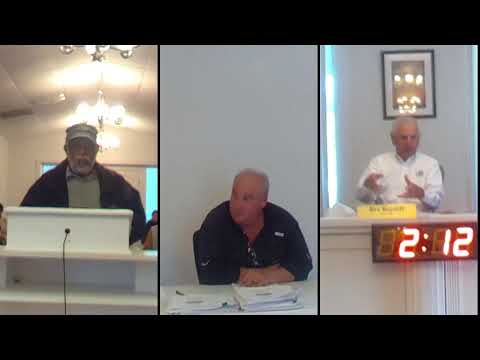
The Port St. Joe City Commission voted March 18 to direct city staff to prepare two Community Development Block Grant applications: one for renovation and improvements to the Washington complex (including the gym and adjacent buildings) and one for a commercial revitalization project on Martin Luther King Boulevard.
The vote instructs staff to work with the commission-appointed Citizen Advisory Task Force (CATF) and grant administrators to finish applications by the May 2 deadline and to commit $25,000 from the city toward each application to increase the city’s points in the competitive scoring process.
Patrick Howard, a grant consultant who said he works with Red Fox Enterprises, explained the program and how projects are evaluated. He told commissioners the Department of Economic Opportunity this year relaxed statutory caps and verbally suggested applicants avoid asking for the entire available pot. He said municipalities typically could apply for projects in housing rehabilitation, commercial revitalization and neighborhood revitalization and that the city could submit more than one application under the emergency guidance being used this cycle. “You can apply for more than one grant,” Howard said.
The CATF’s staff and members recommended two priority applications: a broad scope for the Washington complex — including roofing, windows, heat/air and accessibility work the committee identified — and MLK Boulevard commercial revitalization with utility burial, sidewalks and streetscape work to attract businesses. Commissioners and public speakers emphasized that surface repairs must account for known subsurface problems in several neighborhoods, and several speakers asked that engineering plans address drainage and sinkhole-prone areas before finalizing bid-ready scopes.
Staff and Howard outlined key grant timeline items: the CDBG application deadline is May 2; applicants that advertise a $25,000 local match receive additional scoring points; and projects that are “shovel ready” with plans and specs score higher. Commissioners were also told Duke Energy has provided a preliminary estimate of about $500,000 to bury power lines for three streets in a proposed MLK package; Howard described that figure as “a real good deal” but said cost estimates and required engineering must be submitted with the application.
Commission action: the commission approved putting forward both applications and committing $25,000 per application. The motion passed unanimously.
Why it matters: CDBG awards are competitive and can fund major street, sewer, and public-facility investments that the city otherwise could not afford. The commission’s decision starts a short timetable of engineering, public hearings and application completion that must align with state rules and any disaster-recovery opportunities that may overlap with the same needs.
What happens next: Staff will prepare engineering cost estimates and bid-ready documents where possible, conduct a second public hearing required by the program, and complete the application with the selected grant administrator. If the grants are awarded, projects will proceed through the state’s site-visit, environmental-review and contracting phases before construction.