Get Full Government Meeting Transcripts, Videos, & Alerts Forever!
Get email alerts on the Student Mental Health topic
No spam. Unsubscribe anytime.
Lansing district shifts grant-funded mental-health work to proactive SEL model after student conference
Summary
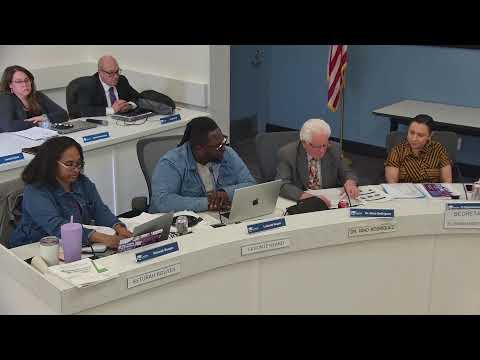
Lansing Public School District officials told the board on March 13 that the district is shifting Year 3 of a federal TEAMS grant from restorative-practices programming toward a proactive social‑emotional learning (SEL) model called Foundations for Success, and that the district held a pilot student mental‑health conference in December.
Lansing Public School District officials told the board on March 13 that the district is shifting Year 3 of a federal TEAMS grant from restorative-practices programming toward a proactive social‑emotional learning (SEL) model called Foundations for Success, and that the district held a pilot student mental‑health conference in December.
Christina Rios, director of mental health for the Lansing Public School District, said administrators nominated 90 students for the December conference and 49 attended. "They all got a swag bag of sorts just as if they were going to a conference that adults would go and attend," Rios said, describing the program content and student feedback.
The district presented the conference results and program changes to the full board after a brief COVID update from Dr. Sue Wheeler of the Department of Health and Wellness. Wheeler reported February counts of 32 student COVID cases and 13 staff cases, and noted the district is distributing take‑home tests ahead of spring break. "By doing the strategies for COVID, we are helping with the other" respiratory illnesses, Wheeler added when trustees asked about influenza and other disease trends.
Nut graf: The shift matters because the grant funds clinicians and training currently used for mostly reactive restorative work; staff said moving to a tiered SEL curriculum aims to reduce behavior incidents before they occur and to provide measurable objectives for students. The district also plans to add clinicians and a clinical specialist this year to manage threat assessments and district‑level crises.
Program details and district plans
Julie Ferguson, from the Office of School Culture, described the operational change: Foundations for Success will be built on an MTSS (multi‑tiered system of supports) framework and initially use the TRAILS curriculum. "Tier 1 is research‑based core instruction" delivered to whole classrooms, Ferguson said; staff anticipate about 15 percent of effort in tier 2 (small groups) and about 5 percent in tier 3 (intensive one‑to‑one support).
District staff reported that Year 3, which began in January, will add three additional mental‑health clinicians deployed to schools and one clinical specialist who will work under district staff on threat‑assessment processes and the FORT program. Rios said the clinical specialist position is intended to provide more experienced support for district‑level crisis work.
Conference takeaways and trustee concerns
Rios and Ferguson said the conference featured two Teen Truth keynote speakers, breakout sessions led by Michigan State University Extension and community partners, vendor tables with local health programs, and practical coping‑skills sessions. Students surveyed after the conference asked for shorter breakout sessions, more hands‑on activities, and additional topics such as stress management, sleep and wellness, and body image on social media.
Several trustees pressed staff about selection, equity and follow‑up. "How were these students nominated?" Trustee Williams asked. Rios replied administrators selected students they felt would benefit and who could attend a full day; the target demographic was grades 10–12 (with Lansing Tech exceptions), though trustees noted much of the district's reactive work has been in middle schools.
Trustee Strode said middle years show the highest volume of reactive interventions and urged piloting proactive SEL work in middle schools. "Middle school is where we are really suffering," Strode said, noting teacher retention and classroom challenges tied to student mental‑health needs.
Ferguson and Rios said clinicians already serve K–8 buildings (six clinicians placed in elementary and middle schools, plus one at Lansing Tech) and that one conference speaker also visited middle schools. Staff said the restorative program had been largely referral‑based (reactive) and that the district intends Foundations for Success to be more proactive.
Accountability, measurement and sustainability
Trustees asked how the district will measure success. Ferguson said the TRAILS curriculum has grade‑banded lesson units and built objectives; staff plan evaluation tools to track whether instruction reduces disciplinary interventions and increases students' SEL competencies. "Part of putting the program together…is there has to be an evaluation tool so that we can evaluate the success of the program itself," she said.
Board members also asked how the program will be sustained after the five‑year federal TEAMS grant ends. The superintendent said the district will seek to institutionalize training and spread curriculum knowledge to teachers so benefits remain if funding ends, but he acknowledged the district cannot promise clinicians funded by grants will be permanent without future revenues.
Clarifying details reported at the meeting
- Conference nominations and attendance: 90 nominated, 49 attended (target: grades 10–12 except Lansing Tech). Source: Christina Rios presentation and post‑conference survey. - Conference partners cited: Teen Truth, Michigan State University Extension, local health department programs, Ellie's Place, FORT program, therapy dog visits. - TEAMS grant status: Year 3 of a five‑year federal grant; district will add three mental‑health clinicians and one clinical specialist in Year 3. - Program structure: Foundations for Success will use TRAILS curriculum; Tier 1 = whole‑class core instruction; Tier 2 ≈ 15% small groups; Tier 3 ≈ 5% intensive one‑on‑one.
Community relevance and next steps
Trustees asked staff to expand outreach next year to settings with higher needs (Capital Area programs, Lansing Learning Hub) and to report follow‑up with student attendees before the end of the school year. Staff agreed to follow up with conference participants and to return with outcome data as Foundations for Success is implemented districtwide.
Ending: The board did not take formal action to adopt the new curriculum at the March 13 meeting; staff will return with implementation and evaluation details and said they will bring additional training and selection guidance to the board for further review.