Get Full Government Meeting Transcripts, Videos, & Alerts Forever!
Get email alerts on the Administrative Closing Policy topic
No spam. Unsubscribe anytime.
Committee considers pay change for administrative closings; seeks shift input from EMS and sheriff's office
Summary
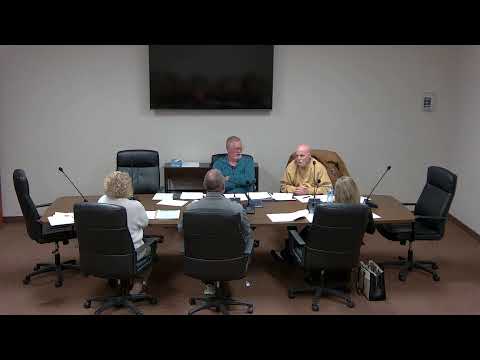
Coffee County's Policy and Procedures Committee discussed revisions to the county's administrative-closing policy, including a proposal to pay first responders a straight eight hours for administrative closings rather than awarding comp time.
Coffee County's Policy and Procedures Committee discussed revisions to the county's administrative-closing policy, including a proposal to pay first responders a straight eight hours for administrative closings rather than awarding comp time.
Committee members said administrative closings (the county's temporary office closures during weather or other events) were originally intended to protect the public and county facilities rather than to be an employee benefit. "An administrative closing'... was never set up to be a benefit. It was set up to protect the public," one committee member said.
The proposed revision would make first responders (EMS, sheriff's deputies and other emergency personnel) eligible for eight hours of pay when a county administrative closing is declared rather than receiving comp time. Members noted operational complications arise because first responders use a variety of shift schedules (8-hour, 12-hour and 24-hour shifts), and the committee debated how to define eligibility and payment when a closing begins partway through a shift.
Examples discussed included dispatchers who start shifts before the administrative offices open at 8 a.m., and EMS 24-hour crews who would be on duty across the entire administrative-closing period. Committee members referenced prior confusion in which the ambulance authority had previously given 24 hours of comp time under the old policy to certain employees scheduled that day.
To address the shift differences, members proposed two possible approaches: require that the employee's scheduled shift include the administrative-closing hours, or pay up to eight hours corresponding to the portion of the employee's scheduled work time that falls within the county's administrative-closing window. One member suggested the committee's working language be changed from "entire shift must begin on the day the administrative closing is in effect" to a clearer phrase such as "scheduled shift includes administrative-closing hours" or "pay up to eight hours during the administrative-closing period."
Before any formal change, the committee directed staff to consult with the sheriff's department, EMS and 9-1-1/dispatch to clarify shift patterns and operational impacts and return recommendations at the next meeting. Members said they preferred straight pay to comp time for employees but want to avoid paying eight hours when an employee worked only a small portion of that period.
No policy change was adopted at the meeting; members left the measure for further study and asked staff to bring revised draft language that addresses partial-shift scenarios.