Get Full Government Meeting Transcripts, Videos, & Alerts Forever!
Get email alerts on the Marine Safety No Wake Enforcement topic
No spam. Unsubscribe anytime.
Resident urges stronger no‑wake enforcement as council and staff discuss signs, tracking and coordination
Summary
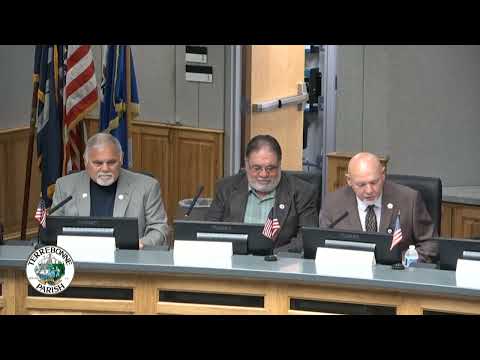
At the March 12 Terrebonne Parish Council meeting, a resident described bayou erosion and enforcement gaps after the state attorney general’s guidance changed no‑wake rules to a 5‑mph standard; council members and staff pledged follow‑up steps including sign replacement, sheriff engagement and consideration of a letter to the attorney general.
Michael Reynold, a resident of 4154 Country Drive, told the Terrebonne Parish Council on March 12 that wakes from fishing, oyster and shrimp boats are damaging banks on Bayou Terrebonne and nearby waterways and said enforcement by parish water patrol has been ineffective.
Reynold said he and neighbors have documented wakes and shoreline loss and asked the council for help finding boat owners and increasing enforcement. “I can get the boat number, and I can get the video to show a boat up on a step doing 5 miles an hour, but they can’t give them a ticket because they don’t know who the driver is,” Reynold said. He said he requested a year of ticket records in November and was told the water‑patrol tickets were not tracked in the computer system.
The matter prompted council discussion about next steps rather than a vote. Councilman Steve Tresclair suggested the council consider sending a “letter of recommendation to the Attorney General’s Office,” to pursue restoration of no‑wake language instead of a numeric speed limit, saying many boats do not have speedometers and that wake size varies with vessel type and load. Tresclair also said he had raised the issue previously with the sheriff and that additional coordination with law enforcement is warranted.
Parish staff and other council members said they are replacing no‑wake signage in some areas and would follow up. One council member said they would meet with the sheriff’s office to explore enforcement options; another said parish water‑patrol leadership had agreed to devote resources after the resident informed them of the meeting.
Reynold asked the council to consider several practical issues: that shorelines can drop off within roughly five feet of the road, that shoreline repairs might require “a mile and a half to two miles of rocks” in some places, and that water‑control structures are being struck by speeding boats. He said he provided five videos to water patrol but still saw no ticketing. The discussion noted the parish lacks a simple electronic tracking method to separate waterway citations from other traffic enforcement, which complicates performance measurement.
Why it matters: Council members and residents say wakes contribute to shoreline erosion, potential public‑safety hazards around water‑control structures, and repair costs for parish infrastructure. The discussion produced a set of next steps the council and staff said they would pursue rather than a formal policy change at the meeting.
Actions and direction from the meeting included: staff work to replace no‑wake signs and provide an update; follow‑up meetings with the sheriff’s office to discuss enforcement; and consideration of a letter or recommendation to the Louisiana Attorney General’s Office about restoring no‑wake language in state guidance so state agencies can assist enforcement.
Clarifying details from the meeting: Reynold said he requested one year of water‑patrol ticket records and was told they were not tracked in the computer system; he later asked for a shorter span (two to three months). He said he provided five videos showing wakes and boat numbers but that identifying the driver is needed to issue citations. The parish acknowledged some no‑wake signs remain down following hurricanes and are being replaced.
Community impact: The discussion focused on Bayou Terrebonne and the Humboldt Canal; affected groups include residents with bayou frontage, commercial seafood operators and recreational boaters. The council did not adopt a new ordinance at the meeting but agreed to pursue administrative and interagency follow up.