Get Full Government Meeting Transcripts, Videos, & Alerts Forever!
Get email alerts on the Higher Education Dei topic
No spam. Unsubscribe anytime.
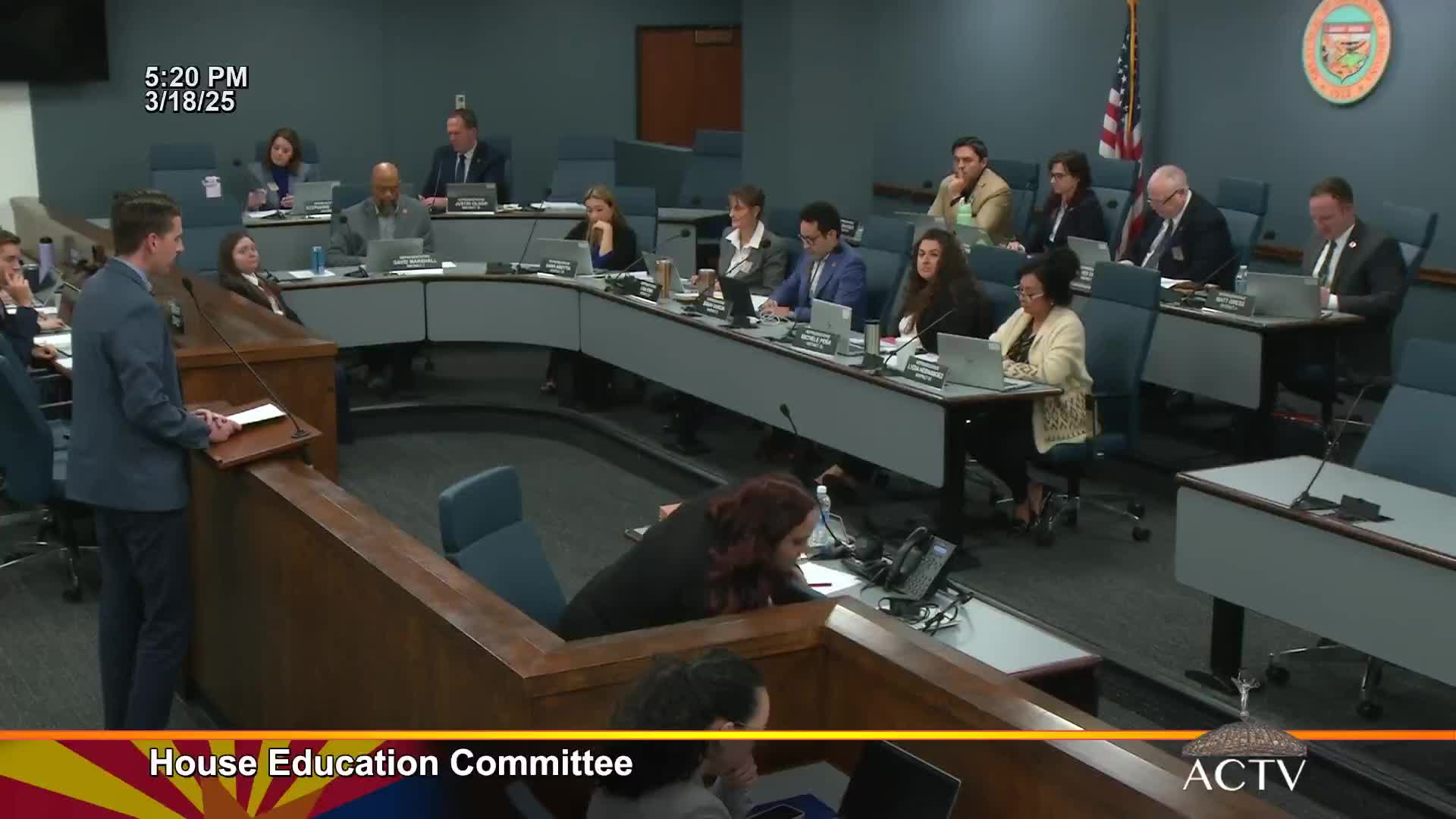
Committee approves bill to bar DEI courses at public colleges; debate centers on academic freedom and workforce implications
Summary
Senate Bill 16‑94, which would make public universities and community colleges ineligible for state funds if they offer courses described as "on diversity, equity and inclusion," passed the committee after extensive debate over academic freedom, accreditation and the definition of DEI.
The House Education Committee voted to give Senate Bill 16‑94 a do‑pass recommendation after an extended discussion about academic freedom, workforce training and the meaning of ‘‘DEI’’ in higher education.
SB 16‑94 declares a public Arizona university or community college ineligible to receive state monies in any fiscal year in which it “offers courses on diversity, equity and inclusion,” and provides a list of topics and phrases the bill’s sponsors say characterize such courses. Supporters said the bill would curb ideological training they view as divisive and outside the core mission of state institutions. Representative Graham (speaker for the record) and other backers argued that state funds should not support curricula that, in their view, promote particular ideologies about race, gender or national identity.
Opponents called the measure an unconstitutional restriction on speech and academic freedom with practical consequences for student learning and professional licensure. Natalia Brown of the ACLU of Arizona testified the bill is “viewpoint discrimination” and would chill debate and instruction; she urged lawmakers to vote no. Representative Abathia warned the bill could jeopardize accreditation for social‑work programs that require coursework aligned with Council on Social Work Education (CSWE) standards and therefore could prevent graduates from becoming licensed social workers. Representative Gutierrez, a member of the committee, said the measure’s list of allowed and disallowed topics is internally inconsistent — the bill would permit study of historical race‑based injustices such as slavery but would restrict modern analyses of structural inequities — and would “eliminate us from existence in history books,” particularly affecting Indigenous students and tribal histories.
Lawmakers raised practical concerns about enforcement, accreditation and workforce readiness. Several members said the bill’s undefined or vague language could create a chilling effect in classrooms and research. Supporters said a clear statutory bar is needed to prevent what they described as ideology masquerading as pedagogy; opponents said the bill overreaches and harms students and public institutions.
By committee roll call, the measure advanced with 7 ayes and 5 nos. Committee members and witnesses agreed the issue would be litigated and debated further as it moves through the Legislature.